Galaxy S25 Edge One Month Review — Thin Frame, Thick Potential
SammyGuru is reader-supported. We have affiliate and sponsored partnerships, so we may earn a commission when you buy through links on our site — at no extra cost to you. Learn more.
Samsung’s recent design trajectory has been all about refinement—thinner, lighter, and more streamlined across the board. The Galaxy S25 Edge continues that evolution, shedding weight while still pushing premium materials and powerful internals. But is a slimmer phone automatically a better one? This is our Galaxy S25 Edge review.
Design
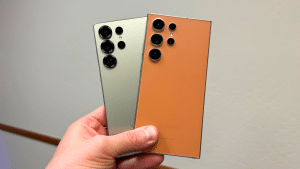
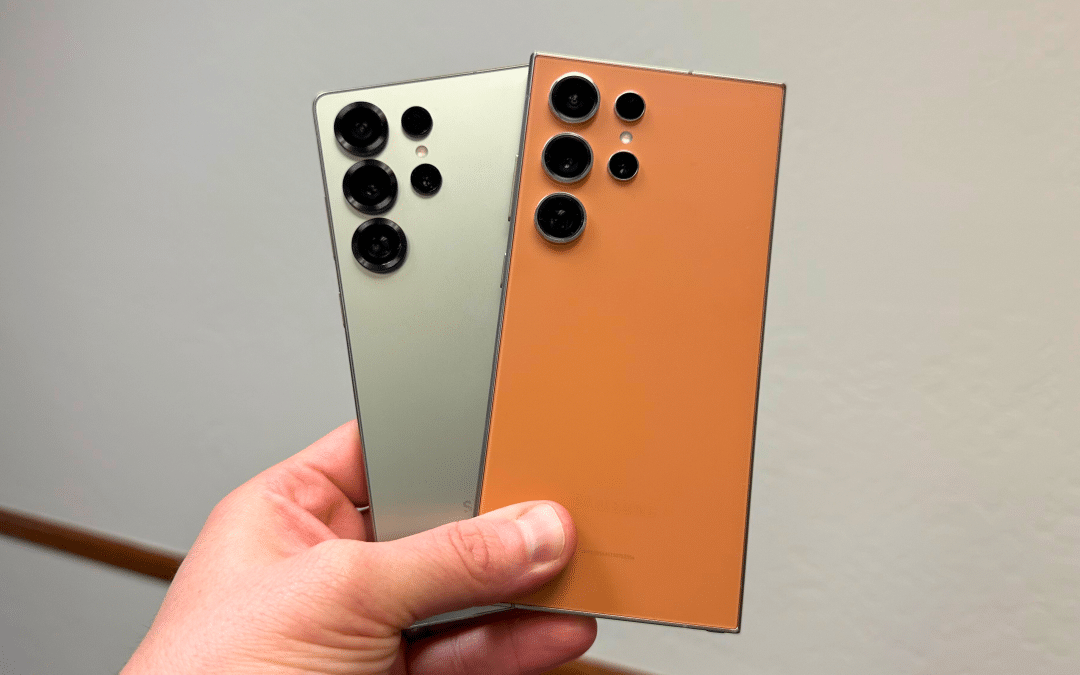
There’s no question that Samsung’s marketing strategy for the S25 Edge is all about the design. I thought it was all hype until I picked this phone up for the first time at an early hands-on session in New York. Holding the S25 Edge in one hand and the S25 Ultra in the other, you start to get it. After carrying the Edge around for 2 weeks as my daily driver, I’m even more enamored with the thin and light design.
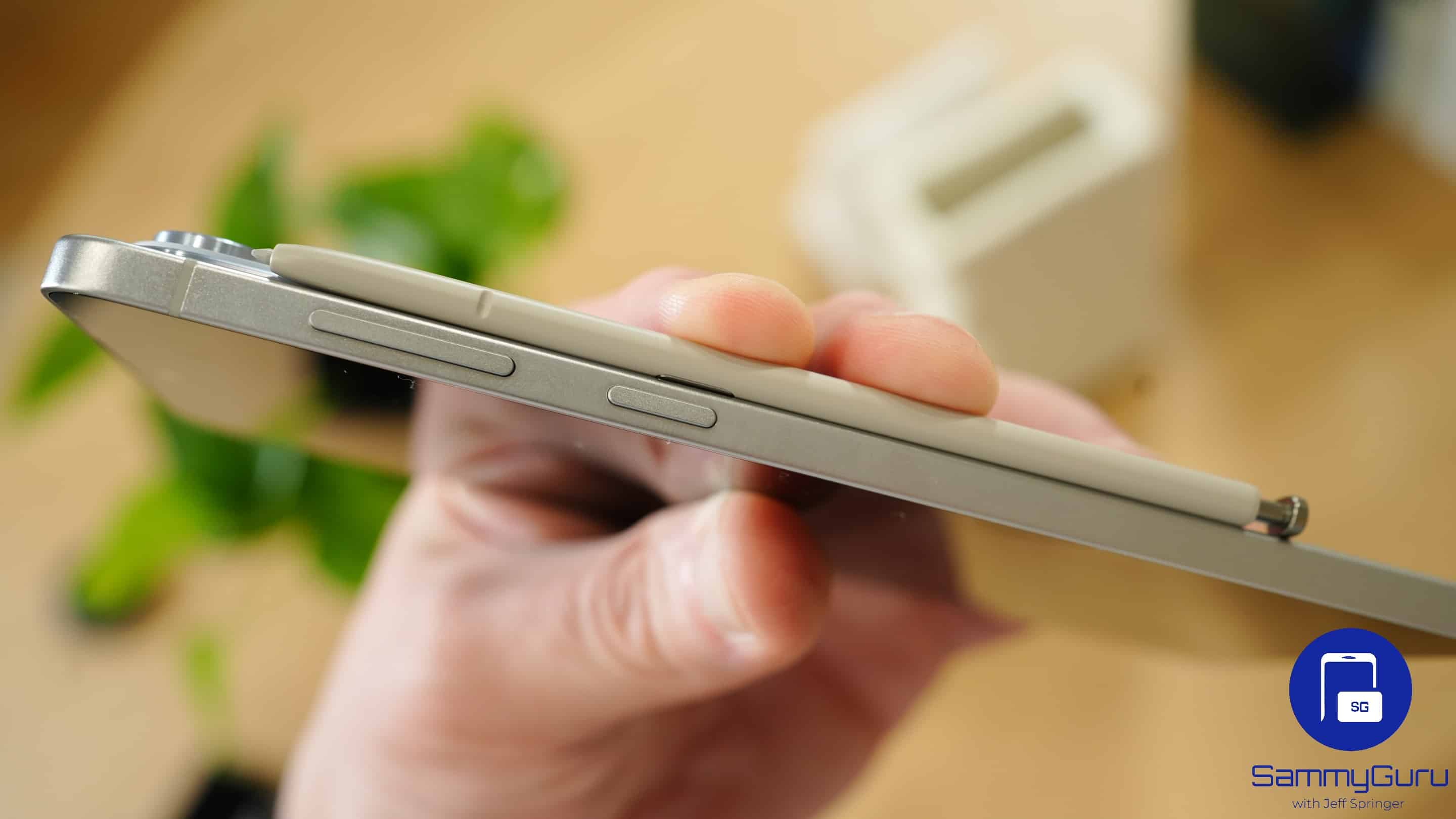
Carrying the device in my pocket is easier, doesn’t weigh down my pants/shorts pockets at all, even when using a case. Using the S25 Edge for a long period of time is more enjoyable than a heavy device like the S25 Ultra or iPhone 16 Pro Max. Using the S25 Edge on vacation, I found it to be a perfect travel companion. Also, when I dropped the S25 Edge on my face while using it to read in bed one night, it didn’t give me a bloody nose. That’s definitely refreshing, as my S25 Ultra can be a bit violent in this regard.
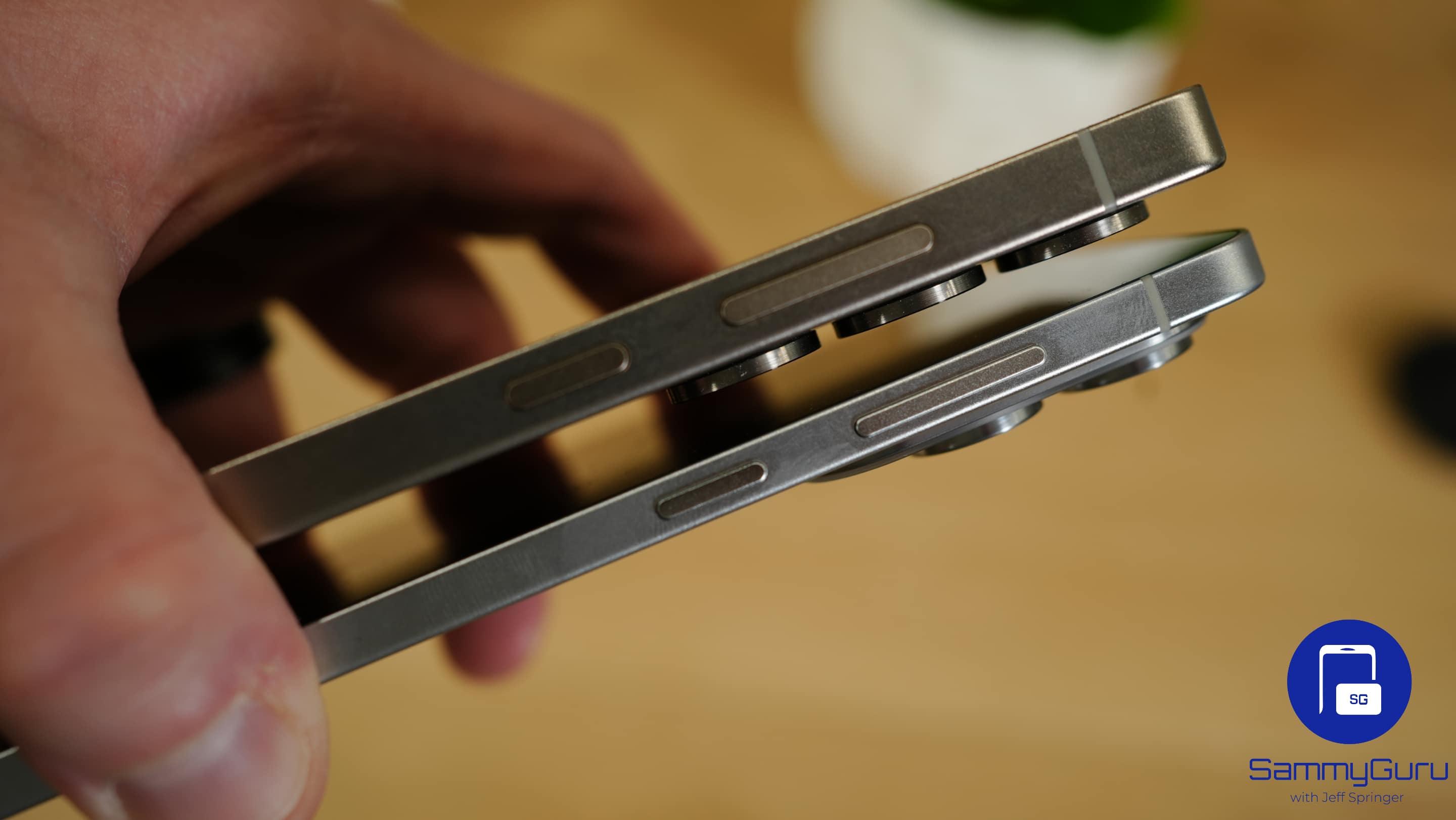
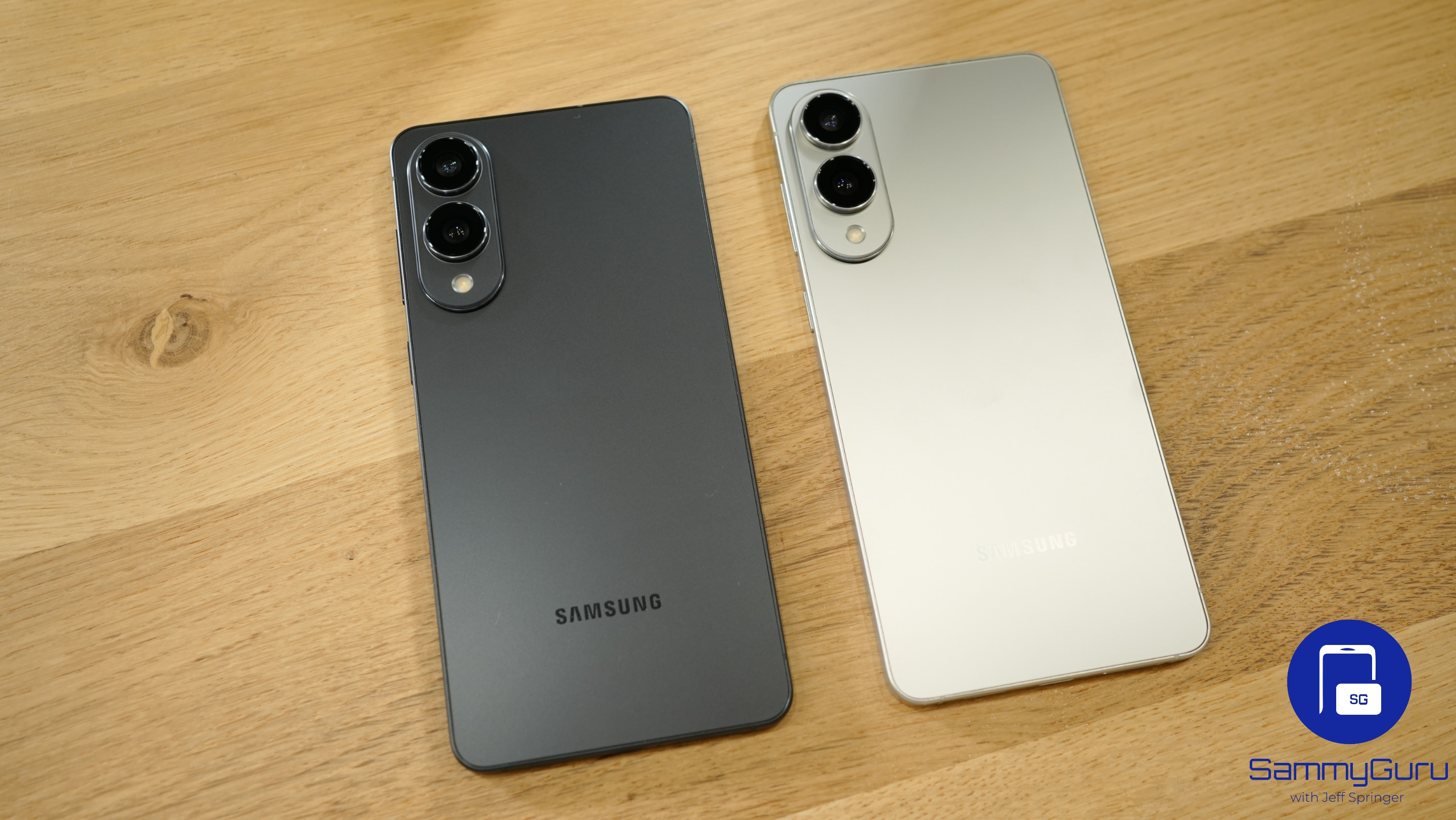
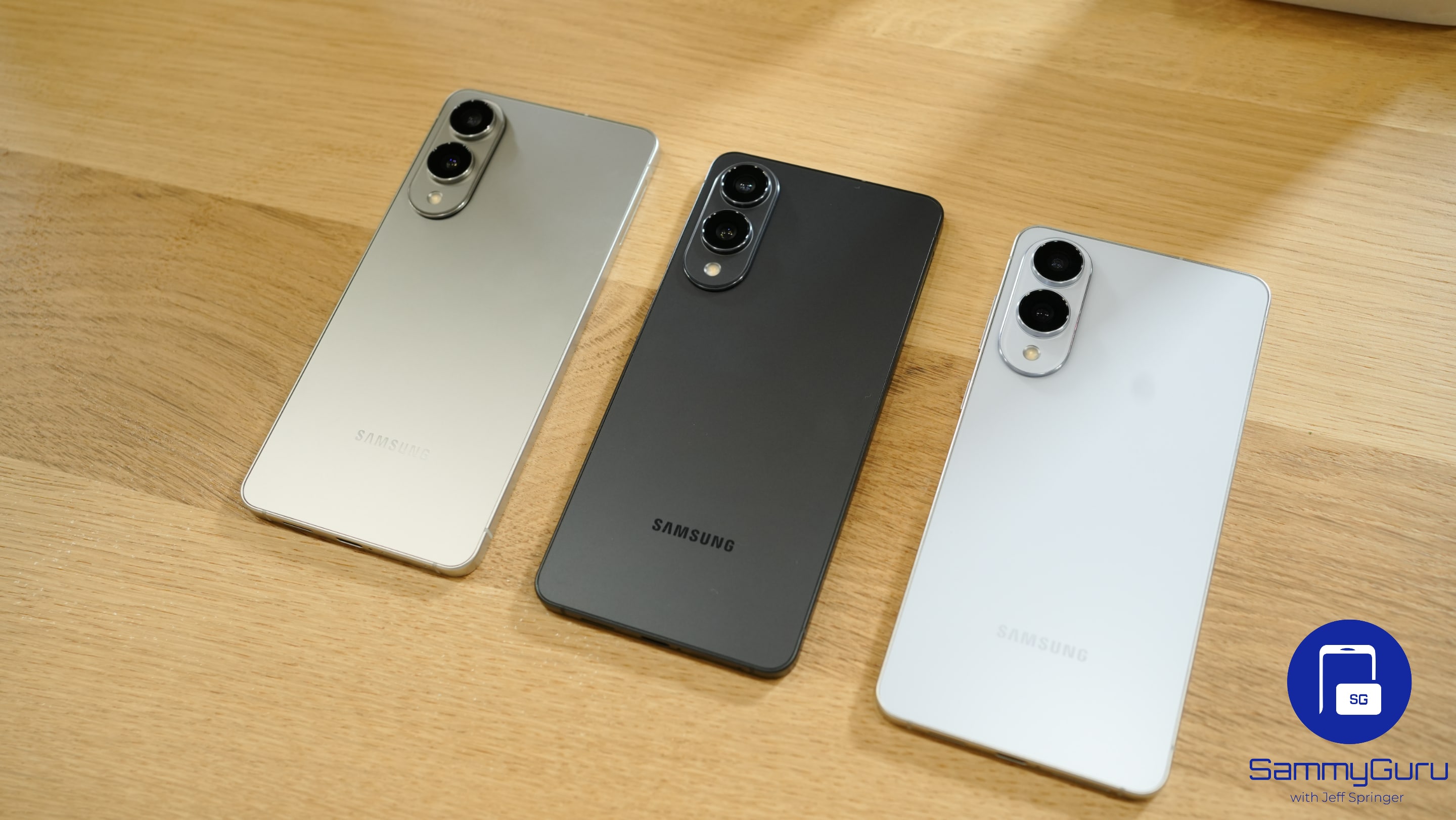
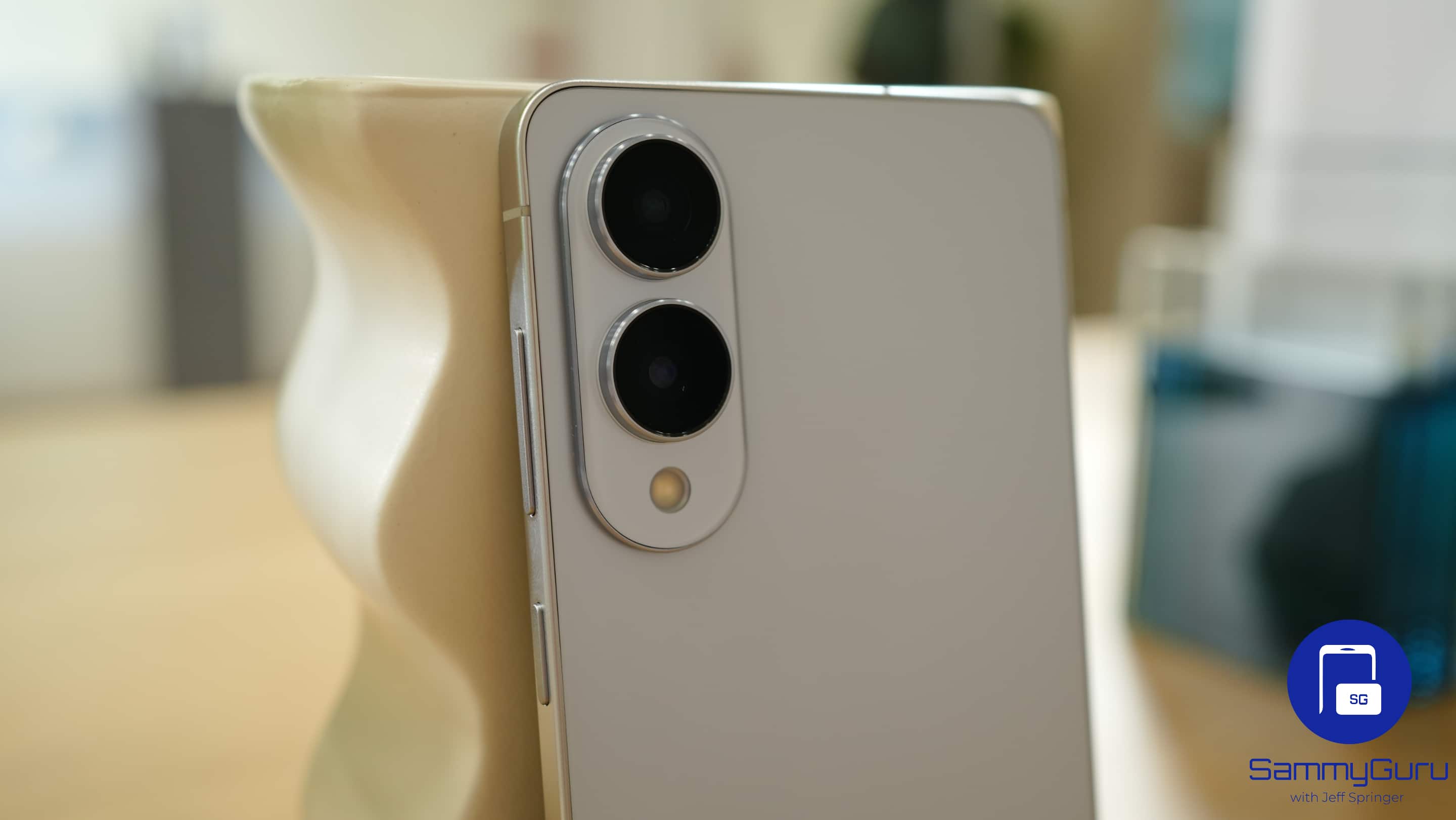
Aesthetically, Samsung kept with the general Galaxy S25 design language in general. One key difference is in the camera module. Owing to the two-camera setup, the S25 Edge has a different look for the camera array. Personally, I find the camera housing on the S25 Edge more elegant than the camera rings on the S25 Ultra. In my view, the S25 Edge excels in the looks department and is the best-looking device in the S25 series.
Build Quality
The S25 Edge isn’t just slim and light, it’s also incredibly durable. The phone feels solid in hand, and there is minimal flex to the device, even under pressure. Samsung managed to retain the titanium frame found on the S25 Ultra, which provides a premium feel. Around front, you get Corning Gorilla Glass Ceramic 2, a new glass ceramic material that fortifies the S25 Edge’s display. Despite the new slim profile, you still get IP68 dust and water resistance as well. The most notable omission in terms of build materials is the anti-glare coating found on the S25 Ultra, which we will discuss more later.
A slimmer device also makes for a more ergonomic experience. It’s much easier to find a comfortable grip. On the other hand, the haptic feedback and vibrations can feel a little hollow at times. I expected this going in due to the extreme thinness, but it doesn’t bother me too much. If you enjoy the hearty haptics on the S25 Ultra, this may give you pause about jumping to the S25 Edge. Overall, the S25 Edge is extremely sturdy and well-built. Any concerns I had about durability going in are unfounded. Samsung did a fantastic job balancing this stunning design with practical safeguards. Of course, you still shouldn’t drop this phone on the ground, it breaks like most others.
Display
Samsung is the king of mobile displays. The S25 Edge continues that trend, but doesn’t bring any massive changes to the tech already found on the S25 series. At least, not on the surface. The S25 Edge features the same 6.7″ QHD panel found on the S25+, with a peak brightness of 2600 nits. In practice, though, the new HOP 3.0 display tech has numerous benefits in such a thin phone. Samsung introduced HOP 3.0 back in January as their own version of LTPO, which allows refresh rate increments of 1.2 and 1.5Hz. There wasn’t much fanfare for the innovation at the time, perhaps because no one understood the key benefits.
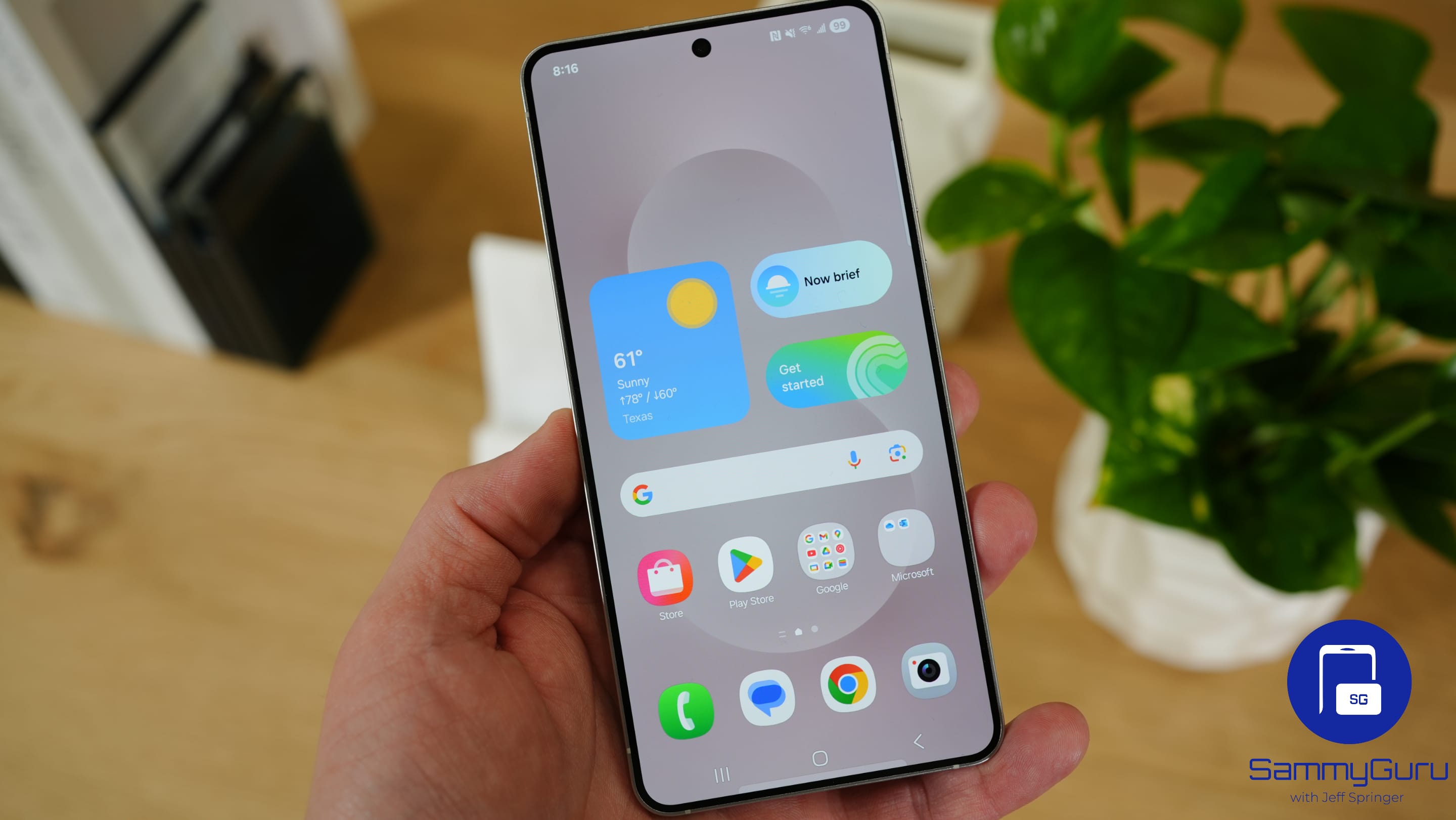
Indeed, the improved efficiency from this new display tech is more pronounced in the S25 Edge. Touch response seems better than my S25 Ultra and S25+, leading to more fluid interaction with One UI elements. One other key benefit of HOP 3.0 is quicker brightness adaptation. The S25 Edge does a much better job of ramping up brightness outdoors and lowering brightness in dark environments. While the specs aren’t much different on paper, the S25 Edge display is superior to the S25+ in numerous ways, including a small advantage in color accuracy.
My only complaint about the S25 Edge display is the lack of the anti-glare coating found on the Galaxy S25 Ultra. While not something you’d miss if you’ve never had it, I’ve grown used to the feature over the past two years. Considering the high price, Samsung should have found a way to add anti-glare here.
Performance & Thermals
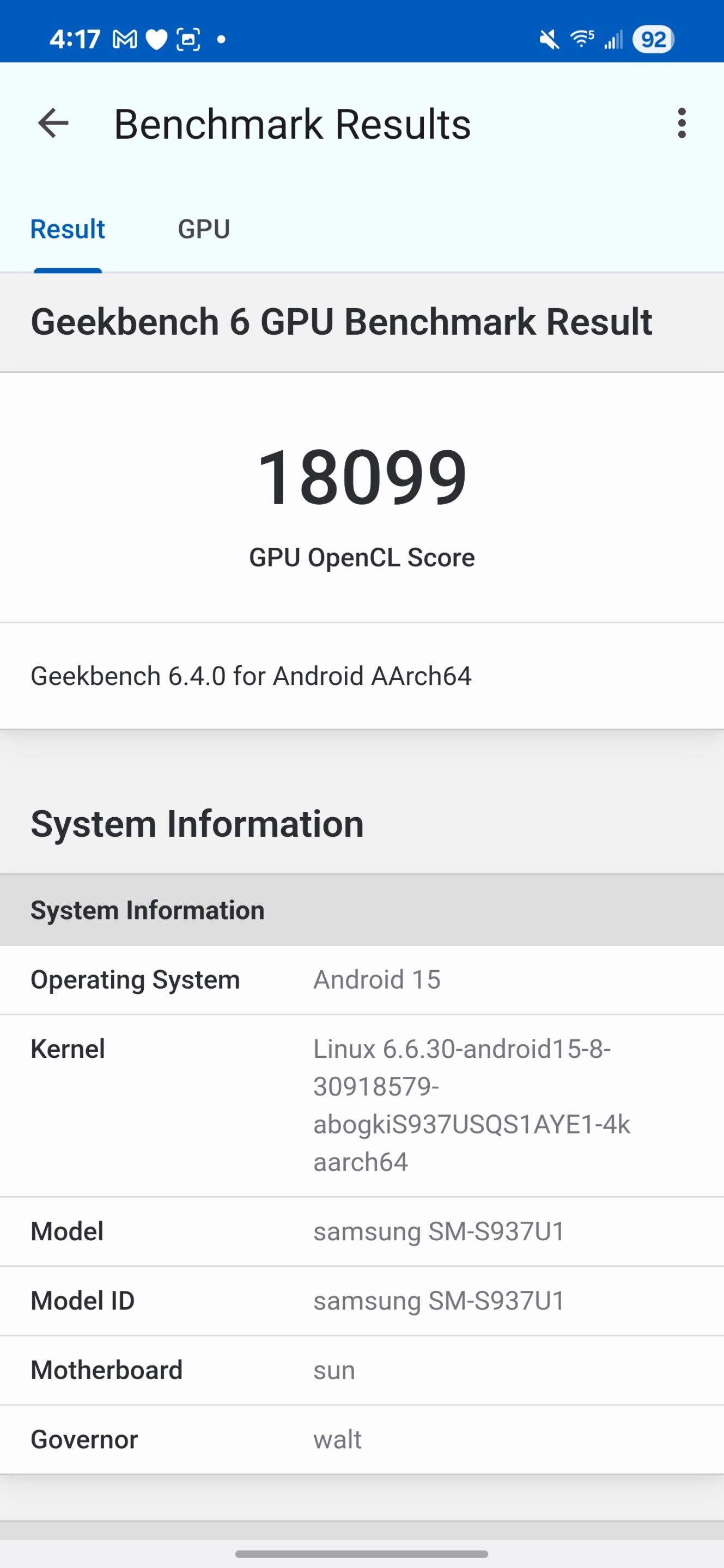
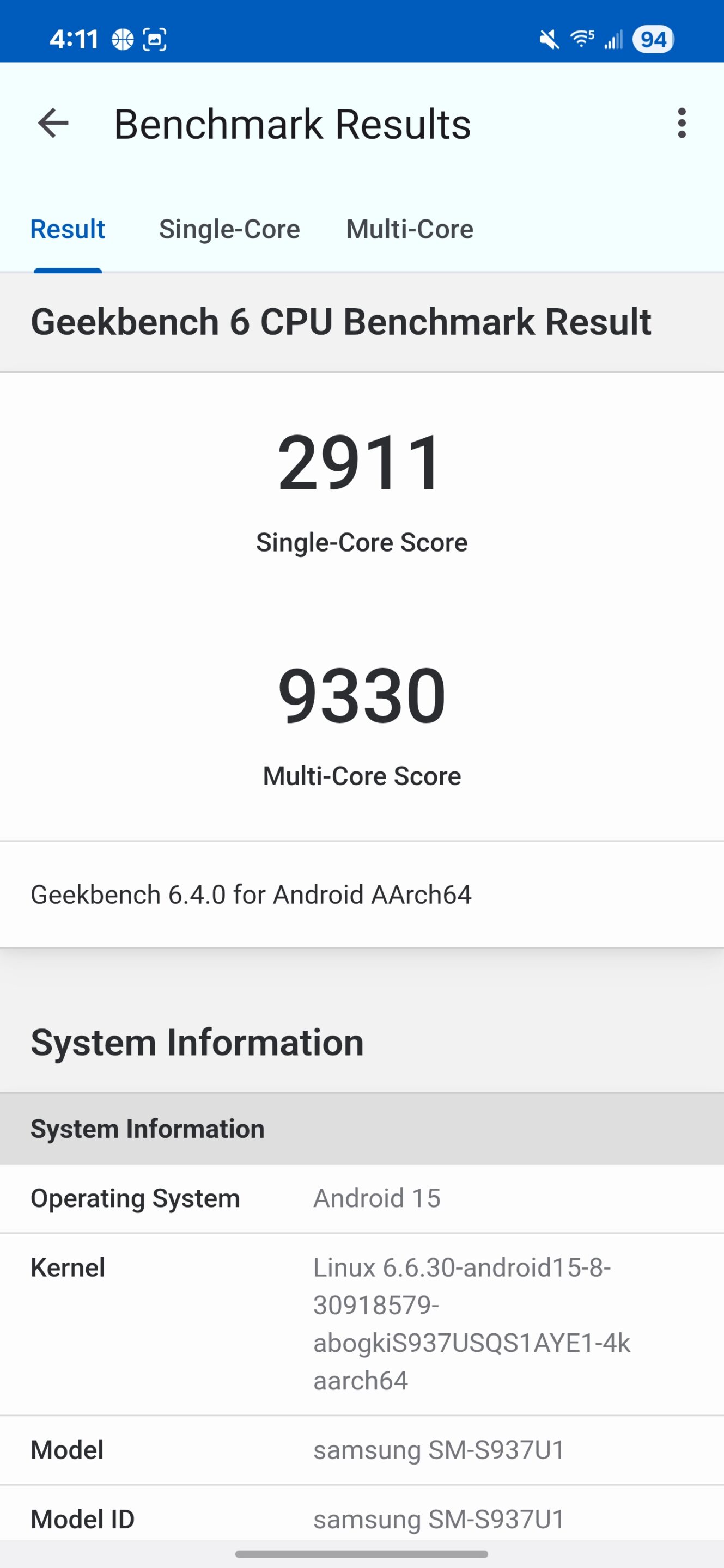
Despite its ultra-thin design, the Galaxy S25 Edge delivers flagship-tier performance in theoretical benchmarks, numbers that closely mirror what we saw in our full review of the S25 Ultra. Both devices share the same processor, so it’s no surprise that the benchmark results are in the same ballpark. On Geekbench 6, the S25 Edge scored 2911 in single-core, 9330 in multi-core, and 18099 in the GPU test—just a few percentage points behind the Ultra’s scores of 2997, 9520, and 18341 ,respectively.
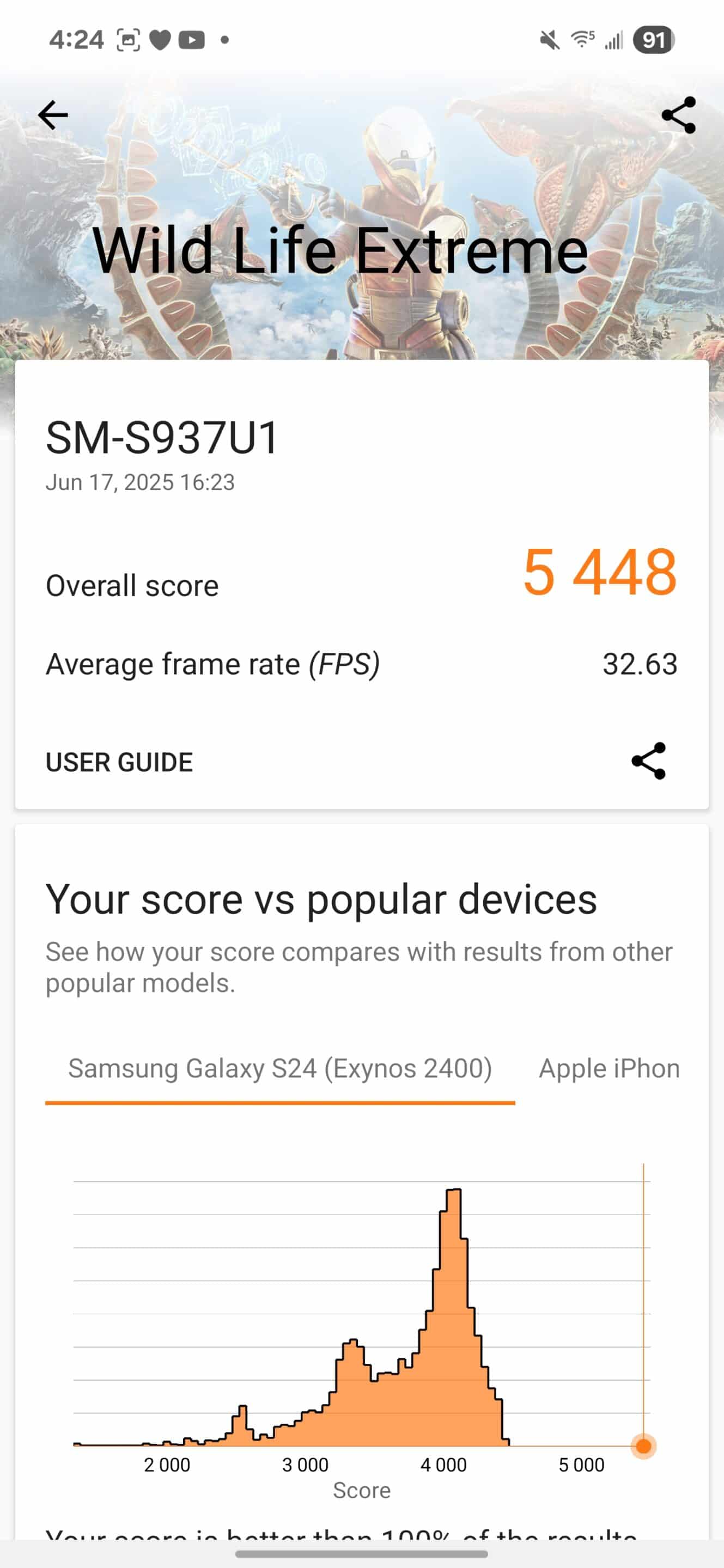
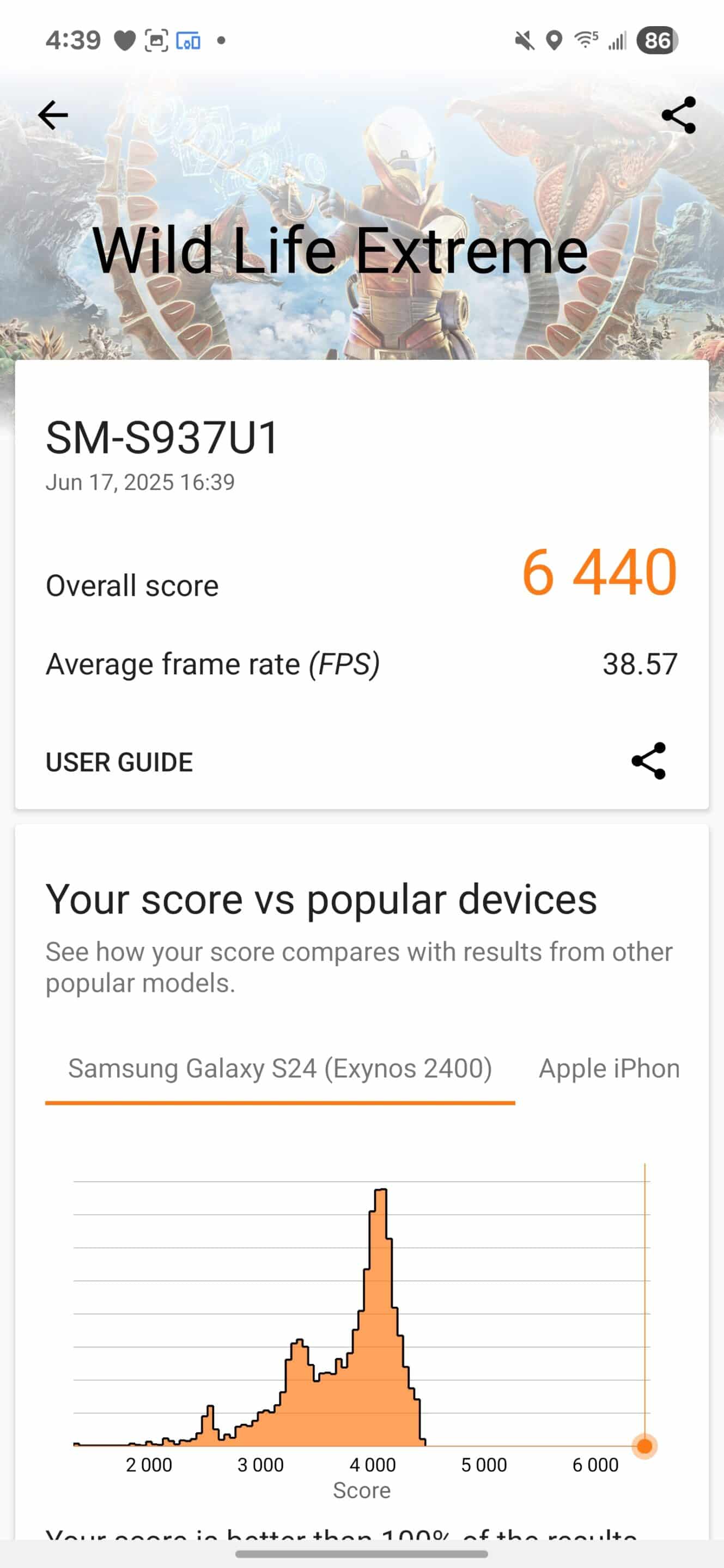
However, where things start to diverge is in thermal performance. Due to its thinner chassis, the S25 Edge doesn’t have as much internal space for heat dissipation, and that limitation shows. In 3DMark’s Wildlife Extreme test, the S25 Edge scored 5448 at room temperature. After a quick 5-minute cool-down in my mini-fridge, the score jumped to 6440—surpassing even the S25 Ultra’s score of 6292. This suggests that the S25 Edge is indeed capable of Ultra-level performance when thermals are under control.
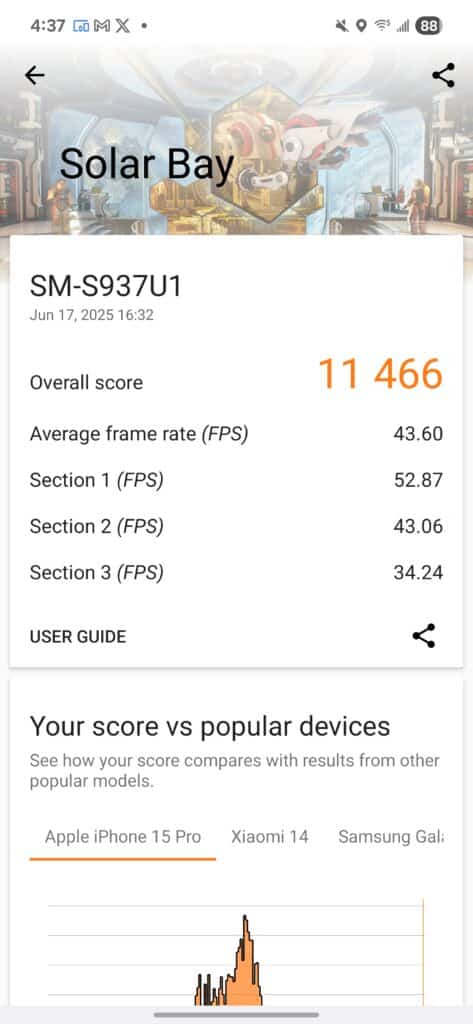
Further supporting this, the S25 Edge achieved a 3DMark Solar Bay score of 11,466, again not far off from the Ultra’s 11,659. But real-world use tells the full story for the average user. In normal day-to-day tasks like browsing, multitasking, or switching between apps, the S25 Edge is incredibly smooth. It handled split-screen and pop-up window multitasking without any hiccups.
Gaming and Day to Day Use
For gamers, though, this is not the ideal smartphone. While short gaming sessions are fine, longer playtime—especially with graphically demanding titles like Riptide GP2—reveals the device’s thermal ceiling. Frame drops and thermal throttling become noticeable, and the phone warms up significantly during extended sessions.
Overall, I’m impressed with how well the S25 Edge performs given its compact thermal envelope. It delivers near-identical benchmark numbers to the S25 Ultra, but if you’re a hardcore mobile gamer or someone pushing performance to the edge (no pun intended), you’ll want to be aware of the thermal trade-offs that come with this sleek profile.
Speakers and Audio Quality
Going into this review, I didn’t expect much out of the S25 Edge in terms of speaker quality. With such a thin profile, it only made sense that depth of sound would suffer. However, I was pleasantly surprised with what Samsung has accomplished here.
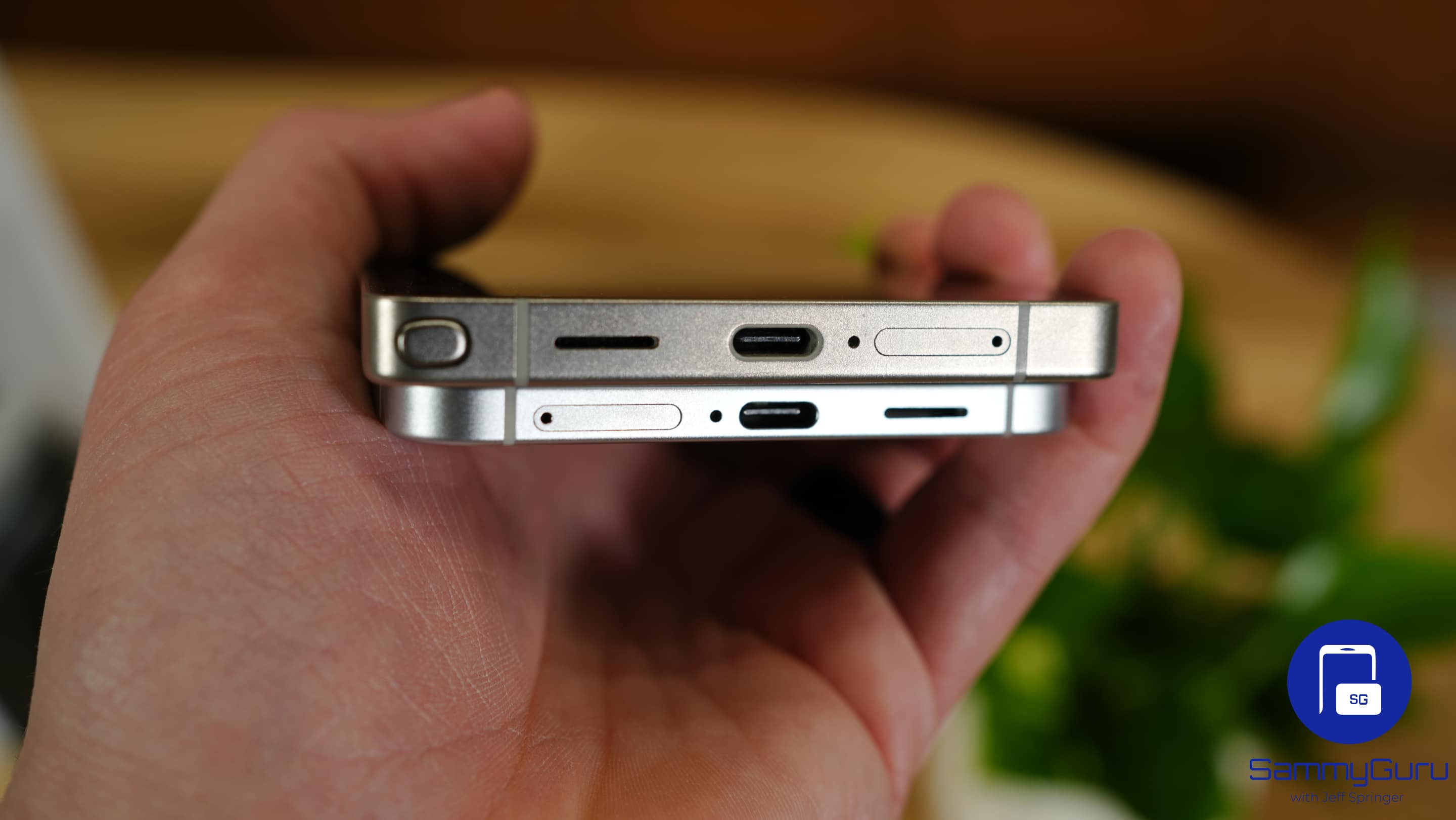
The S25 Edge has a stereo speaker setup, utilizing the earpiece along with the bottom-firing speaker to achieve the stereo experience. Despite the thin chassis, the S25 Edge speakers get plenty loud with a solid amount of bass. Given, the volume and bass aren’t on par with the S25 Ultra or even the S25+. but still better than I expected. I wouldn’t recommend listening to music on these speakers, but for gaming and watching YouTube videos it’s absolutely fine. If you notice the sound profile to be a bit flat, enabling Dolby Atmos makes a world of difference on the S25 Edge.
Call quality was excellent in my time using the device as my daily driver. The S25 Edge also comes with all of the important Bluetooth codecs (just like its siblings). Given the flatter speaker sound, a quality pair of wireless buds is the way to go when listening to music. You also have Auracast functionality built-in with One UI 7, with the ability to listen to nearby broadcasts. I really hope Auracast catches on in the coming years with more widespread adoption. It’s an excellent idea on paper.
Camera Performance
The Galaxy S25 Edge makes a clear trade-off in the camera department, opting for a dual-camera setup to maintain its impressively slim profile. While this means you’ll miss out on an optical zoom lens found on the S25+ and S25 Ultra, Samsung has done an admirable job compensating with software enhancements and sensor quality.
On the back, you’ll find a 200MP main sensor and a 12MP ultrawide, with all zooming handled digitally through the primary lens. While the lack of a dedicated telephoto is a technical limitation, the results are far better than expected. The 4x digital crop from the main sensor is shockingly good—close in quality to the S25 Ultra’s 5x optical zoom in well-lit conditions, and in some low-light shots, the Edge’s cropped zoom actually looks sharper. It’s a testament to Samsung’s computational photography improvements here.
Macro shots also shine on the S25 Edge, with the dedicated Macro Mode preserving impressive detail in close-ups. Selfies taken with the 12MP front camera look clean and natural, though I didn’t notice a big leap from the S25 Ultra in this area.































Interestingly, the main camera here might even have an edge over the Ultra in specific low-light scenarios. Despite using the same 200MP sensor, the S25 Edge seems to benefit from slightly tweaked processing, producing sharper and more balanced low-light shots in my testing. For photography enthusiasts, this could be a pleasant surprise.
Video performance is similarly strong. The Galaxy S25 Edge actually outperforms the Ultra in color accuracy and exposure control during low-light video capture. Stabilization is solid, and results across 4K and 8K modes are dependable.
Camera Housing and Software
Physically, the camera bump is more noticeable than on the S25+ or Ultra—it protrudes more prominently from the slim frame, creating some wobble when placed flat on a table without a case. It’s a minor design drawback, but something to consider.
That said, the One UI 7 camera app is a joy to use. It’s clean, intuitive, and offers direct access to Pro Photo, Pro Video, and Expert RAW modes. Everything is just a swipe away.
In short, while the S25 Edge lacks optical zoom, it doesn’t lack camera performance. For most users, this camera system is more than capable, and in some ways, it even challenges its more expensive sibling.
Battery Life
If there’s one area where the Galaxy S25 Edge falls flat, it’s battery life. Samsung engineered the S25 Edge with a higher-density 3900 mAh battery. Despite their attempts, this cell simply isn’t enough for a modern flagship, especially one pushing this level of performance and display resolution. In my daily use, starting around 8 AM, I consistently found myself needing a top-up by mid-afternoon. On most days, I had to plug in around 3 to 4 PM just to make it through to midnight. That’s far from ideal.
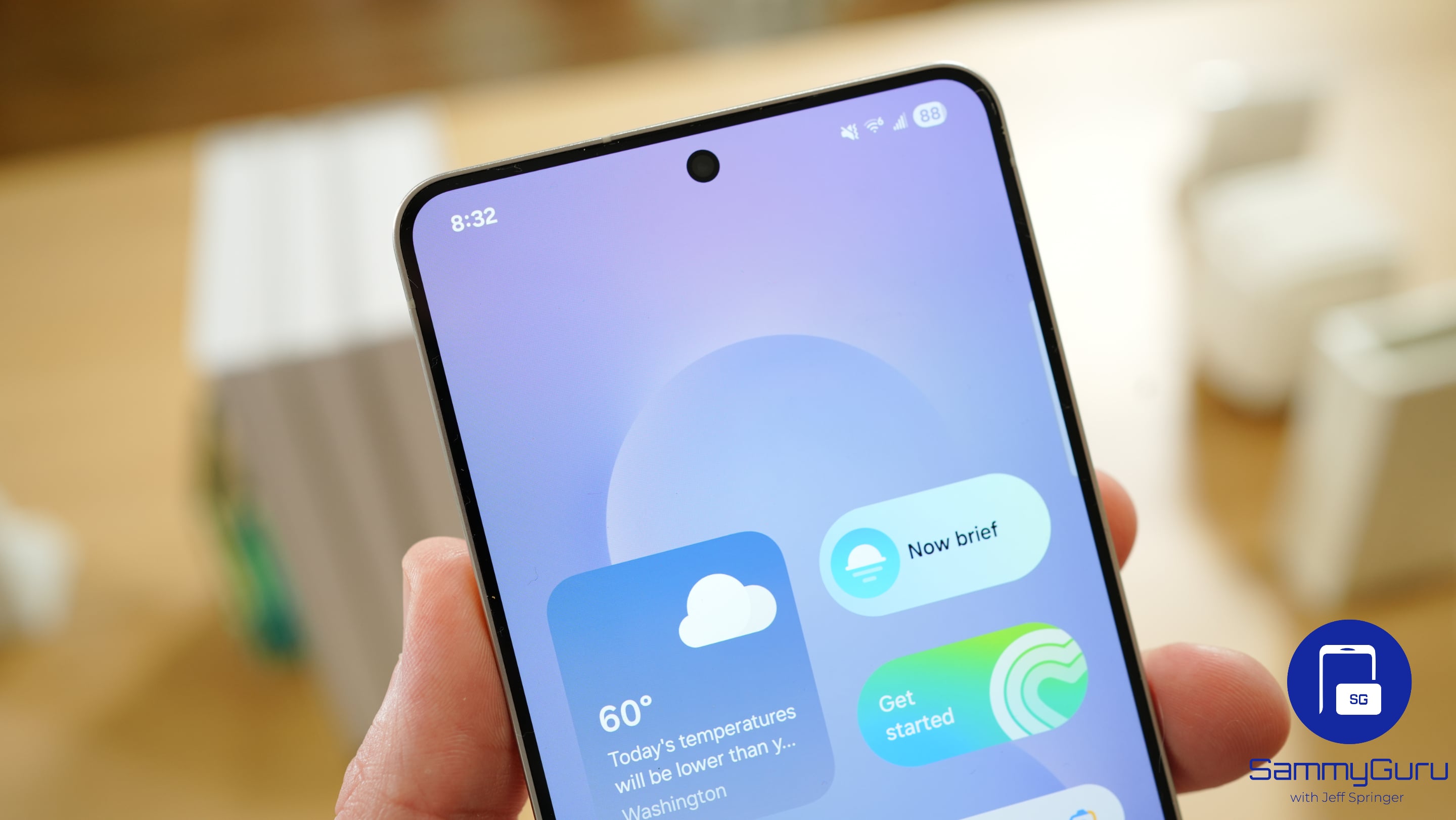
Average screen-on time landed between 4 to 4.5 hours per charge, which is noticeably less than what I’ve seen from the S25+ and S25 Ultra. Compared to the Galaxy S25 Ultra, I lost around 2 full hours of screen-on time. Even the standard S25+ outpaced the Edge by a solid 1 to 1.5 hours in similar mixed-use scenarios.
To make matters worse, Samsung stuck with 25W wired charging here, well behind the 45W offered on the Ultra model, and a far cry from what we’re seeing in the Android space overall. With a battery this small, faster charging could’ve been a saving grace—but that opportunity was missed.
Hopefully, Samsung explores new battery tech for the S26 Edge (if there is such a thing). There’s already talk of silicon carbide-based batteries making their way into the S series in 2026, which could offer significantly better energy density and efficiency. That improvement can’t come soon enough for the Edge.
Conclusion
The Galaxy S25 Edge isn’t trying to be the most powerful phone in Samsung’s lineup, and that’s okay. This device is built for general users who prioritize comfort and convenience over brute strength. If you don’t need all-day battery life or you spend most of your day near a charger, the S25 Edge delivers a sleek experience in a truly refined form factor. Power users, gamers, and multitaskers will still be better off with the Galaxy S25 Ultra, and those who just want a larger phone with better endurance should seriously consider the S25+.
Still, there’s something refreshing about the direction Samsung is taking here. The S25 Edge is incredibly thin, light, and durable, and using it daily made me question whether I really need the Ultra as my go-to device, or even whether the S Pen is a necessity at all. With tablets like the affordable Tab S10 FE on the market, it might make more sense to offload stylus-heavy tasks to a device that isn’t living in your pocket all day.
All things considered, the S25 Edge is a solid first step in Samsung’s quest to build a thin and light flagship. It’s not perfect—battery life needs real improvement, the display could benefit from an anti-glare coating, and thermal management still lags behind expectations. But if Samsung can address these shortcomings in the next iteration, they might just redefine what we expect from a lightweight flagship or even a flagship period. If you’re feeling Samsung’s streamlined flagship, you can pick one up directly from their online shop.

Written by
Jeff SpringerJeff Springer is the Founder and Managing Editor at SammyGuru. Pursuing his passion for mobile tech, he started covering Samsung and Android on his Youtube channel in 2014 and continues to post daily Samsung tutorial videos. As a past staff writer at XDA Developers and Android Police, Jeff has a wealth of experience managing written content as well. In 2023, Jeff started SammyGuru to offer a different type of Samsung news site. He firmly believes that providing great value to readers is the core mission of our coverage. Jeff lives in Phoenix, AZ with his wife and two kids. In his small amount of free time, he collects fountain pens, stationery, and Pokémon cards.

Follow us on Google Discover & set us as a preferred source in Google News
Share this Post
___________________________


New Blog Posts
___________________________
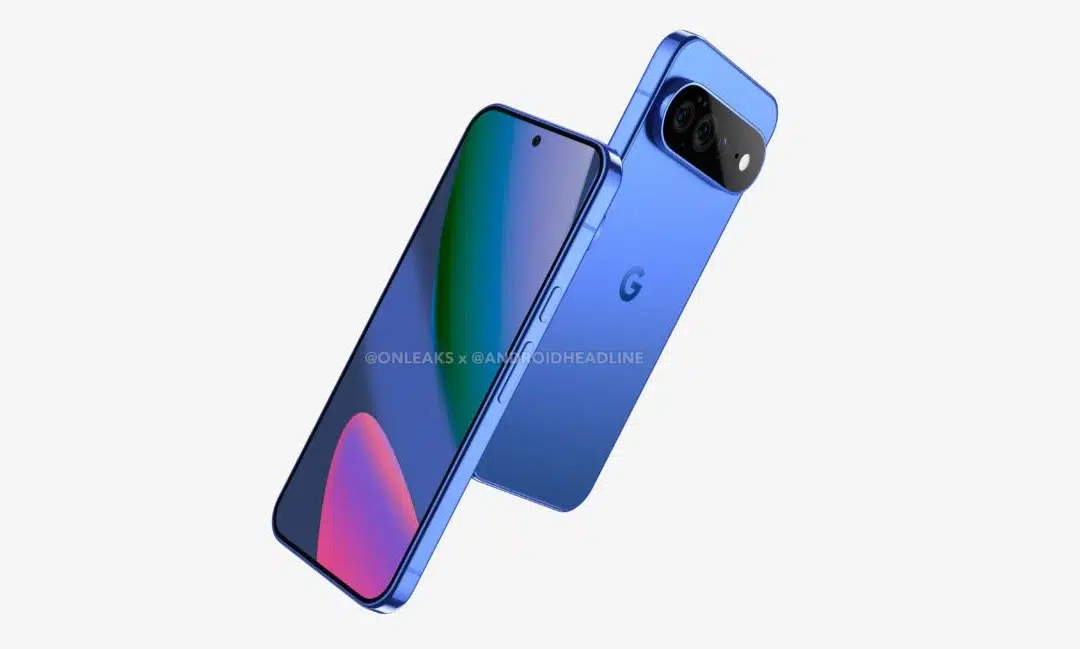
First Set of Pixel 11 Pro XL Renders Are Here
Pixel 11 Pro XL CAD renders show minimal design changes
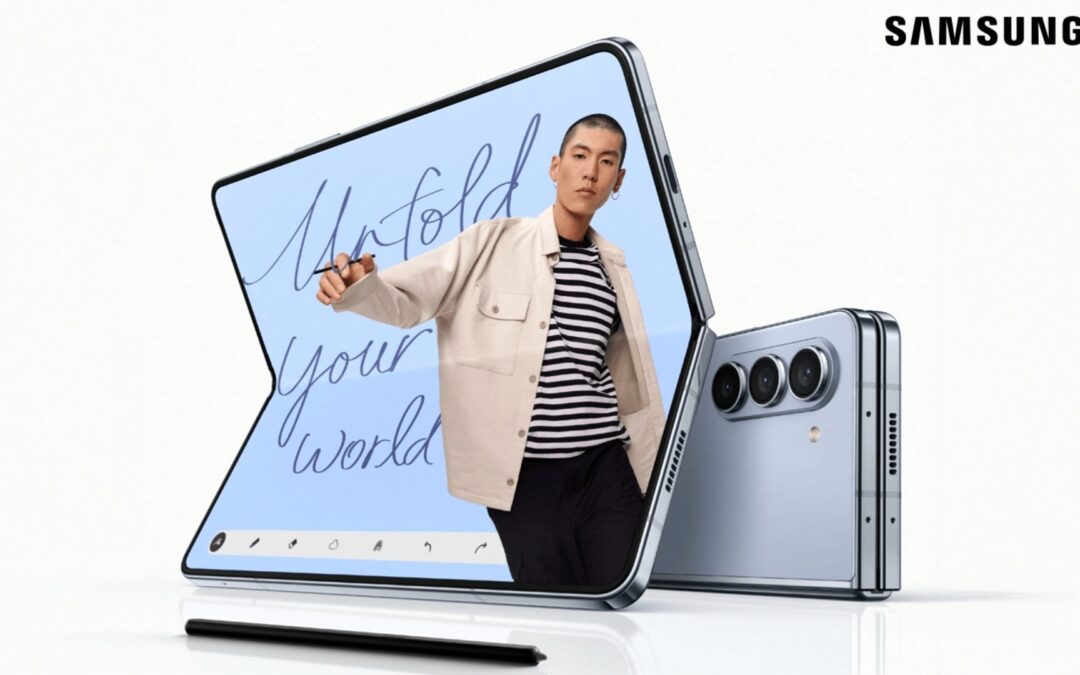
Is Samsung Preparing One UI 8.5 Beta for Galaxy Z Fold 5 and Flip 5?
Samsung may launch a One UI 8.5 beta program for its 2023 foldables
Galaxy S25 One UI 8.5 Beta May Run Longer Than Expected
Galaxy S25 series’ One UI 8.5 beta may stretch to 10 rounds