Understanding Smartphone Photography Chain – Part 1: Video Formats
SammyGuru is reader-supported. We have affiliate and sponsored partnerships, so we may earn a commission when you buy through links on our site — at no extra cost to you. Learn more.
In this article
- Smartphone photography is more than megapixels
- Codec Architecture: Interframe vs Intraframe Compression
- ProRes and High Bitrate HEVC in Professional Smartphone Video
- ProRes RAW: Earlier in the Imaging Pipeline
- APV: Samsung’s Open Intraframe Architecture An Android Video Game Changer
- Log Recording, Bit Depth, and Compression Integrity
- Why This Is Bigger Than a Spec Comparison
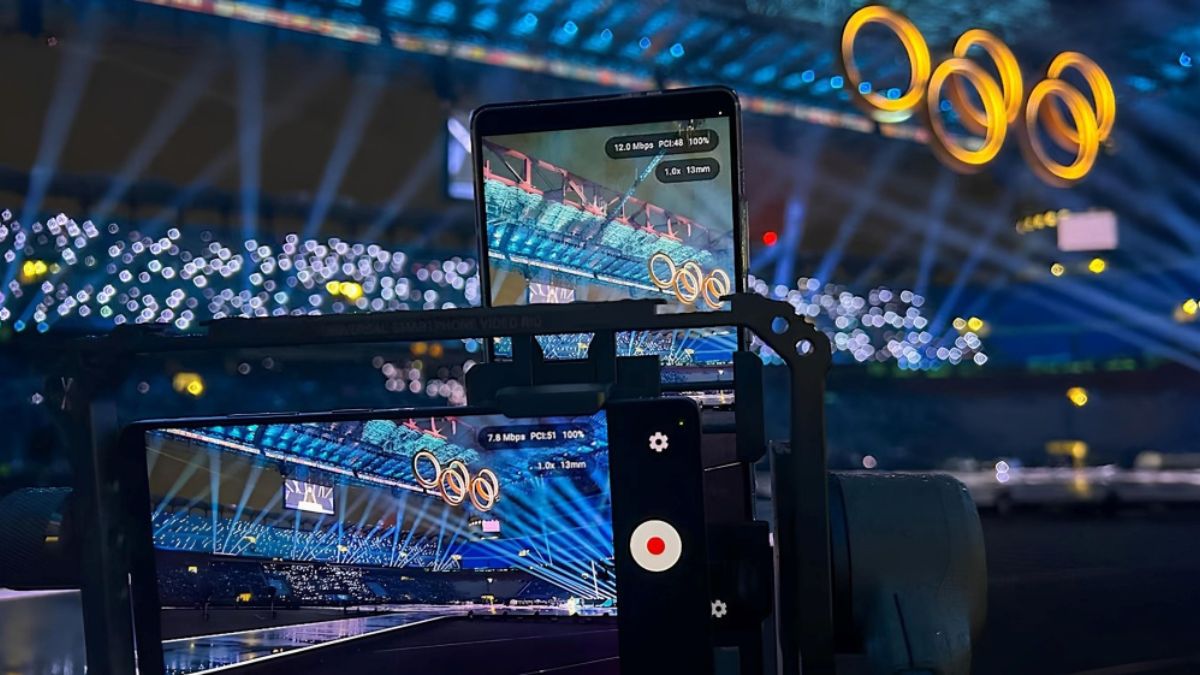
While we wait for Galaxy Unpacked, this is the right moment to step back and examine something most discussions ignore: the Smartphone Photography Chain. We will start with the structure of the video imaging pipeline. We will look beyond specs and into the compression architecture that defines different video formats, like HEVC, ProRes, ProRes RAW, and APV.
Smartphone photography is more than megapixels
Smartphone photography does not begin with megapixels. And it does not end with dynamic range claims. It begins when the sensor captures photons. It ends only after the encoded file survives compression, editing, rendering, platform upload, and display tone mapping. Between capture and delivery lies the real determinant of quality: processing and encoding.
The Smartphone Video Imaging Pipeline Includes:
- Format (Photo & Video) — structure, compression philosophy, container design.
- Video Compression Architecture — interframe vs intraframe encoding behavior.
- Editing Pipeline & Platform Compatibility — decoding stability, grading tolerance, workflow integration.
- Social Media Compression — recompression, bitrate reduction, metadata stripping.
- HDR Format, Chroma Subsampling & Storage Bandwidth — color precision, tonal resolution, throughput ceilings.
- Thermal Behavior — sustained encoder performance, bitrate consistency over time.
- Sensor Design & Lens Characteristics — optical foundation, photon capture, physical constraints (Briefly introduced in the Zoom Telephoto Battle 2026).
- ISP, NPU & Neural Processing — noise reduction, tone mapping, sharpening, computational rendering (Previously outlined in the same analysis).
Each layer shapes the outcome of professional smartphone video. This series dissects every stage independently, not to decide what looks better, but to understand why it looks that way. We will begin with video formats. Because format is where raw image data becomes a file. And once data is compressed, it can never be fully recovered.
Codec Architecture: Interframe vs Intraframe Compression
Modern smartphones rely on two compression philosophies that define mobile video codecs. Interframe codecs, such as HEVC, analyze motion across frames. They store keyframes and encode the changes between them using prediction and motion vectors. The result is high efficiency, smaller files, and delivery-friendly compression.
However, frames become dependent on one another. Under heavy grading or exposure recovery, artifacts can propagate — macroblocking, temporal instability, texture collapse — especially when bitrate allocation is limited.
By contrast, intraframe codecs encode each frame independently. Since every frame is self-contained, file sizes increase. However, timeline scrubbing becomes smoother, color grading is more stable, and compression damage does not cascade across frames.
Both Apple and Samsung rely heavily on HEVC for mainstream recording, but with a slight tweak. The difference is not the codec name. It is bitrate philosophy, encoder tuning, and feature exposure within the broader video compression architecture.
On Samsung devices, HEVC enables HDR, HDR10+, Log recording, and higher bitrate modes. High Bitrate options are available only when HEVC is selected. H.264, by contrast, does not support HDR, Log, or high bitrate configurations. It remains limited to standard dynamic range workflows and lower data ceilings, primarily for compatibility.
Samsung flagships allow High Bitrate modes that significantly increase data allocation, especially in demanding scenarios like 4K60 capture.
Apple iPhones, meanwhile, apply tightly controlled dynamic bitrate management. Allocation is consistent, automated, and rarely exposed for manual override. The distinction is philosophical:
Samsung gives the option to push bitrate higher.
Apple optimizes allocation behavior automatically.
At comparable HEVC bitrates, both can produce excellent 4K video. Visible differences are shaped not only by bitrate, but by:
- Noise reduction strategy before encoding
- Sharpening intensity
- HDR tone mapping decisions
- Color science and contrast curves
Bitrate matters. But processing philosophy matters just as much.
ProRes and High Bitrate HEVC in Professional Smartphone Video
Apple differentiates itself with ProRes. On supported iPhone Pro models, ProRes operates at significantly higher data rates than standard HEVC and uses intraframe compression.
The advantage is not simply “more bitrate.” It is structural integrity within the editing pipeline. Because frames are independent, aggressive color grading, exposure recovery, and LUT application retain stability with fewer artifacts. The cost is storage. One minute of high-resolution ProRes can consume multiple gigabytes.
Samsung historically focused on pushing HEVC efficiency upward — balancing quality with practical file size. High Bitrate HEVC narrows the visible gap under normal conditions. But under extreme grading or compositing workflows, intraframe formats maintain structural advantages.
This is not a quality war. It is a workflow distinction inside the smartphone video imaging pipeline.
ProRes RAW: Earlier in the Imaging Pipeline
Recent iPhone Pro models expand further with ProRes RAW. Unlike ProRes (which records processed video), ProRes RAW captures 12-bit minimally processed sensor data before full demosaic and tone mapping, often in a 4:3 open-gate format. This represents an earlier stage in the video imaging pipeline.
Instead of encoding a fully processed YUV image, ProRes RAW preserves early-stage sensor output before complete ISP interpretation. White balance adjustments, highlight recovery, and tonal shaping retain deeper flexibility in post-production.
However, file sizes increase significantly. Workflow complexity also increases, with processing responsibility shifting from device to editor. It is not simply higher quality. It is earlier in the pipeline.
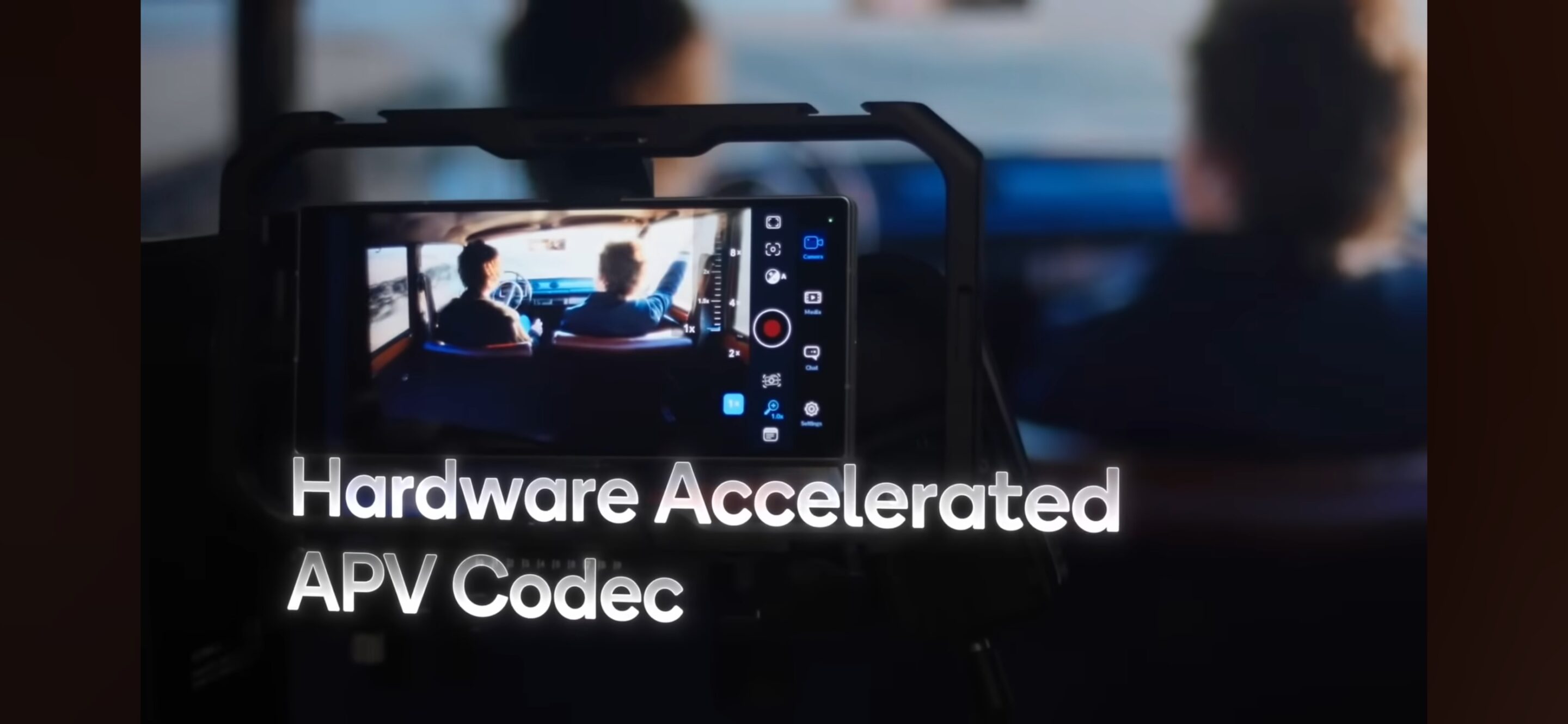
APV: Samsung’s Open Intraframe Architecture An Android Video Game Changer
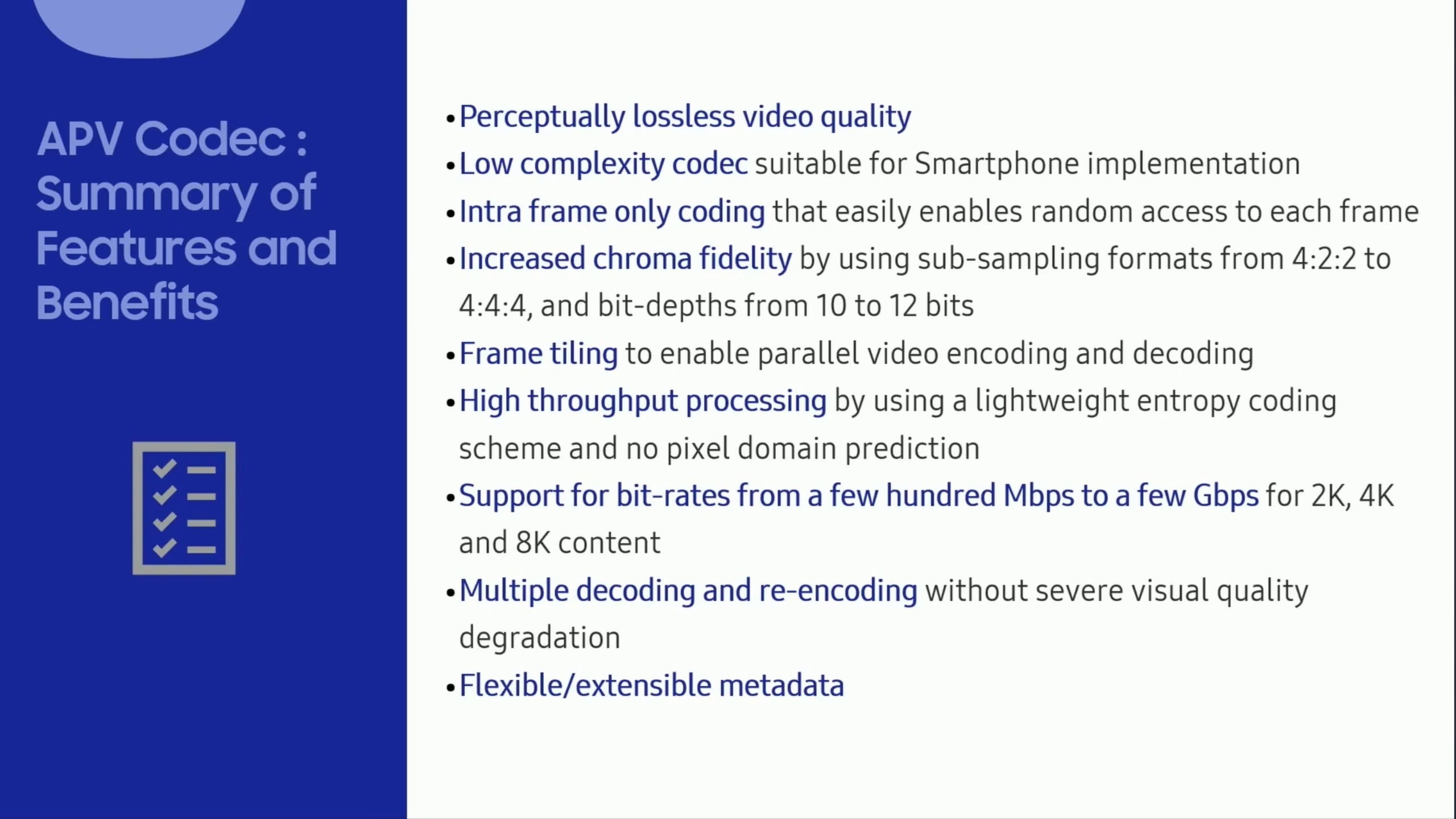
Samsung’s Advanced Professional Video (APV) codec signals a strategic shift in mobile video codecs. APV is an intraframe codec designed for professional workflows. It supports:
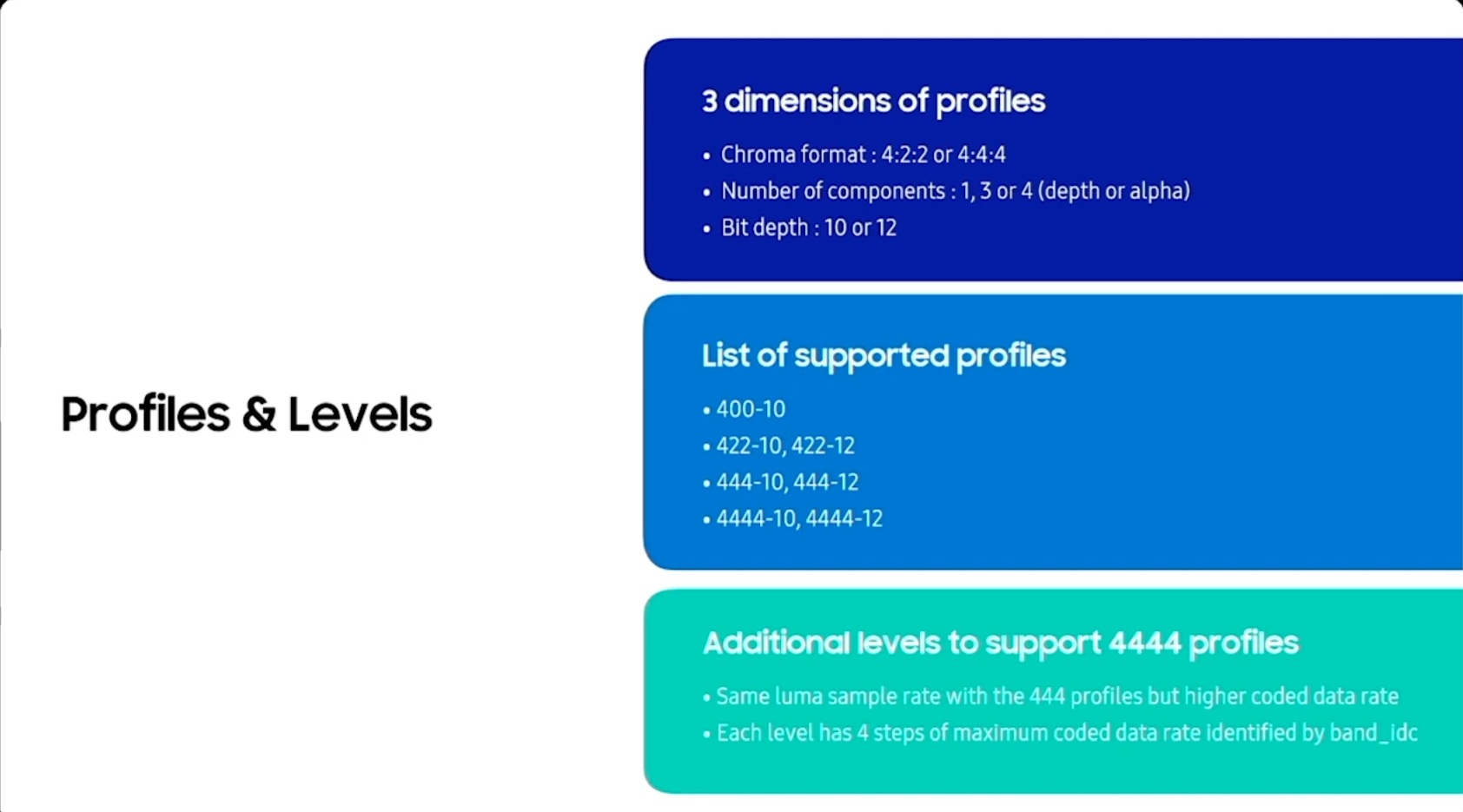
- 10-bit and 12-bit configurations
- Chroma subsampling up to 4:4:4 (depending on implementation)
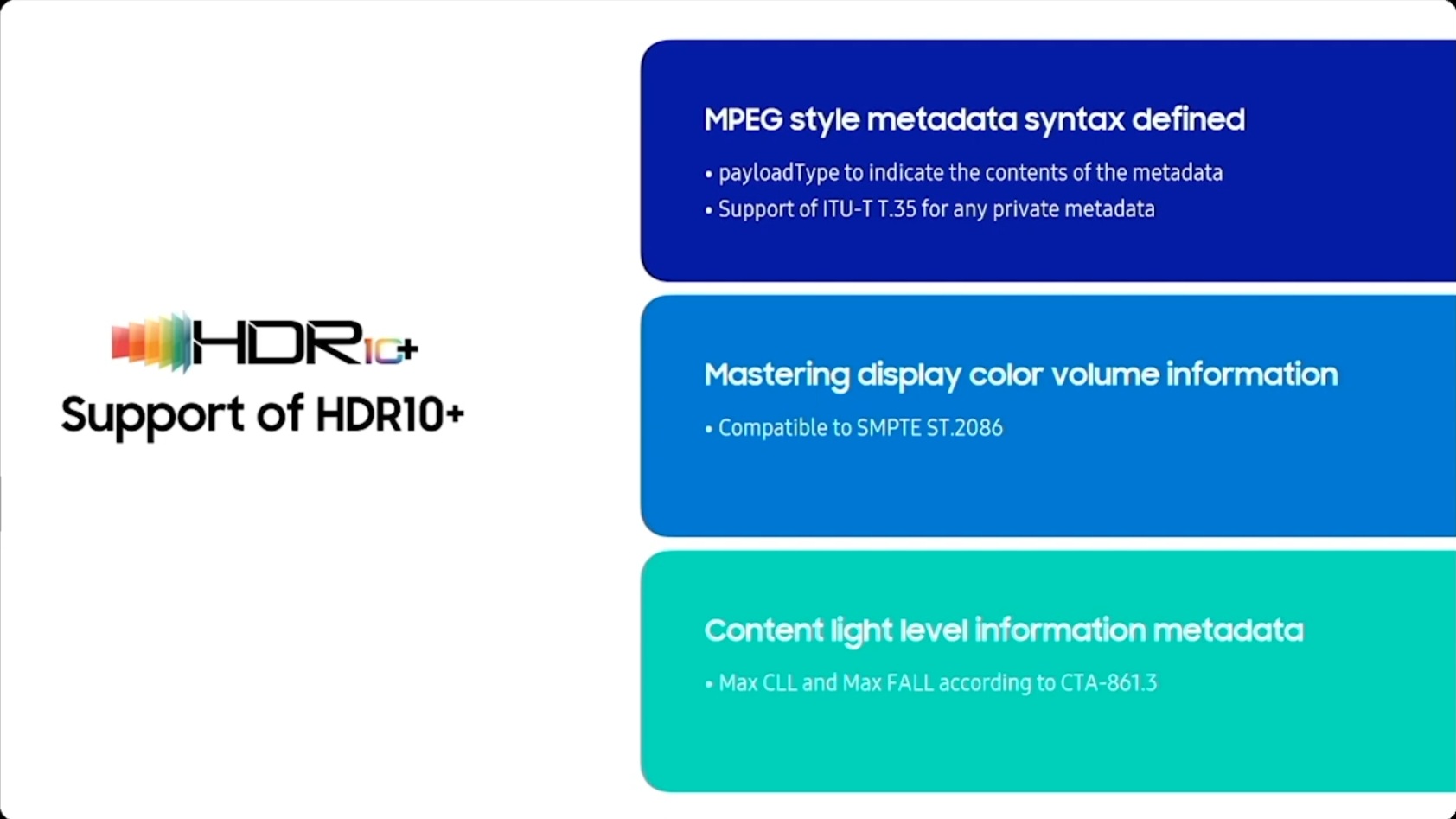
- HDR10+ metadata
- Scalable bitrates toward gigabit-class ranges
- Parallel encoding structures optimized for mobile efficiency
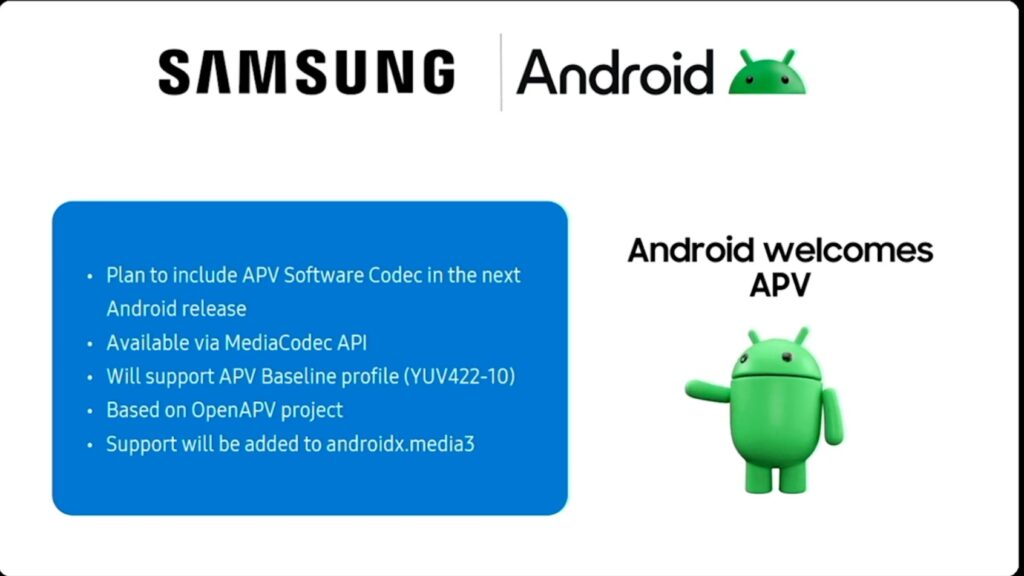
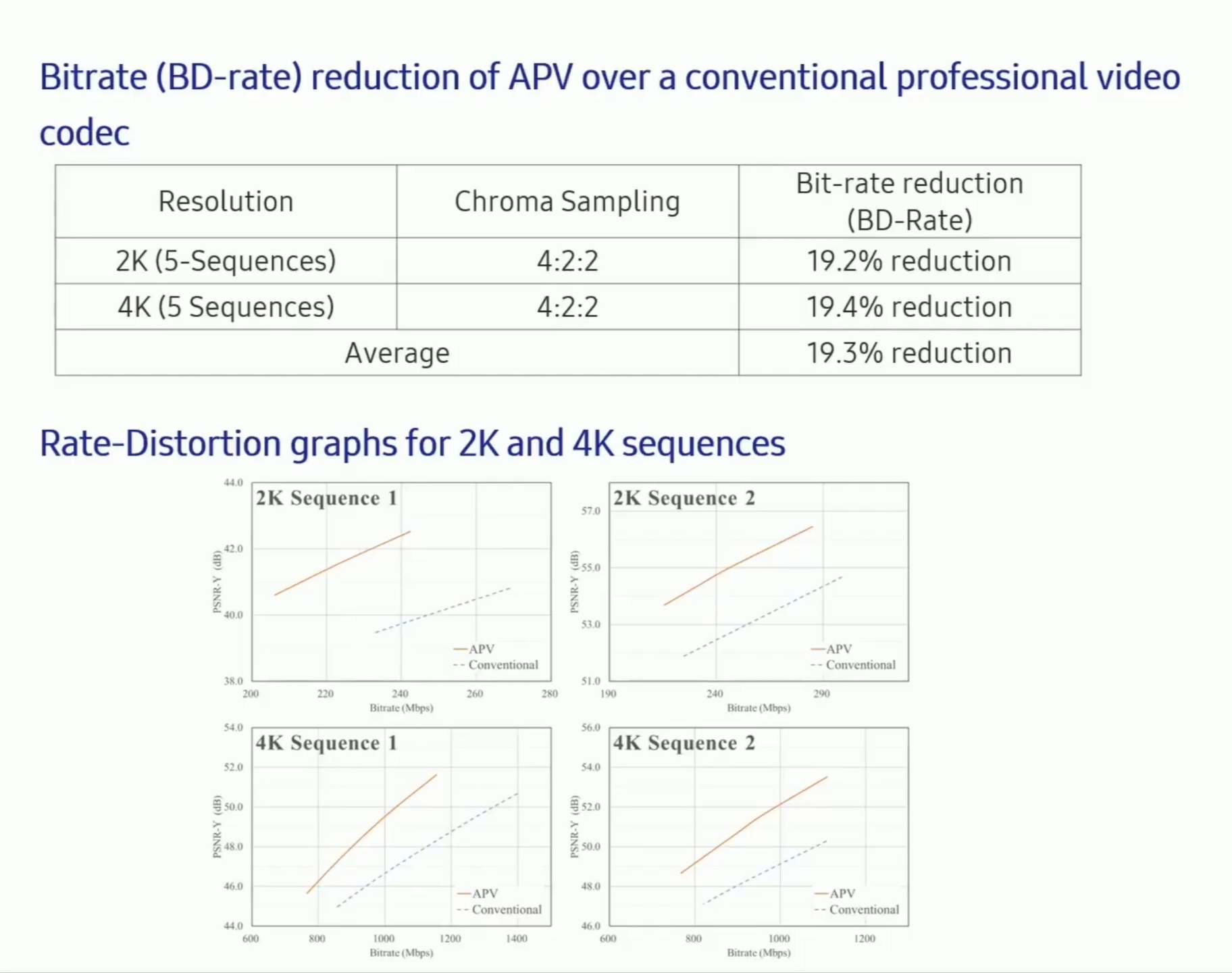
Unlike HEVC, APV is not delivery-oriented. It is designed as an intermediate format — conceptually comparable to ProRes. However, APV records a fully processed image after ISP decisions. It preserves maximum precision at the video stage — not at the raw sensor stage. Where ProRes RAW captures before heavy processing, APV captures after processing but with high chroma fidelity, high bit depth, and intraframe stability.
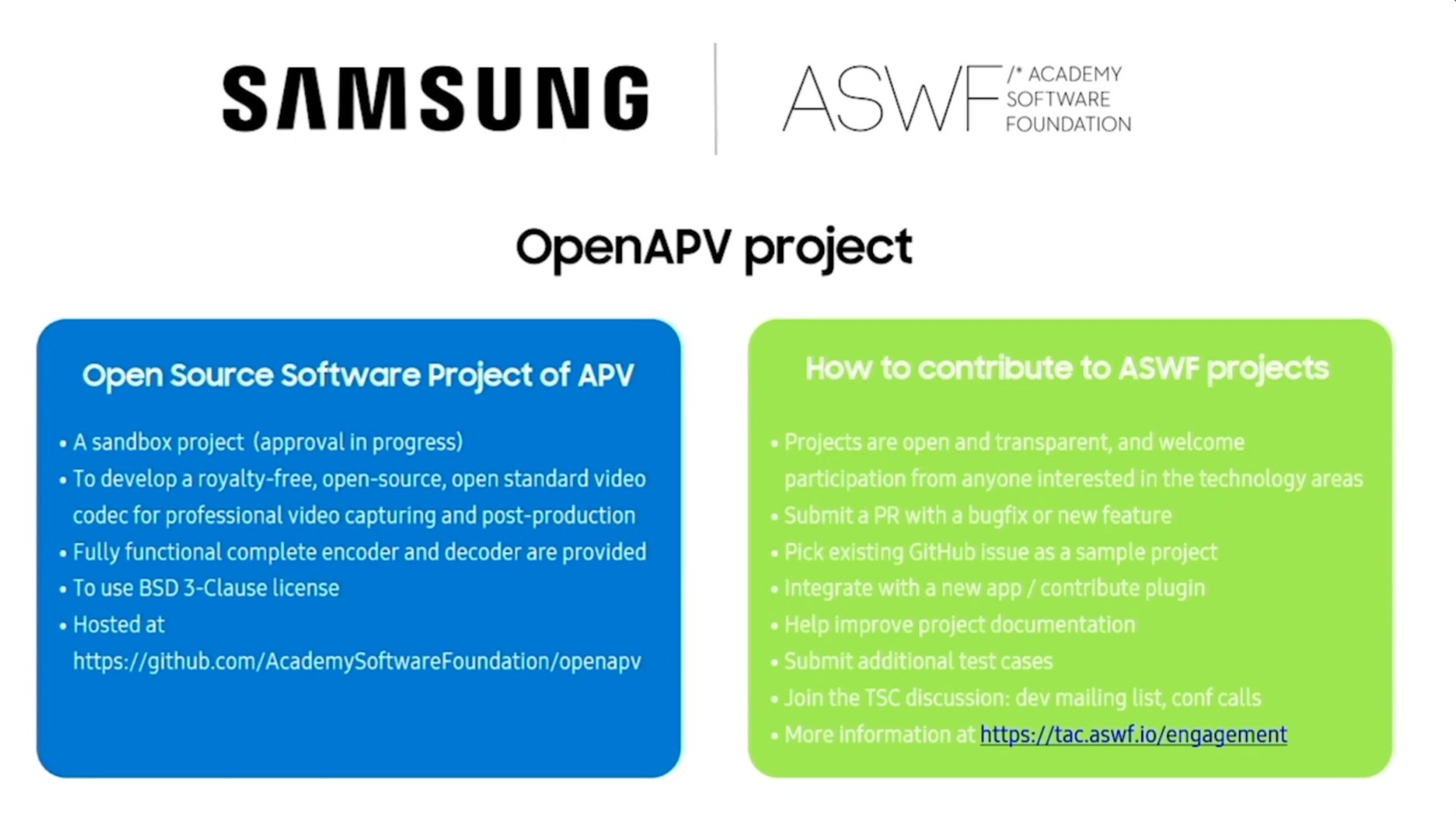
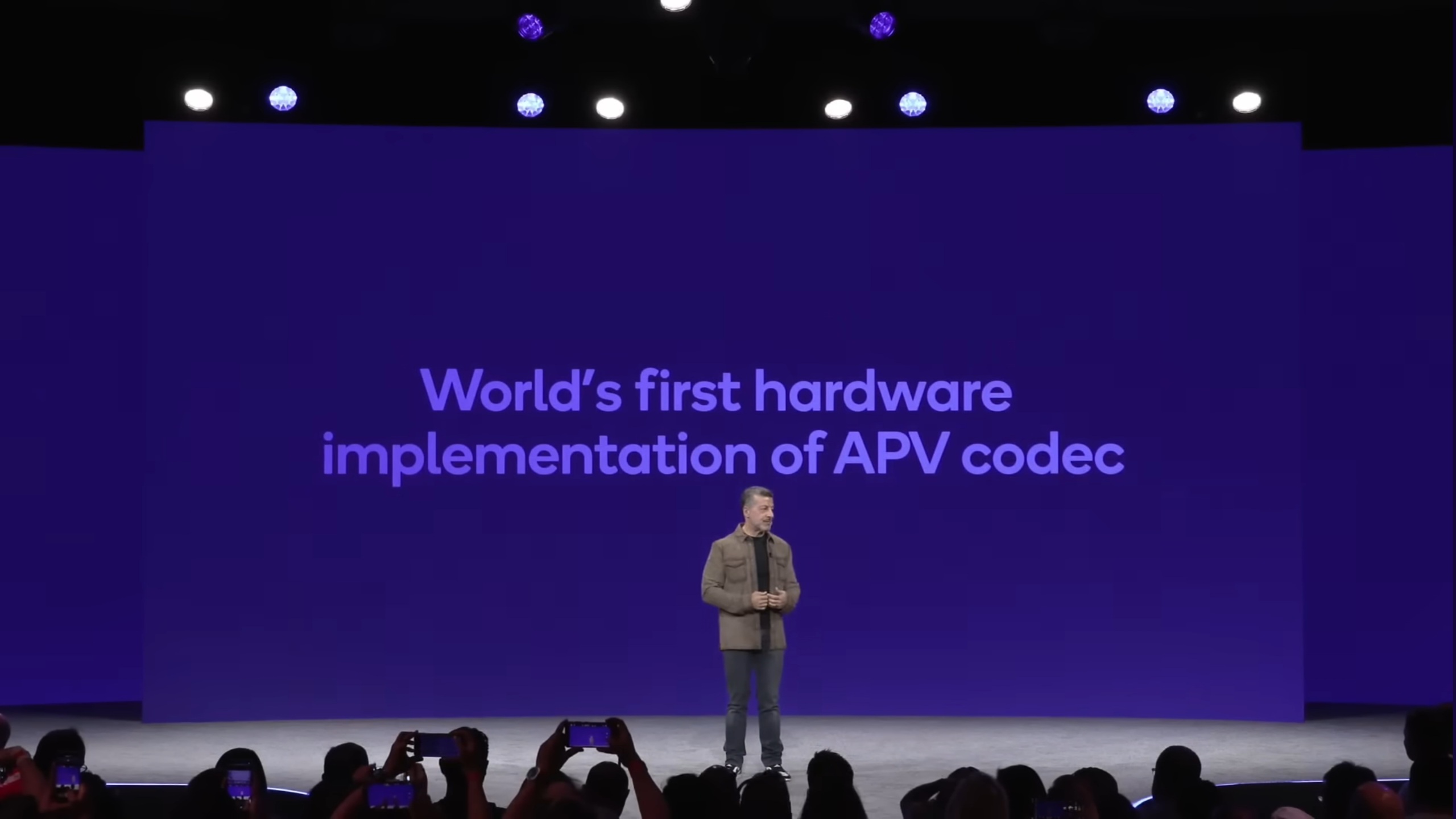
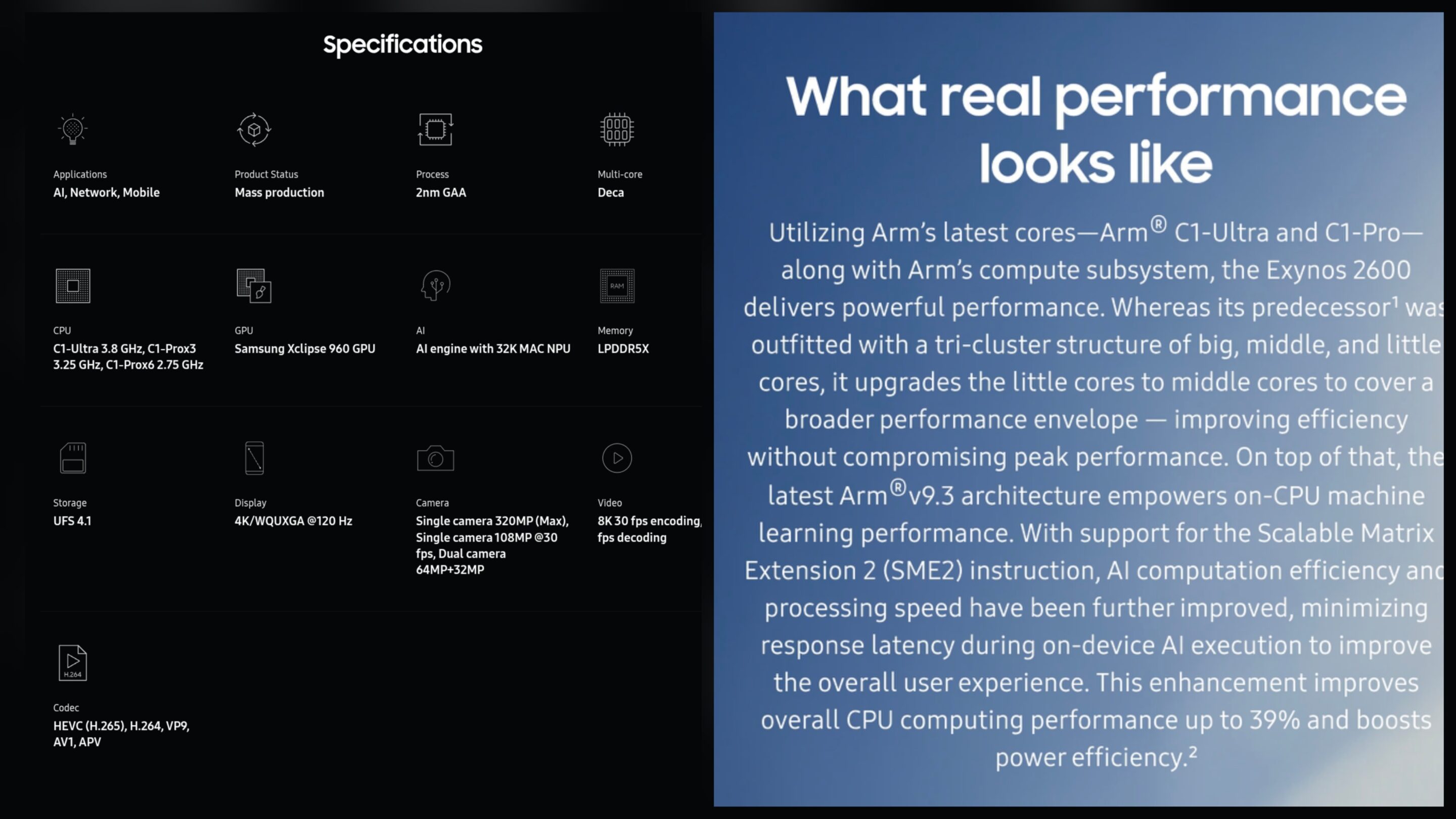
APV is positioned as an open and extensible format under the Academy Software Foundation. With hardware implementation across multiple flagship Android chipsets ( Snapdragon and Samsung Exynos), it signals broader ecosystem ambition within professional smartphone video.
Log Recording, Bit Depth, and Compression Integrity
Both Apple and Samsung ecosystems now support Log recording. Log flattens gamma curves to preserve highlight and shadow detail. But Log demands data precision. If bitrate or bit depth is insufficient, flattened tonal curves quickly expose banding and compression artifacts.
In high-quality 10-bit HEVC recording, both systems provide strong grading flexibility when the bitrate is adequate. Intraframe formats such as ProRes and APV inherently offer greater tonal stability during aggressive color manipulation because each frame is independently encoded. Structure matters more than headline resolution. And bit depth matters more than marketing brightness numbers.
Why This Is Bigger Than a Spec Comparison
This is no longer just about bitrate, chroma subsampling, or whether one phone records 12-bit while another supports 4:4:4. With APV moving under the Academy Software Foundation and receiving hardware implementation across multiple Android silicon platforms, it signals something larger: the potential formation of an open, cross-vendor professional video standard.
Meanwhile, Apple continues to advance a vertically integrated ProRes and ProRes RAW pipeline tightly optimized within its own ecosystem.
This is not a codec feature battle. It is two fundamentally different ecosystem strategies shaping the future of the smartphone video imaging pipeline. One bets on open scalability. The other bets on controlled end-to-end refinement. Format is not the entire photography chain. But it is the moment where physics becomes mathematics. Once compression makes a decision, no algorithm can fully reverse it.
Log without sufficient data collapses.
HDR without metadata support is wasted.
Bitrate without thermal stability becomes inconsistent.
Chroma without depth falls apart under stress.
Codecs define what survives into post-production.
And post-production defines what survives into history.
And this is only the first layer. Next, we move deeper into the chain — step by step. Because understanding the structure is the only way to understand the result.


Follow us on Google Discover & set us as a preferred source in Google News
Share this Post
___________________________


New Blog Posts
___________________________
First Set of Pixel 11 Pro XL Renders Are Here
Pixel 11 Pro XL CAD renders show minimal design changes

Is Samsung Preparing One UI 8.5 Beta for Galaxy Z Fold 5 and Flip 5?
Samsung may launch a One UI 8.5 beta program for its 2023 foldables
Galaxy S25 One UI 8.5 Beta May Run Longer Than Expected
Galaxy S25 series’ One UI 8.5 beta may stretch to 10 rounds