Samsung Tested a Galaxy Z TriFold with Four Rear Cameras [U]
SammyGuru is reader-supported. We have affiliate and sponsored partnerships, so we may earn a commission when you buy through links on our site — at no extra cost to you. Learn more.
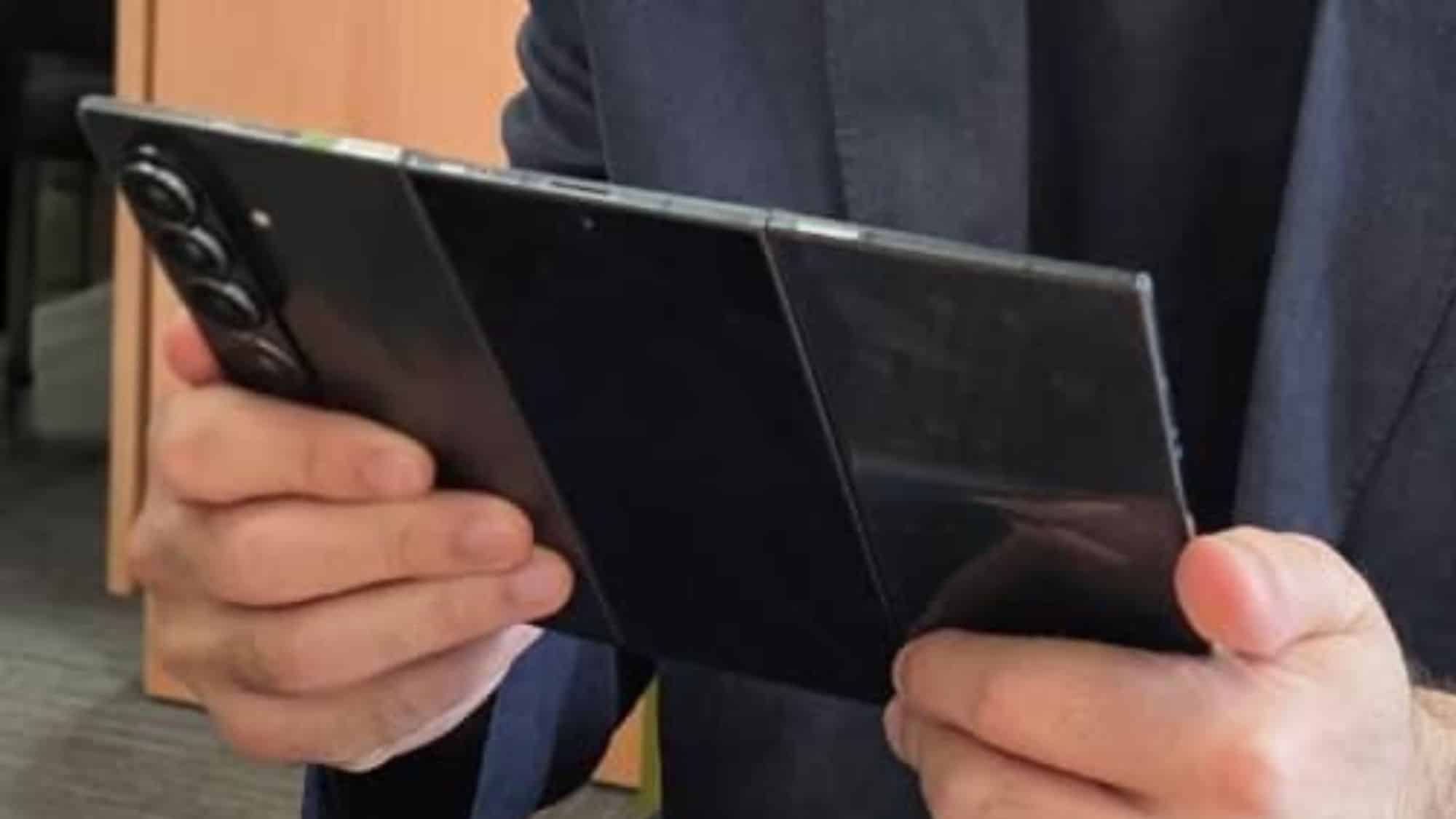
Update 12/10 9:30 AM EST: The executive admitted that they actually used generative AI to remove the sticker. And it mistakenly added a fourth camera, which caused all the confusion. So indeed there’s “nothing special or new here” as Saheb writes.
Samsung’s latest Galaxy Z TriFold is one of the most exciting tech launches of the year. However, a recent discovery of a possible prototype version of the device has given fans even more to talk about. The prototype unit features four rear cameras, not three like the final model.
A prototype reveals what the Galaxy Z TriFold could have been
Omar Saheb, VP of Marketing & E-commerce at Samsung Electronics MENA (Middle East and North Africa), recently wrote a LinkedIn post about the Galaxy Z TriFold. The post also includes a few images of what appears to be an early version of the TriFold (as spotted by SamMobile), and that’s where things get interesting.
The retail version of the Galaxy Z TriFold boasts three rear cameras: a 200MP main sensor, a 12MP ultrawide camera, and a 10MP telephoto lens with 3x optical zoom. However, the newly surfaced prototype shows a fourth camera module that sits below the main trio. More importantly, it looks noticeably thinner than the other three. An educated guess for the fourth unit is that it may have been a dedicated 50MP camera with 5x optical zoom.

Could it be a second-generation Galaxy Z TriFold? Well, the possibility is very low, as Samsung only launched the first-generation model last week. Instead, this appears to be one of the many prototypes the company created during the long development process of its first TriFold.
The Galaxy Z TriFold is already a major engineering achievement. The device features a triple-panel design with two hinges that fold inward at different angles (one side must close before the other). This structure protects the 10-inch main screen from scratches. When folded, it switches to the 6.5-inch cover screen, allowing users to use it like a regular phone. It will arrive in the US in the first quarter of 2026.

Written by
Binay KonwarBinay Konwar started his blogging journey in 2014 and has since written plenty of tech articles. At present, he is working as a News Writer at SammyGuru, covering everything about Samsung. He holds a Master's degree in Mathematics, but his real passion lies in tech and writing. In his free time, he enjoys playing chess and watching movies.

Follow us on Google Discover & set us as a preferred source in Google News
Share this Post
___________________________


New Blog Posts
___________________________
First Set of Pixel 11 Pro XL Renders Are Here
Pixel 11 Pro XL CAD renders show minimal design changes
Is Samsung Preparing One UI 8.5 Beta for Galaxy Z Fold 5 and Flip 5?
Samsung may launch a One UI 8.5 beta program for its 2023 foldables
Galaxy S25 One UI 8.5 Beta May Run Longer Than Expected
Galaxy S25 series’ One UI 8.5 beta may stretch to 10 rounds