Understanding Smartphone Photography Chain – Part 2: Photo Formats
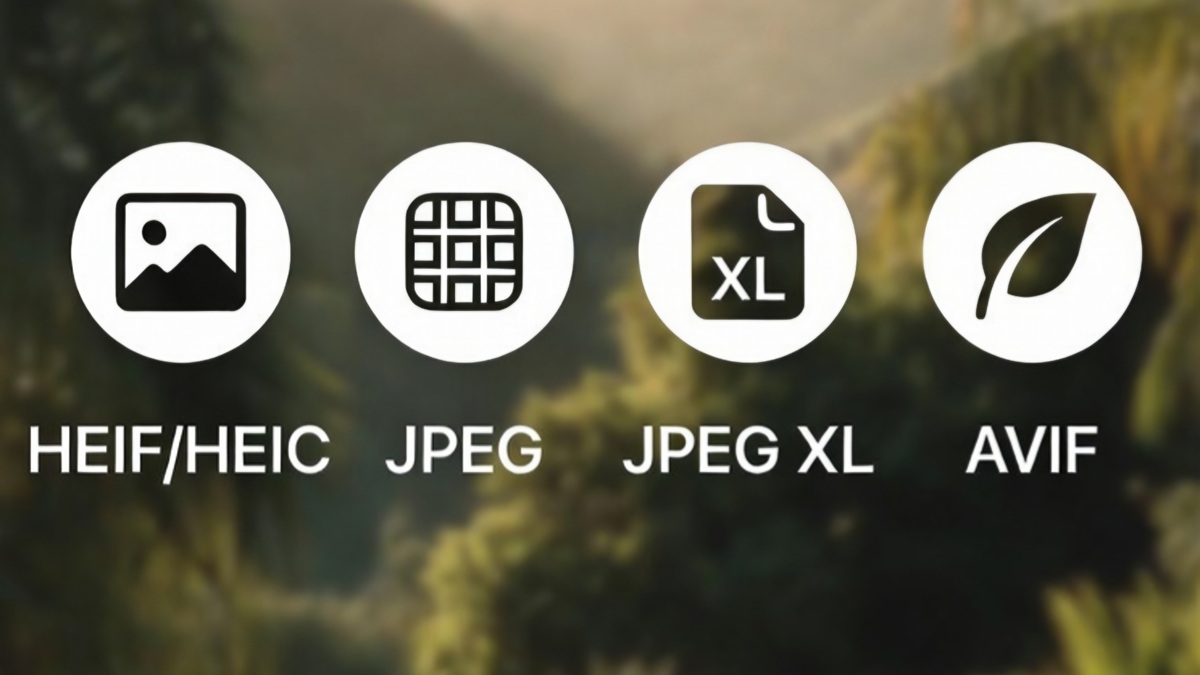
We began the smartphone photography chain series with video formats, because compression defines what survives into post-production. Now we continue with still images. Photo format decisions are quieter than video codec debates. But they are just as structural.
Before we dive into editing platforms and social media compression in the next chapters, we must understand the foundation: How the image is stored. Because once an image is encoded, irreversible decisions have already been made. And format determines how much of the sensor’s work actually survives.
From Sensor to Container
A smartphone does not “take a JPEG.” Light hits the sensor. Photons are converted into electrical signals. That RAW data is processed through the ISP and neural pipelines: demosaicing, noise reduction, tone mapping, sharpening, and color calibration. Only after those decisions are made does the device encode the result into a photo format.
Simply put:
- RAW is the beginning.
- Your phone edits it automatically.
Then it packages that processed image into a container, which can be JPEG, HEIC, or any other format. Shooting manual RAW just shifts the editing stage from the device to you. The difference is control. The chain is the same. And once the container is chosen, flexibility is already defined.
From JPEG to HEIF — The Structural Shift
For decades, JPEG defined digital photography. It was lightweight, universal, and efficient. But it was built in the 1990s. JPEG is fundamentally an 8-bit format. It operates within SDR color space structures such as sRGB. However, a JPEG file does not natively store HDR metadata or extended tonal information in the way modern HDR formats do.
That said, modern smartphones can simulate HDR appearance in gallery previews even when the underlying file is JPEG. They do this through display tone mapping, embedded gain maps, or device-level rendering behavior. So, while a JPEG may appear HDR in the gallery, the underlying file structure remains limited in tonal depth and color precision. And that distinction matters inside the Photography Chain.
JPEG uses DCT block compression. Under heavy editing, like shadow recovery, highlight pulls, and aggressive saturation, banding and color breakup can appear quickly. After all, this format wasn’t designed for computational HDR pipelines.
HEIF / HEIC — The Modern Smartphone Standard
HEIF (High Efficiency Image Format) defines the container. HEIC is the most common implementation, typically using HEVC compression. This is where smartphones evolved. Apple made HEIF mainstream beginning with iOS 11. Samsung adopted HEIC in Galaxy flagships and expanded it with 10-bit color and HDR workflows in recent generations.
- On Apple devices, files may appear labeled as .HEIF.
- On Samsung devices, they typically appear as .HEIC.
The naming differs. The structural foundation is similar. HEIF/HEIC allows for higher compression efficiency than JPEG. We are talking about 10-bit color depth and wide color gamut storage, including Display P3. It also supports HDR image pipelines with metadata and auxiliary layers, such as depth and gain maps.
Inside the Photography Chain, this changes everything. More bit depth means smoother gradients. Wide gamut means richer reds and greens on modern displays. HDR support means highlight data survives beyond SDR ceilings. When editing a 10-bit HEIC file:
- Sky gradients hold longer
- Skin tones fracture less under stress.
- Shadow transitions remain smoother.
This is not about sharpness. It is about tonal stability, which defines how far an image can travel before it collapses.
JPEG XL — The Future That Repositioned Itself
JPEG XL was engineered to correct JPEG’s structural limits. It supports high bit depth, wide gamut, native HDR workflows, progressive decoding, and both lossy and lossless compression within one architecture. Architecturally, it is superior to legacy JPEG. In many scenarios, it competes directly with HEIF.
JPEG.ORG
For years, adoption appeared stalled, mostly because of browser politics, platform hesitation, and ecosystem fragmentation. In standard shooting modes, that perception largely remains true. Most smartphones do not expose JPEG XL as a visible .jxl capture format in Auto mode.
But here is the crucial shift: JPEG XL did not disappear. It moved into the RAW pipeline. Modern computational RAW systems, including ProRAW and Expert RAW workflows, now use JPEG XL compression internally within DNG 1.7 containers. This means the file may still appear as a .dng, but the RAW data inside can be compressed using JPEG XL — in either lossy or lossless form, depending on implementation.
From a Photography Chain perspective, this is significant. Computational RAW files are large. Multi-frame HDR stacking increases data volume. High-resolution sensors amplify storage pressure. But JPEG XL enables:
- Smaller RAW file sizes without sacrificing tonal precision.
- Lossless compression for maximum editing flexibility.
- More efficient handling of computational HDR data.
It did not become the universal gallery format. But it secured a strategic position where data density is highest inside advanced RAW workflows. JPEG XL is not paused. It is embedded.
AVIF — The Next Efficiency Layer
AVIF is built on the AV1 compression architecture. It is not an evolution of JPEG, but a next-generation codec foundation adapted for still images. Technically, AVIF can offer higher compression efficiency than HEIC, and 10-bit and 12-bit support. It even boasts wide color gamut compatibility, native HDR storage, and superior gradient preservation.
From a pure data perspective, AVIF can store more precision at smaller file sizes than HEIC. That’s why this matters inside the smartphone camera pipeline Because smartphones are becoming more HDR-native, more P3-dependent, more computational, and more storage-constrained. As such, AVIF could allow:
- Smaller HDR files without tonal loss.
- Better gradient retention in skies and skin.
- More efficient cloud sync.
- Higher precision uploads with reduced bandwidth.
It strengthens what survives the chain. However, most smartphones still do not offer AVIF as a native capture format in their default camera systems. AVIF is widely supported for decoding and web delivery. It has not yet become a primary capture format. If that changes, mobile photo storage efficiency could shift dramatically.
Color Space — sRGB vs Display P3
Color space is not branding language. It defines how much color can physically exist inside a file.
- sRGB covers a limited portion of visible color.
- Display P3 expands that range, especially in reds and greens.
Modern flagship ecosystems capture and display in P3 within supported workflows. But if you export to a platform that forces sRGB conversion, the color space compresses. The image may look flatter, as certain vibrant tones lose dimensionality. And again, format defines what survives.
Where We Stand Today
In practical smartphone photography, JPEG remains the universal compatibility fallback, while HEIF/HEIC is the true modern HDR-capable standard in flagship ecosystems. JPEG XL, on the other hand, remains limited in standard capture modes, but actively powers modern computational RAW workflows.
AVIF represents the next efficiency frontier, waiting for capture-level adoption. This is not about declaring a winner. It is about understanding:
- Where precision is preserved.
- Where compression limits flexibility.
- Where platforms shrink color
- Where editing potential survives.
Photo formats are not headline features, but they silently shape everything that follows, including editing flexibility, cloud storage behavior, social media recompression, cross-platform compatibility, and color integrity. Formats define what survives into editing, editing defines what survives into sharing, and sharing defines what survives into memory.
In the next part of this series, we move deeper into the Photography Chain, exploring editing platforms and social media compression. Because once the file leaves your device, another transformation begins. And that transformation is often more destructive than the first. Stay tuned.

Follow us on Google Discover & set us as a preferred source in Google News
Share this Post
___________________________


New Blog Posts
___________________________
First Set of Pixel 11 Pro XL Renders Are Here
Pixel 11 Pro XL CAD renders show minimal design changes
Is Samsung Preparing One UI 8.5 Beta for Galaxy Z Fold 5 and Flip 5?
Samsung may launch a One UI 8.5 beta program for its 2023 foldables
Galaxy S25 One UI 8.5 Beta May Run Longer Than Expected
Galaxy S25 series’ One UI 8.5 beta may stretch to 10 rounds