
Samsung Tops Q3 2025 Smartphone Shipments with 60.6M Units
SammyGuru is reader-supported. We have affiliate and sponsored partnerships, so we may earn a commission when you buy through links on our site — at no extra cost to you. Learn more.
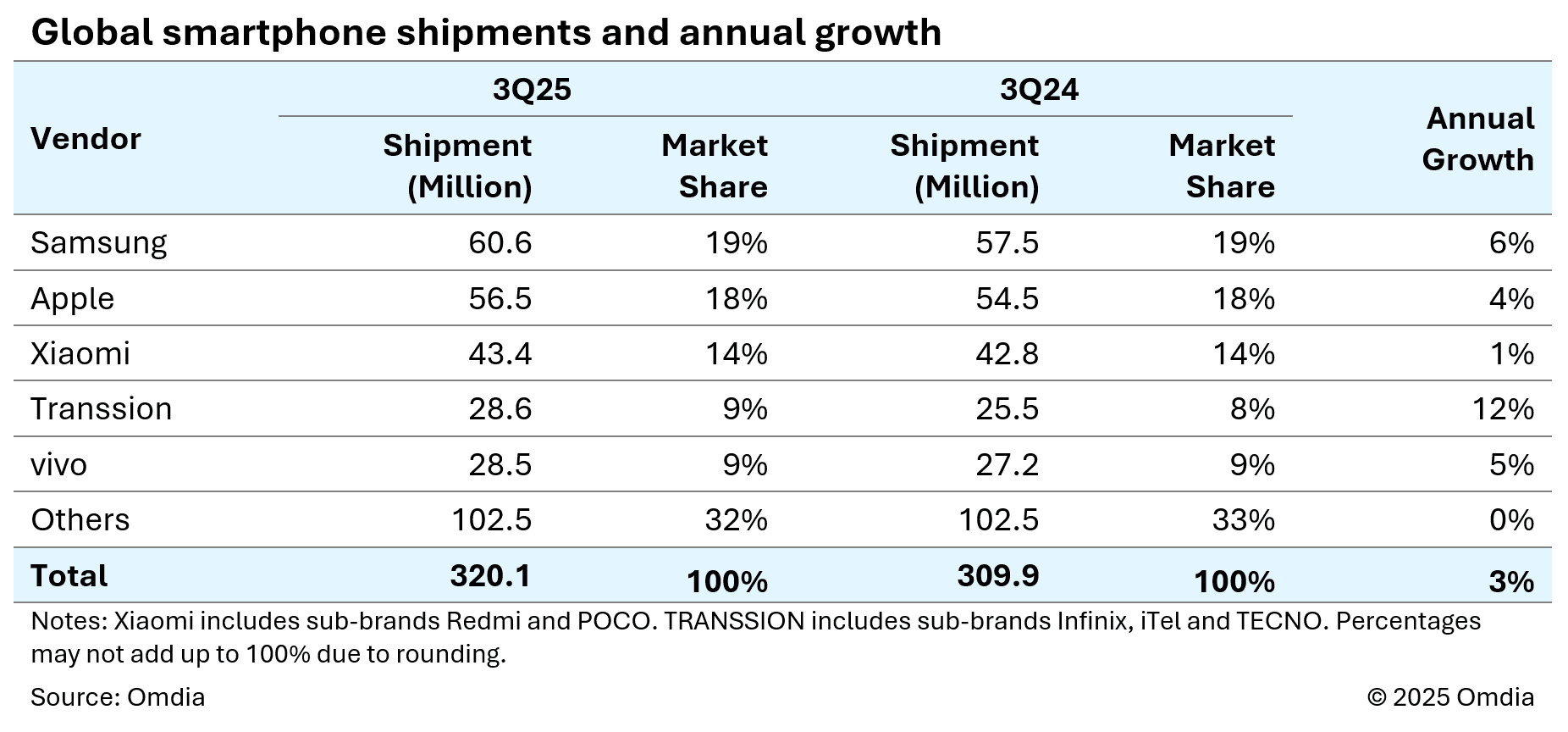
Samsung led the global smartphone market in the first two quarters of 2025. The trend continued into the third quarter as well, with shipments of 60.6 million Galaxy smartphones globally. The Korean company’s latest foldables and mid-to-low-end segment played a key role in its Q3 performance.
Samsung’s foldables and affordable A-series models contributed greatly to Q3 2025 shipments
According to data from Omdia, Samsung saw a 6% year-on-year growth in smartphone shipments during the third quarter of 2025. The company captured a 19% share of the global market, the same as in Q3 2024. The newly released Galaxy Z Fold 7 and Z Flip 7 models contributed greatly to this growth. Likewise, its mid-to-low-end Galaxy A series, mainly the latest A07 and A17, sold well in the Asia-Pacific and Middle East regions.
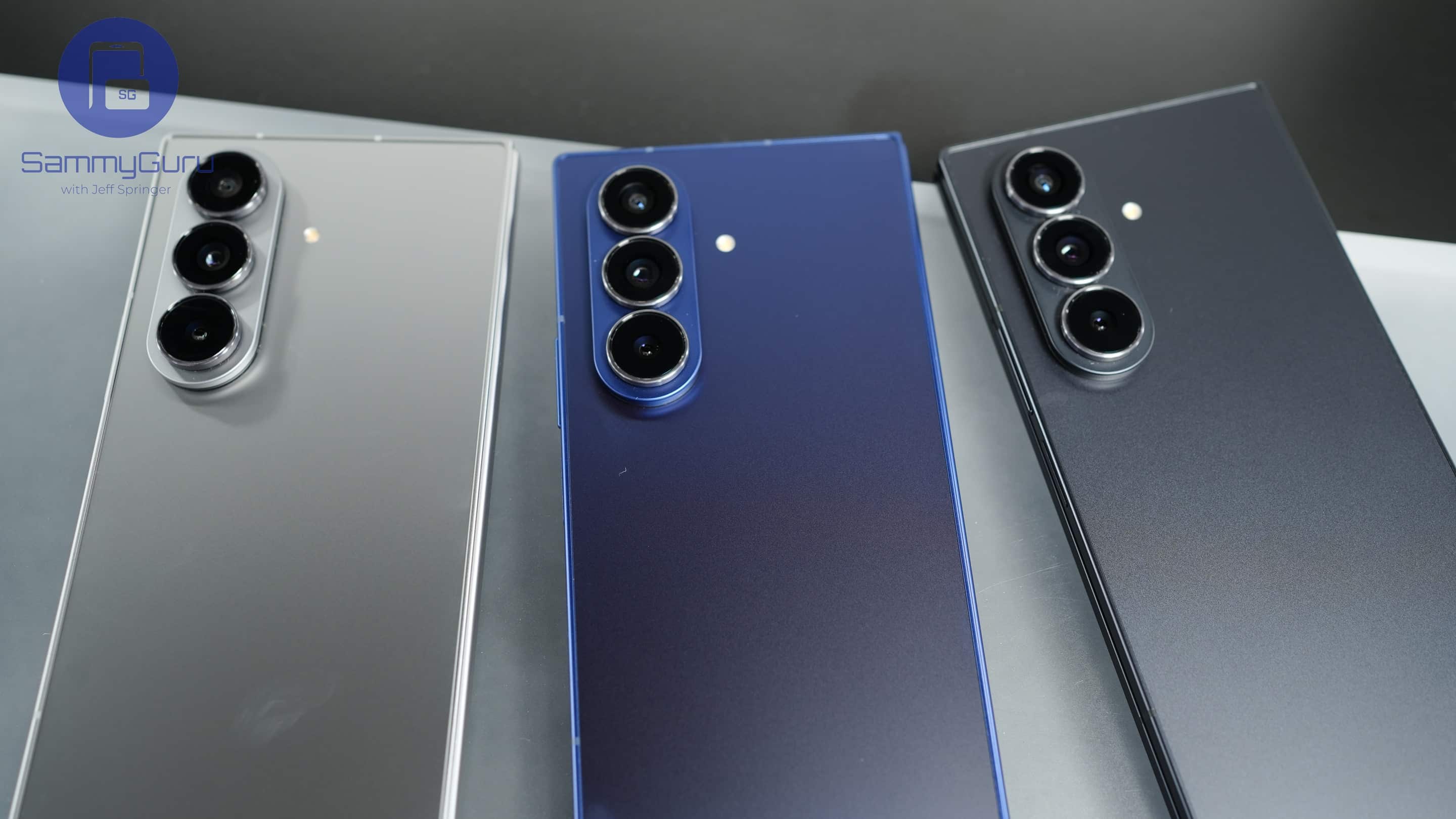
The Galaxy Z Fold 7 is Samsung’s latest book-style foldable, while the Galaxy Z Flip 7 is its latest clamshell model. The Flip 7 is attracting buyers with its large 4.1-inch outer screen and an upgraded 4,300 mAh battery. The Fold 7, on the other hand, stands out for its incredibly thin form factor, as well as a taller and wider profile than its predecessor. Furthermore, its 200MP main shooter is definitely a strong selling point.
In the mid-range lineup, the Galaxy A17 features Optical Image Stabilization (OIS) on its main camera (first time for the A1x series). The Galaxy A07 will get six major OS upgrades and six years of security updates, which is impressive for its price point.
Meanwhile, Apple secured the second spot with shipments of 56.5 million units (up 4% year-on-year). The Cupertino giant saw solid demand for its base iPhone 17, which offers higher storage capacity without a price increase. Xiaomi secured the third position with 43.4 million units shipped (up 1% year-on-year).
Speaking of the overall global market, smartphone shipments reached 320.1 million units in Q3 2025, representing a 3% year-on-year increase. However, the industry continues to face challenges such as component shortages and rising manufacturing costs.
“Vendors may adopt different strategies to tackle this common challenge — securing channel funding early, prioritizing high-margin models, keeping mid- and low-end devices on a defensive stance, and leveraging scaling to strengthen supply chain bargaining power,” said Jusy Hong, Senior Research Manager at Omdia.

Written by
Binay KonwarBinay Konwar started his blogging journey in 2014 and has since written plenty of tech articles. At present, he is working as a News Writer at SammyGuru, covering everything about Samsung. He holds a Master's degree in Mathematics, but his real passion lies in tech and writing. In his free time, he enjoys playing chess and watching movies.

Follow us on Google Discover & set us as a preferred source in Google News
Share this Post
___________________________


New Blog Posts
___________________________

First Set of Pixel 11 Pro XL Renders Are Here
Pixel 11 Pro XL CAD renders show minimal design changes

Is Samsung Preparing One UI 8.5 Beta for Galaxy Z Fold 5 and Flip 5?
Samsung may launch a One UI 8.5 beta program for its 2023 foldables

Galaxy S25 One UI 8.5 Beta May Run Longer Than Expected
Galaxy S25 series’ One UI 8.5 beta may stretch to 10 rounds