Samsung Narrows Resale Value Gap With Apple, Thanks to Galaxy AI
SammyGuru is reader-supported. We have affiliate and sponsored partnerships, so we may earn a commission when you buy through links on our site — at no extra cost to you. Learn more.
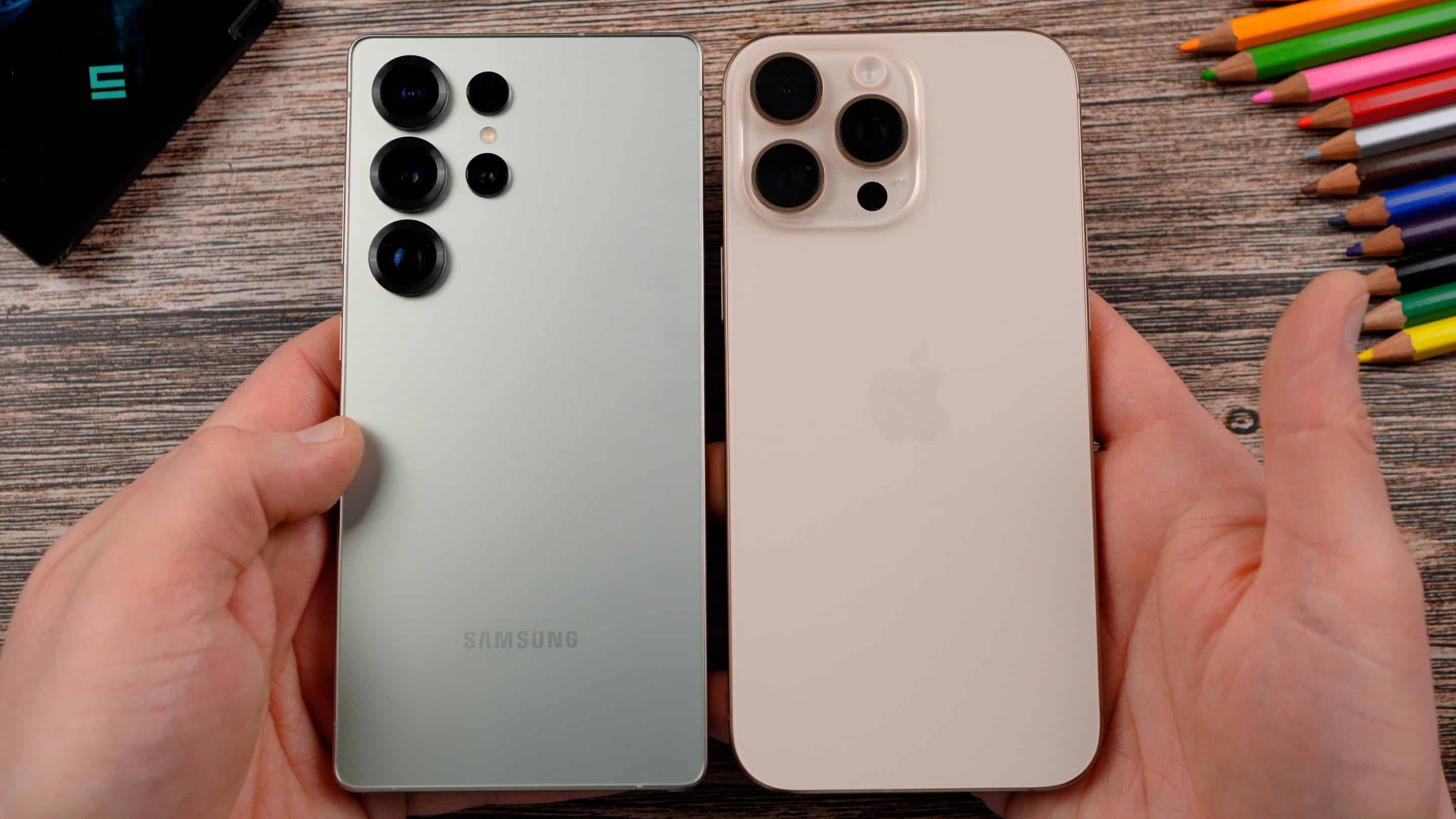
For years, Apple has led the smartphone resale value race, but Samsung is catching up fast. According to fresh insights from SellCell, Samsung’s AI-powered Galaxy S series is steadily closing the depreciation gap. With improvements in resale value retention across several flagship generations, the Korean firm is on track to challenge Apple’s long-standing dominance by mid-2026.
AI is shifting the resale landscape, and Samsung is coming for Apple
While Apple devices still retain value better overall, the data paints a clear trend: Samsung’s Galaxy smartphones, powered by practical and impactful Galaxy AI features, are holding their value longer. More importantly, their resale value is improving faster than ever before.
SellCell’s latest resale market analysis compared depreciation trends across the Apple iPhone, Samsung Galaxy S, and Google Pixel flagships. The standout result? Samsung showed a 5.3 percentage point improvement in 5-month depreciation over three generations — from 51.9% on the Galaxy S22 to 46.6% for the Galaxy S25. This progress demonstrates growing consumer trust in Galaxy AI and Samsung’s long-term software support.
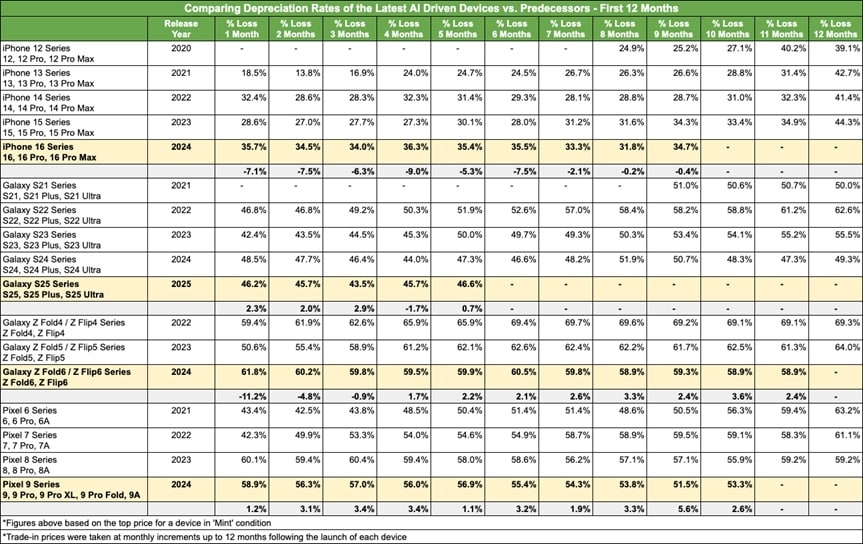
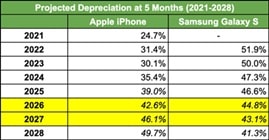
Meanwhile, the iPhone 16 has depreciated 35.4% just five months after launch, up significantly from 24.7% for the iPhone 13 — a 10.7-point increase. Apple’s resale value trend is currently moving in the opposite direction, and a flawed launch of Apple Intelligence could be one of the factors. Samsung’s Galaxy AI suite is more powerful than Apple’s AI features, and consumers know that.
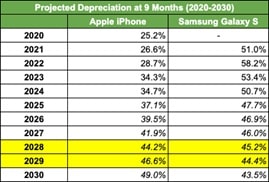
The resale value gap between the two firms’ latest flagships is now just 11.2 percentage points at the five-month mark. It was nearly 30 percentage points a few years ago. The Galaxy S25’s predicted 9-month depreciation is 47.7%, following consistent year-over-year improvements. That for the iPhone 16 is 34.7%. Samsung’s foldables are also showing promise, with a 2.4-point improvement over the last generation.
Projections show Samsung’s value retention potentially surpassing or at least matching Apple’s by mid-2026 if current trends continue. This could mark a big shift in the second-hand or refurbished smartphone market. Perhaps the recent rise in global demand for Galaxy flagships, including the Galaxy S25 series, Fold 7, and Flip 7, is indicative of a growing consumer trust in Samsung products.
Key driving factors for Samsung
The three key factors that appear to be fueling this shift are AI, extended software support, and design leadership. Samsung’s Galaxy AI brings tools like Live Translate, Generative Edit, and Note Assist that actually have the potential to make an impact on consumers’ everyday lives. These are not just promises, but fully integrated features across the Galaxy S and foldable lineups.
AI isn’t just a buzzword for Galaxy devices; it’s a meaningful upgrade that’s driving consumer satisfaction and holding real-world value in the resale market. Samsung’s hardware maturity and design leadership are also attracting more people. With the Galaxy S25 and the next-gen foldables, the Korean firm has set new benchmarks for performance, durability, and premium design.
Moreover, Samsung leads the Android ecosystem in software longevity, offering up to seven years of OS and security updates on its flagship devices — a major driver of resale confidence. Even mid-range Galaxy devices now get updates for up to six years, with a minimum of four years for entry-level offerings.
Consumers are becoming increasingly savvy when it comes to total device value, and resale potential plays a big role. As Samsung continues to refine its AI capabilities and deliver reliable long-term support, the Galaxy S series could soon become the new standard for value-conscious premium smartphone buyers.

Written by
Sumit AdhikariSumit, a life-long Samsung user, is passionate about technology and has been professionally writing on tech since 2017. He’s a mathematics graduate by education and enjoys teaching basic mathematics tricks to school kids in his spare time. Sumit believes in artificial intelligence and dreams of a fully open, intelligent and connected world.

Follow us on Google Discover & set us as a preferred source in Google News
Share this Post
___________________________


New Blog Posts
___________________________
First Set of Pixel 11 Pro XL Renders Are Here
Pixel 11 Pro XL CAD renders show minimal design changes
Is Samsung Preparing One UI 8.5 Beta for Galaxy Z Fold 5 and Flip 5?
Samsung may launch a One UI 8.5 beta program for its 2023 foldables
Galaxy S25 One UI 8.5 Beta May Run Longer Than Expected
Galaxy S25 series’ One UI 8.5 beta may stretch to 10 rounds