Here’s How the Galaxy Z TriFold Holds Up in Rigorous Durability Test
SammyGuru is reader-supported. We have affiliate and sponsored partnerships, so we may earn a commission when you buy through links on our site — at no extra cost to you. Learn more.
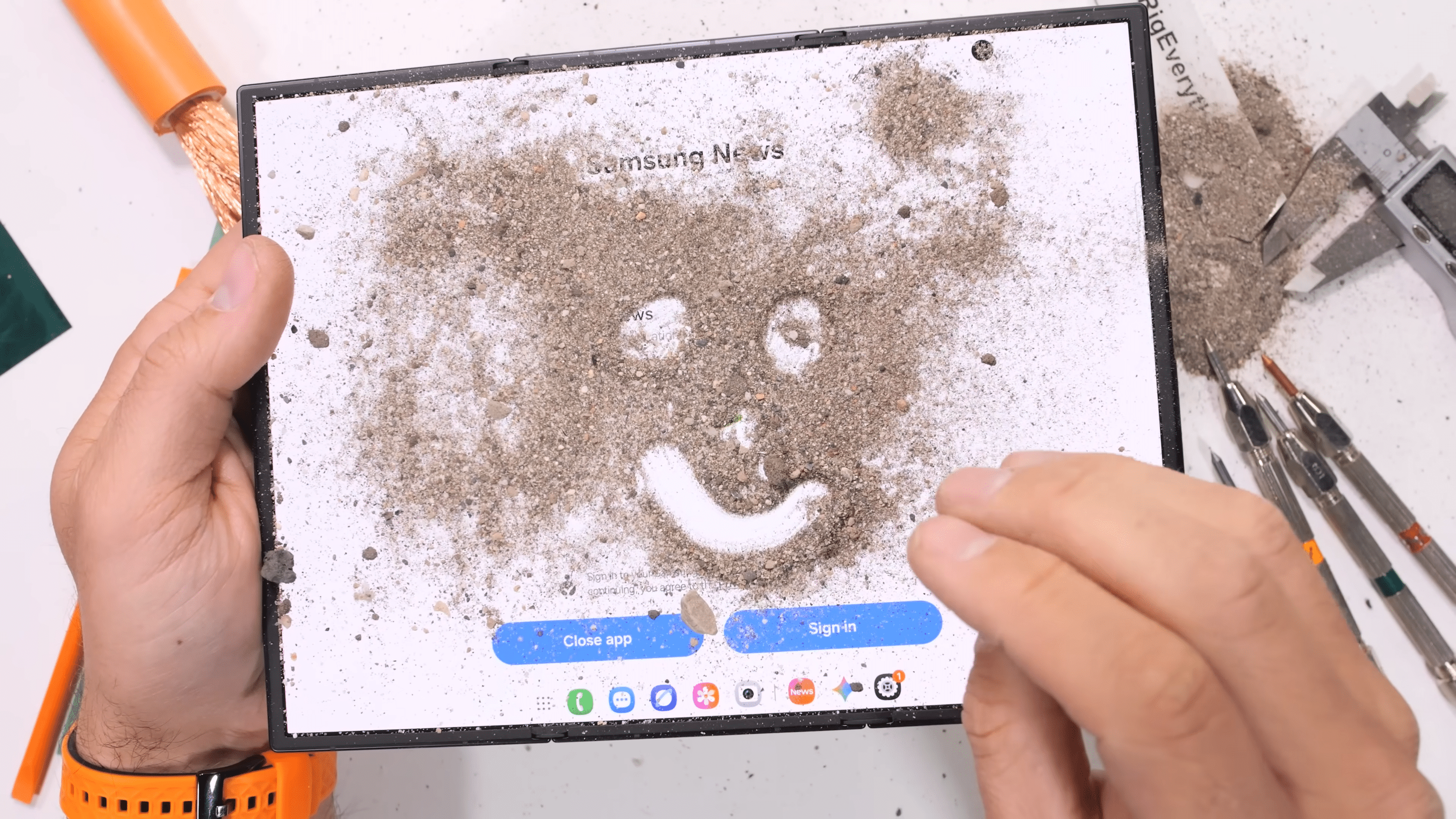
Samsung’s most ambitious foldable yet, the Galaxy Z TriFold, has now undergone a full durability test by Zack Nelson of JerryRigEverything. Ahead of its US release, the video shows how the Galaxy Z TriFold’s design holds up under stress and where its limits lie.
JerryRigEverything puts the Galaxy Z TriFold through rigorous durability testing
Notably, it’s also Samsung’s most expensive phone yet, but that doesn’t necessarily mean it’s more durable. The trifold design is still a new form factor for Samsung, even though the company has been making foldables for more than seven generations. Now, let’s take a closer look at how durable it actually is.
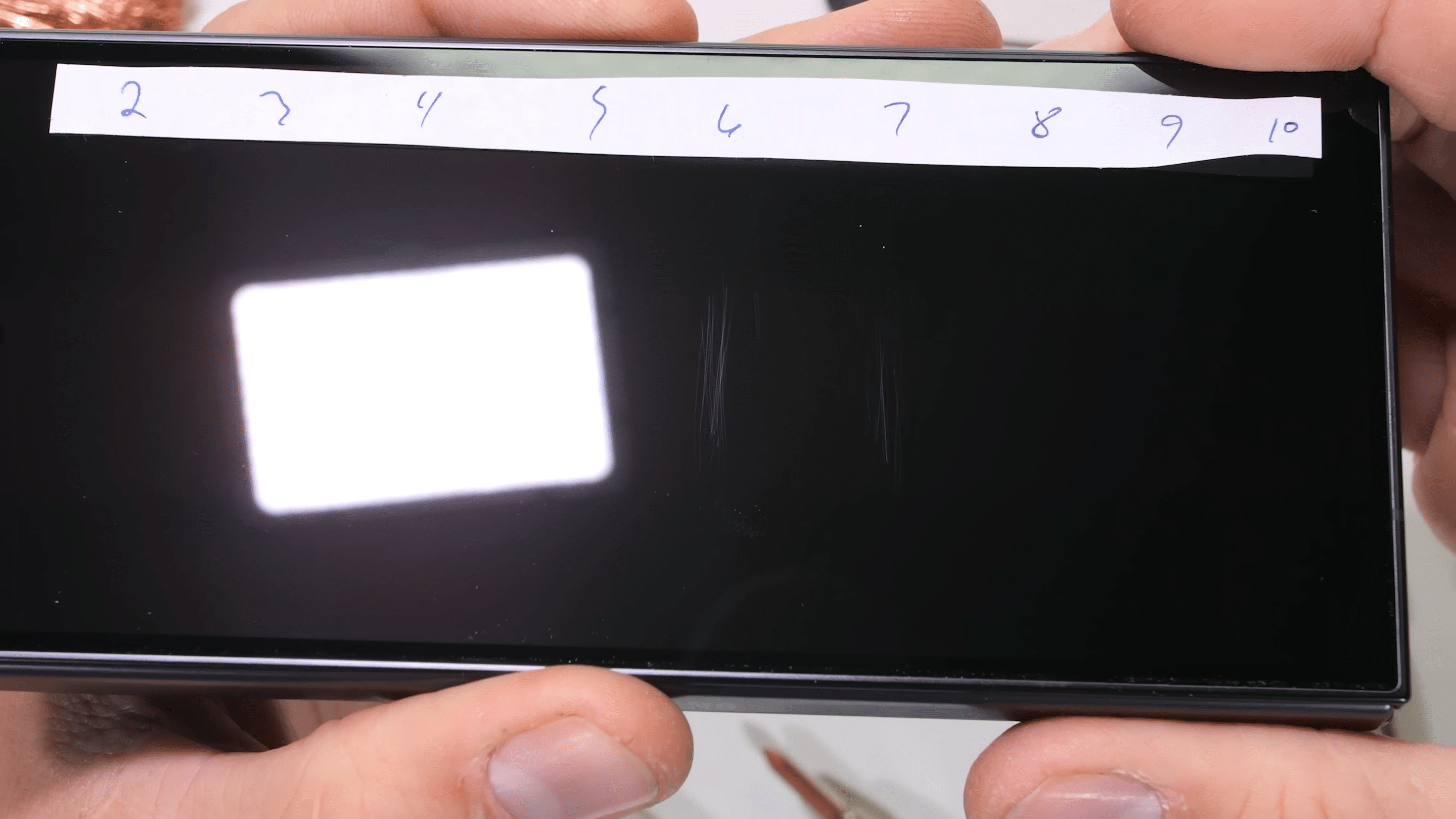
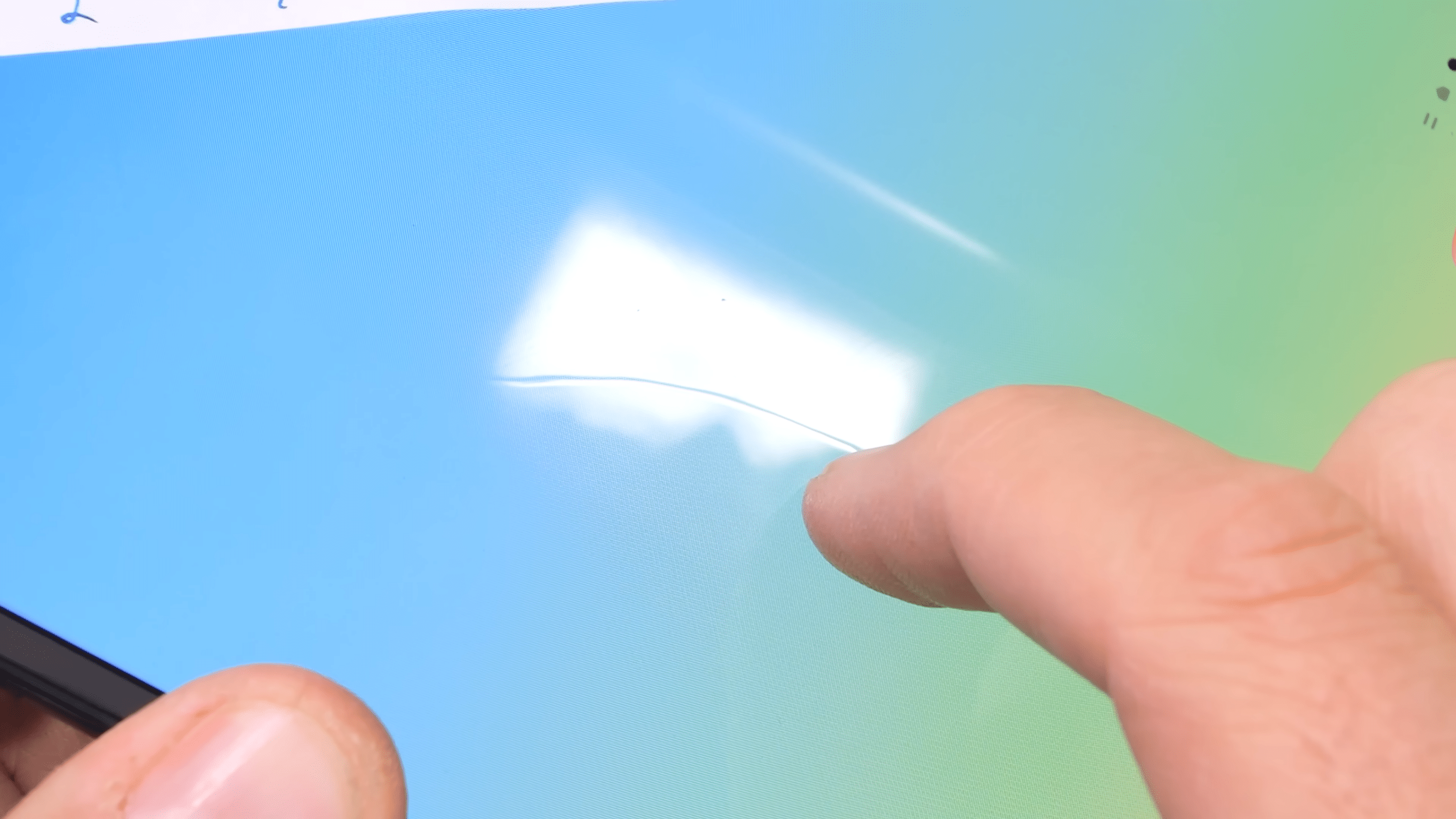
There are a couple of on-screen warnings during Galaxy Z TriFold setup that explain how to fold the device properly and remind users that it offers limited dust resistance. Zack begins his usual testing with a scratch test, in which the 6.5-inch cover display made of Gorilla Glass Ceramic 2 scratches at a Mohs level 6, with deeper grooves appearing at level 7. The inner display is far softer, showing scratches at level 2 and deeper damage at level 3.
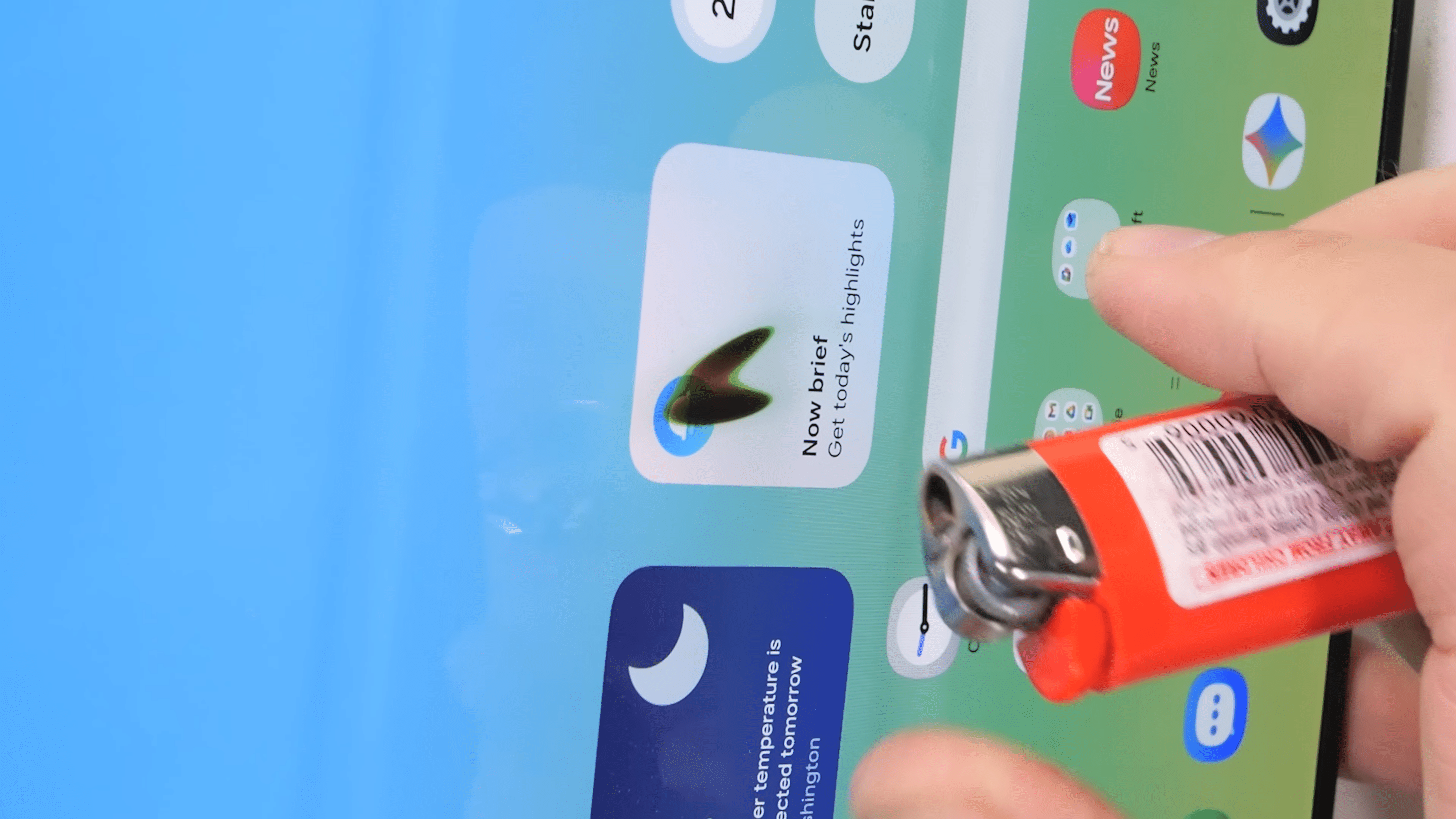
Heat resistance is less impressive. The outer display suffered permanent OLED damage after around 17 seconds of flame exposure, while the inner 10-inch panel failed after roughly 10 seconds. With rumors suggesting the inner screen could cost more than $1,100 to replace, durability concerns may translate directly into repair anxiety for owners.
Samsung rates the Z TriFold at IP48, which allows limited water exposure but offers minimal dust protection. Nelson’s dust test revealed that fine metallic particles are quickly drawn into the dual hinges by internal magnets, producing audible grinding.
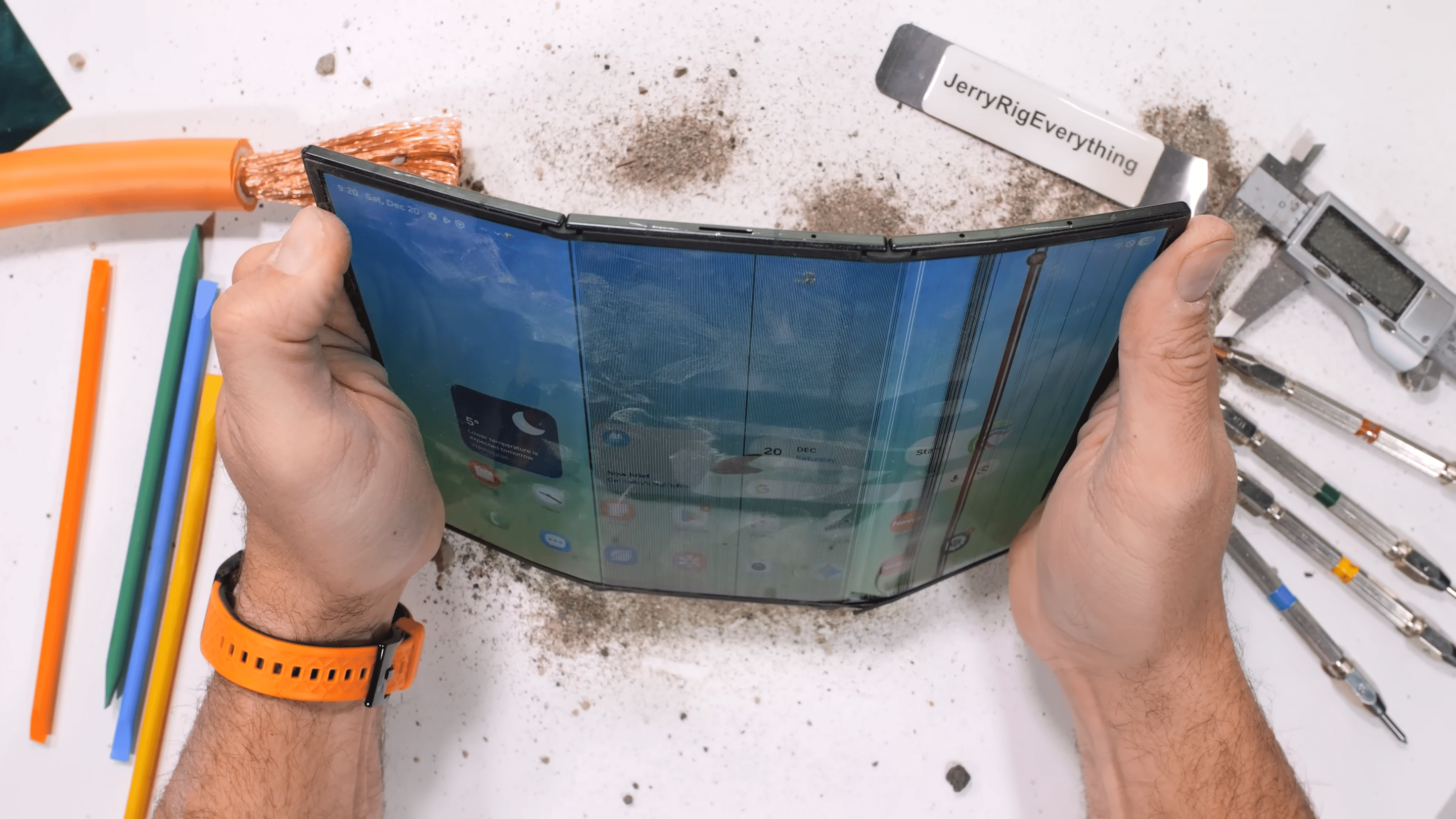
The bend test ultimately proved fatal. Despite titanium components in the hinges, the ultra-thin 3.9 mm aluminum frame, significantly thinner than Apple’s 5.6 mm iPhone Air, buckled under pressure due to antenna cutouts and non-structural rear panels. The result was a catastrophic structural failure.
You can also check out our unboxing and first impressions video below.

Written by
Abhinav AnandAbhinav Anand is the News Editor at SammyGuru and a technology journalist based in New Delhi. Before joining SammyGuru, he contributed to numerous outlets, including Android Headlines, ExtremeTech, The Mac Observer, Financial Express, Economic Times, iGeeksBlog, KnowTechie, PhonesWiki, SlashGear, and more. You can reach him at abhinav@sammyguru.com.

Follow us on Google Discover & set us as a preferred source in Google News
Share this Post
___________________________


New Blog Posts
___________________________
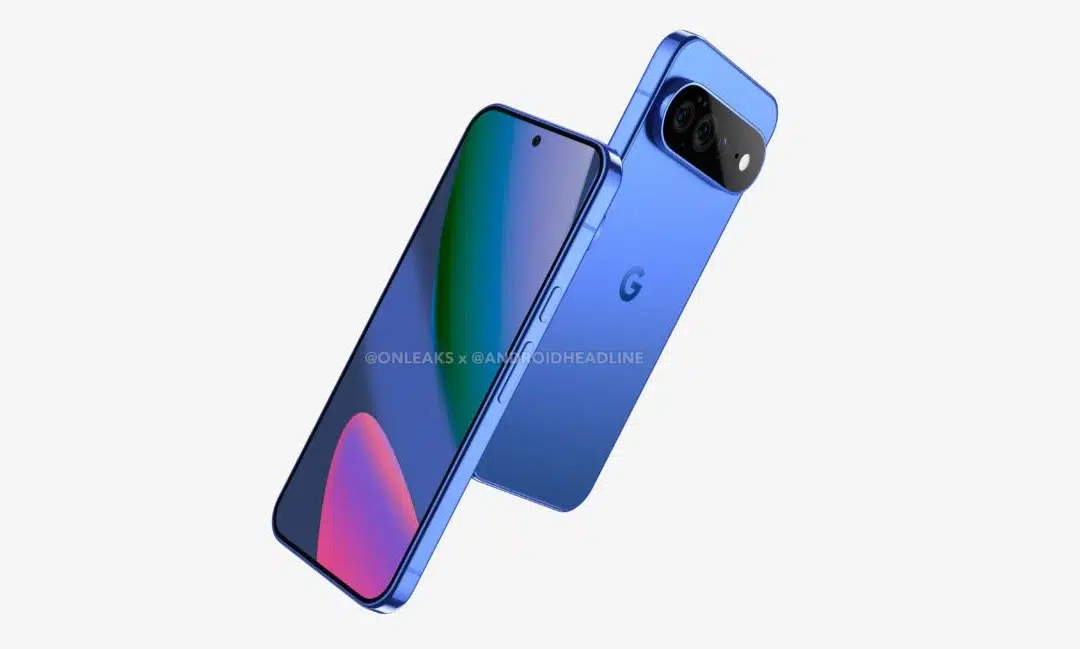
First Set of Pixel 11 Pro XL Renders Are Here
Pixel 11 Pro XL CAD renders show minimal design changes

Is Samsung Preparing One UI 8.5 Beta for Galaxy Z Fold 5 and Flip 5?
Samsung may launch a One UI 8.5 beta program for its 2023 foldables
Galaxy S25 One UI 8.5 Beta May Run Longer Than Expected
Galaxy S25 series’ One UI 8.5 beta may stretch to 10 rounds