
Global Tablet Shipments Rise, but Samsung Sees Q4 Decline
SammyGuru is reader-supported. We have affiliate and sponsored partnerships, so we may earn a commission when you buy through links on our site — at no extra cost to you. Learn more.
Samsung offers tablets across both premium and budget segments, making it the leading brand in the Android tablet market. However, despite overall growth in the global tablet market, the company saw its shipments drop in the fourth quarter of 2025. It looks like the firm failed to attract enough buyers for the products it launched in late 2025.
Samsung suffers a decline in Q4 2025 tablet shipments
According to Omdia, global tablet shipments reached 162 million units in 2025. This is a 9.8% increase compared to the previous year. This figure represents the highest annual shipment volume since the pandemic-driven demand boom of 2020. Speaking of Q4 2025, the market saw shipments of 44 million units, up 9.8% from the same period last year.
“Seasonal holiday demand, combined with vendor pre-build activity ahead of anticipated memory constraints, provided a meaningful uplift to shipments in the final quarter,” said Himani Mukka, Research Manager at Omdia. “However, tablet demand will come under increasing pressure in 2026.”
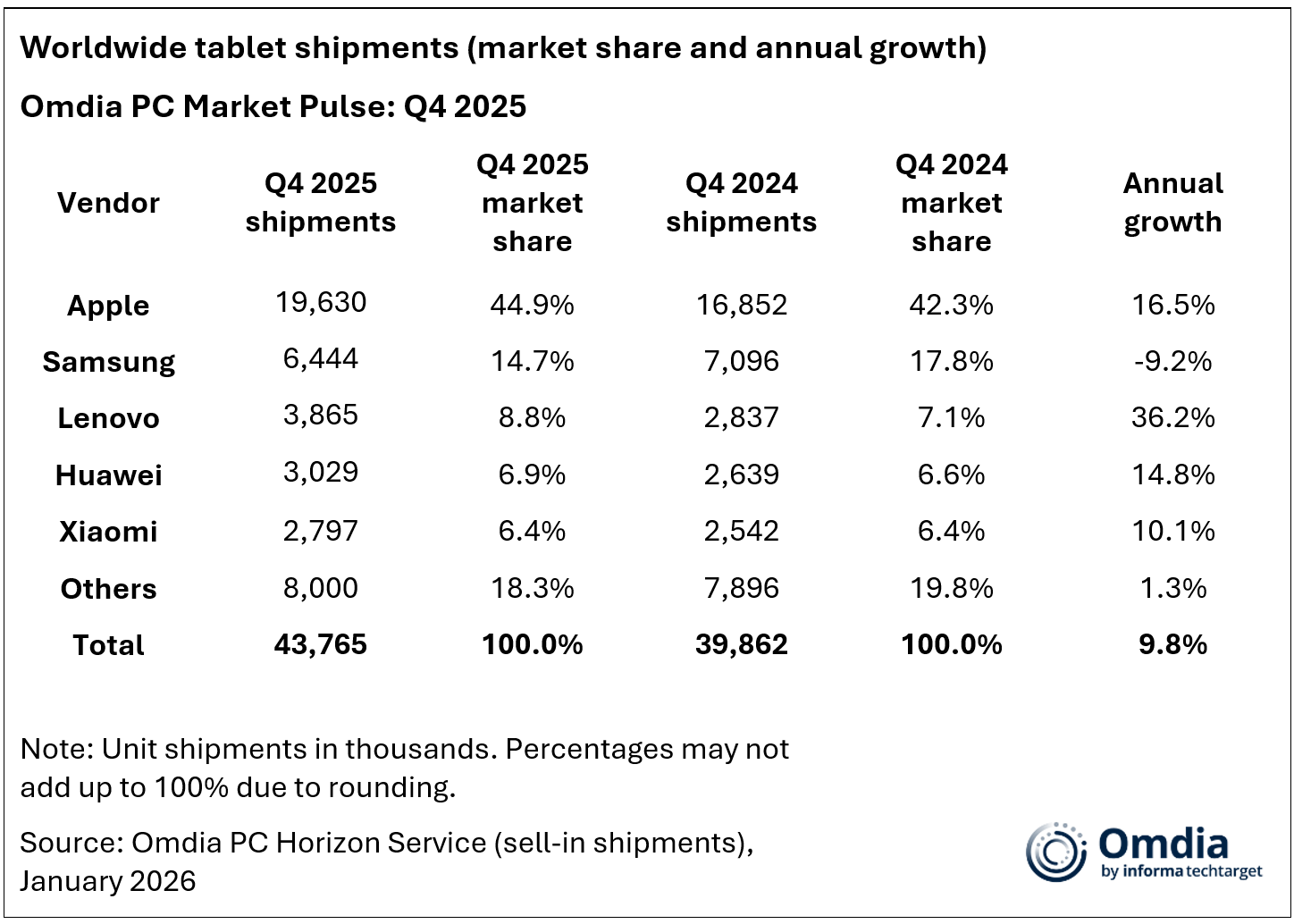
Samsung maintained its top spot in the Android tablet segment and ranked second overall in Q4 2025. However, the company saw a 9.2% decline in shipments compared to the same period last year. It shipped 6.4 million units, resulting in market share dropping to 14.7% from 17.8% in Q4 2024.
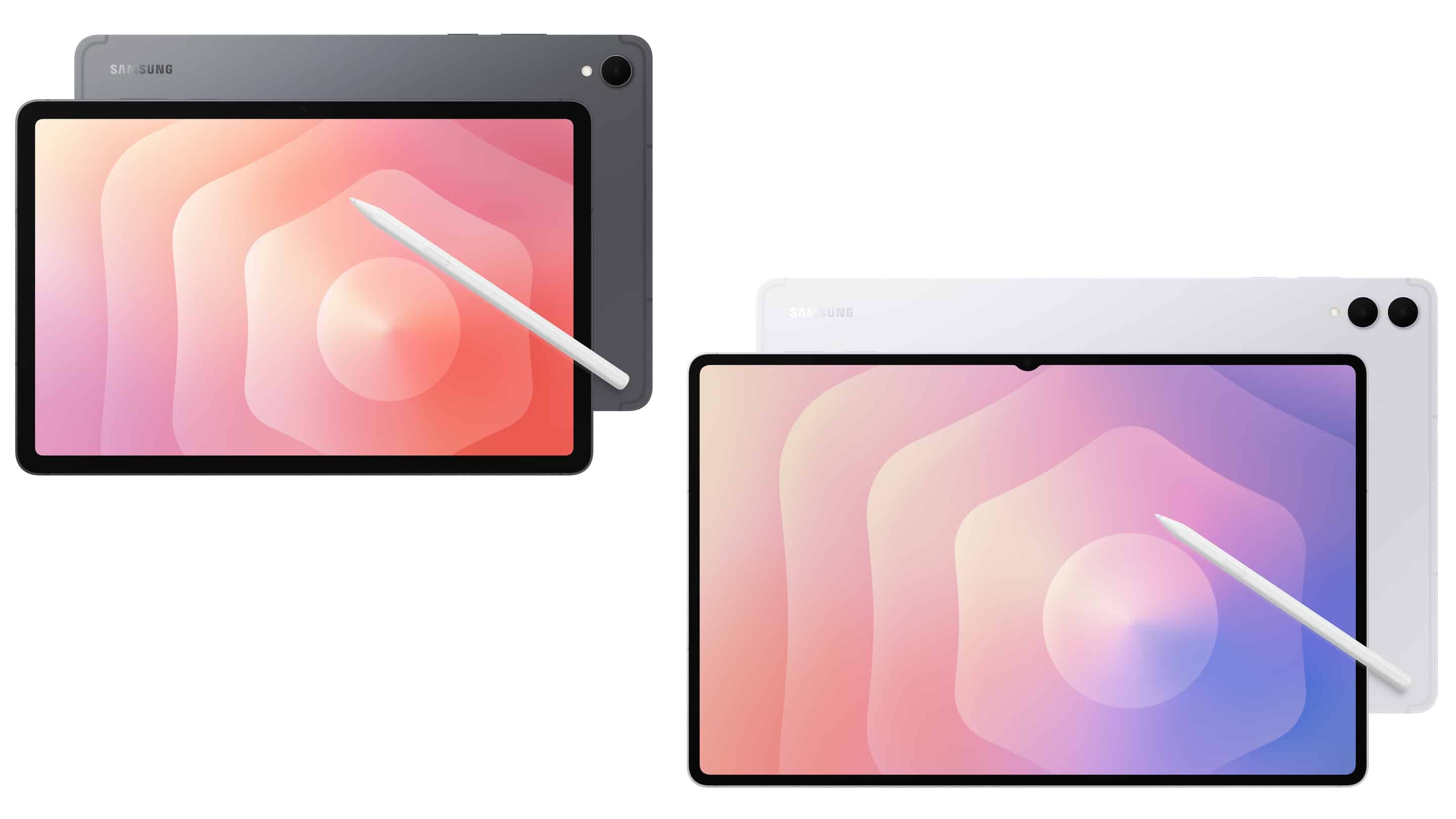
This is quite surprising, as Samsung’s shipment drop came despite the launch of its new tablet lineup in late 2025. In September, the company debuted the Galaxy Tab S11 series to attract high-end users. Moreover, the Galaxy Tab A11 went official in September and the A11+ in November to cater to budget-conscious buyers.
Meanwhile, Apple continued to lead the global tablet market with shipments of 19.6 million iPads in Q4 2025. The Cupertino giant’s iPad 11th Generation and M5-powered iPad Pro played a key role in the growth. Lenovo saw 36% growth (the highest among major vendors, shipments 3.9 million units) compared to the same period last year, placing it in third place. Huawei came in fourth with 3 million units shipped, while Xiaomi completed the top five with 2.8 million units.

Written by
Binay KonwarBinay Konwar started his blogging journey in 2014 and has since written plenty of tech articles. At present, he is working as a News Writer at SammyGuru, covering everything about Samsung. He holds a Master's degree in Mathematics, but his real passion lies in tech and writing. In his free time, he enjoys playing chess and watching movies.

Follow us on Google Discover & set us as a preferred source in Google News
Share this Post
___________________________


New Blog Posts
___________________________

First Set of Pixel 11 Pro XL Renders Are Here
Pixel 11 Pro XL CAD renders show minimal design changes

Is Samsung Preparing One UI 8.5 Beta for Galaxy Z Fold 5 and Flip 5?
Samsung may launch a One UI 8.5 beta program for its 2023 foldables

Galaxy S25 One UI 8.5 Beta May Run Longer Than Expected
Galaxy S25 series’ One UI 8.5 beta may stretch to 10 rounds