Samsung’s New NAND Structure Cuts Power Consumption by a Whopping 96%
SammyGuru is reader-supported. We have affiliate and sponsored partnerships, so we may earn a commission when you buy through links on our site — at no extra cost to you. Learn more.
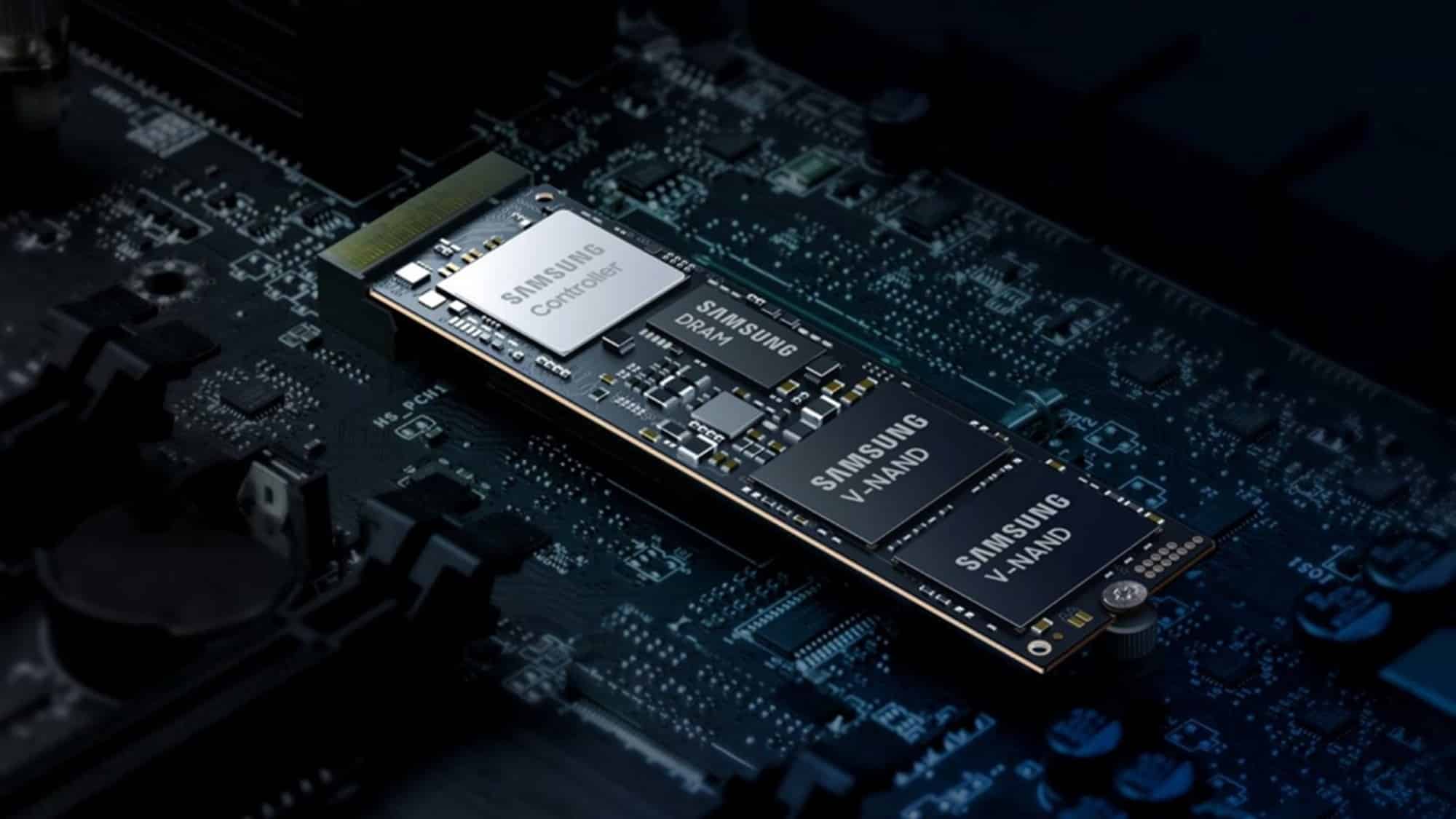
Samsung has achieved a major breakthrough in memory technology. The company announced that its researchers have developed a new NAND flash structure that reduces power consumption by more than 90%. This development could reshape the future of AI data centers, mobiles, and other devices that rely on memory chips.
Samsung has developed ultra-low-power NAND flash
According to a report from ETNews, Samsung Advanced Institute of Technology (SAIT), the new NAND flash structure combines ferroelectric and oxide semiconductors. The company has also published its research in Nature, the world’s leading multidisciplinary science journal.
NAND flash memory can store large amounts of data (even when power is turned off). It works by injecting electrons into memory cells. As companies try to increase storage capacity, they build chips with more NAND layers. However, this increases the need for more power to read and write data. This has become a major concern, particularly in data centers.
Thankfully, Samsung’s researchers have recently succeeded in addressing the problem. Oxide semiconductors are difficult to control because of their unstable threshold voltage. However, the team found this element to be an advantage when paired with the ferroelectric structure. Ferroelectric materials can maintain their electric polarization without requiring a continuous power supply.
As a result, the structure achieved an impressive 96% reduction in power consumption. Samsung says that the discovery is the result of its in-house research efforts, with 34 researchers from Samsung Electronics SAIT and the Semiconductor Research Institute.
“We have confirmed the feasibility of implementing ultra-low-power NAND flash,” said Yoo Si-jeong, a researcher at Samsung Electronics’ SAIT and the first author of the study. “The role of storage in the AI ecosystem is growing, and we will pursue follow-up research with the goal of commercializing the product in the future.”
Meanwhile, Samsung aims to focus on higher profits in its memory business. The company plans to meet the growing demand for DRAM products such as DDR5, LPDDR5X, and GDDR7 amid increased pricing.

Written by
Binay KonwarBinay Konwar started his blogging journey in 2014 and has since written plenty of tech articles. At present, he is working as a News Writer at SammyGuru, covering everything about Samsung. He holds a Master's degree in Mathematics, but his real passion lies in tech and writing. In his free time, he enjoys playing chess and watching movies.

Follow us on Google Discover & set us as a preferred source in Google News
Share this Post
___________________________


New Blog Posts
___________________________
First Set of Pixel 11 Pro XL Renders Are Here
Pixel 11 Pro XL CAD renders show minimal design changes

Is Samsung Preparing One UI 8.5 Beta for Galaxy Z Fold 5 and Flip 5?
Samsung may launch a One UI 8.5 beta program for its 2023 foldables
Galaxy S25 One UI 8.5 Beta May Run Longer Than Expected
Galaxy S25 series’ One UI 8.5 beta may stretch to 10 rounds