
TSMC Begins 2nm Production as Samsung Steps Up Foundry Challenge
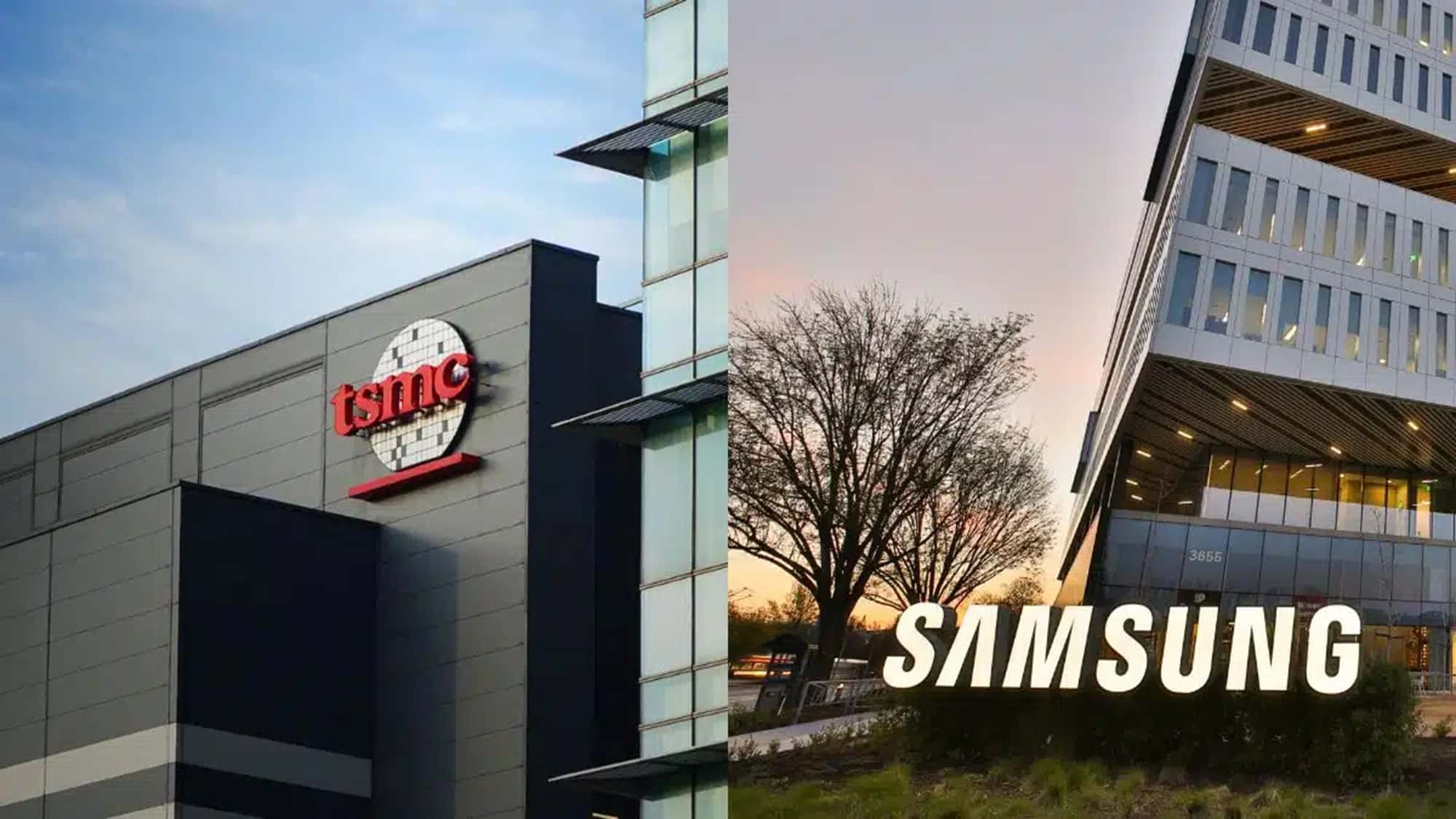
As the 2nm era kicks off, the global semiconductor race has heated up. TSMC has begun mass production of its most advanced 2nm technology to strengthen its lead in cutting-edge manufacturing. This move follows Samsung’s earlier start of mass production of its 2nm node for the Exynos 2600 chip. This sets the stage for intensified competition between the two foundries.
Samsung sees opportunity amid TSMC’s 2nm push
TSMC has announced that its 2nm (N2) technology has started volume production in Q4 2025 as planned. The company says Fab 20 (in Hsinchu) and Fab 22 (in Kaohsiung) are the production facilities for the next-gen process. While the Taiwanese firm did not disclose detailed output levels or yield rates, the start of volume production suggests it has achieved manufacturing readiness.
TSMC’s N2 process delivers major improvements over its existing 3nm technology. These include 25-30% better power efficiency and 10-15% higher performance. Demand for the company’s 2nm process is already robust, with major customers like Apple and Nvidia filling nearly a full year of production capacity. As a result, it reportedly plans to increase 2nm production plants in Taiwan.
Meanwhile, Samsung is working to close the gap with TSMC as it ramps up its own 2nm (SF2) process. The company is reportedly mass-producing the Exynos 2600 chip, expected to power some units of the upcoming Galaxy S26 series, using this technology.
The SF2 performance gains are around 8% in power efficiency and 5% in performance compared to its second-generation 3nm process. However, Samsung’s 2nm process performance on paper does not look promising compared to TSMC’s. The reason for minimal performance gains is that the company originally designed SF2 as a third-generation 3nm process.
Samsung can’t repeat its 3nm mistakes
Samsung sees increasing opportunities thanks to current market conditions and geopolitical factors. As TSMC’s 2nm capacity fills up quickly and prices rise, major technology companies will likely lean toward the Korean foundry. Likewise, Taiwan’s technology protection policies (N-2 principle) may also go in Samsung’s favor.
The rule requires that technologies sent overseas be at least two generations behind, meaning TSMC cannot immediately deploy its latest nodes at its Arizona plant in the US. With Samsung already securing 2nm chip supply deals with major clients like Tesla, the company appears to be on the right track to gain a solid foothold in this space.
That said, Samsung also had a head start over TSMC in the 3nm era. It started 3nm mass production almost six months before its Taiwanese rival. Yet, TSMC achieved better yield and performance, capturing the bulk of the market. Samsung can’t repeat those mistakes again in the 2nm era. Time will tell whether it’s up for the task.

Follow us on Google Discover & set us as a preferred source in Google News
Share this Post
___________________________


New Blog Posts
___________________________

First Set of Pixel 11 Pro XL Renders Are Here
Pixel 11 Pro XL CAD renders show minimal design changes

Is Samsung Preparing One UI 8.5 Beta for Galaxy Z Fold 5 and Flip 5?
Samsung may launch a One UI 8.5 beta program for its 2023 foldables
Galaxy S25 One UI 8.5 Beta May Run Longer Than Expected
Galaxy S25 series’ One UI 8.5 beta may stretch to 10 rounds