Samsung Reclaims No. 1 Spot in DRAM as Memory Prices Surge
SammyGuru is reader-supported. We have affiliate and sponsored partnerships, so we may earn a commission when you buy through links on our site — at no extra cost to you. Learn more.
Samsung is benefiting from a dramatic shift in the global memory market. Rising prices and renewed competitive positioning helped it reclaim the top spot in DRAM in Q4 2025, driving strong profitability for its semiconductor division and the company as a whole. Better yet, industry experts predict a continued surge in memory chip prices through 2026.
Samsung led the Q4 2025 DRAM market by revenue, thanks to a huge price boost
According to Counterpoint Research, memory prices climbed sharply late last year. Both DRAM and NAND flash components saw significant increases in the final quarter of 2025. DRAM prices increased by roughly 40–50% in Q4, with a similar increase expected in the first half of 2026. The research firm predicts another 20% hike in the second half of the year.
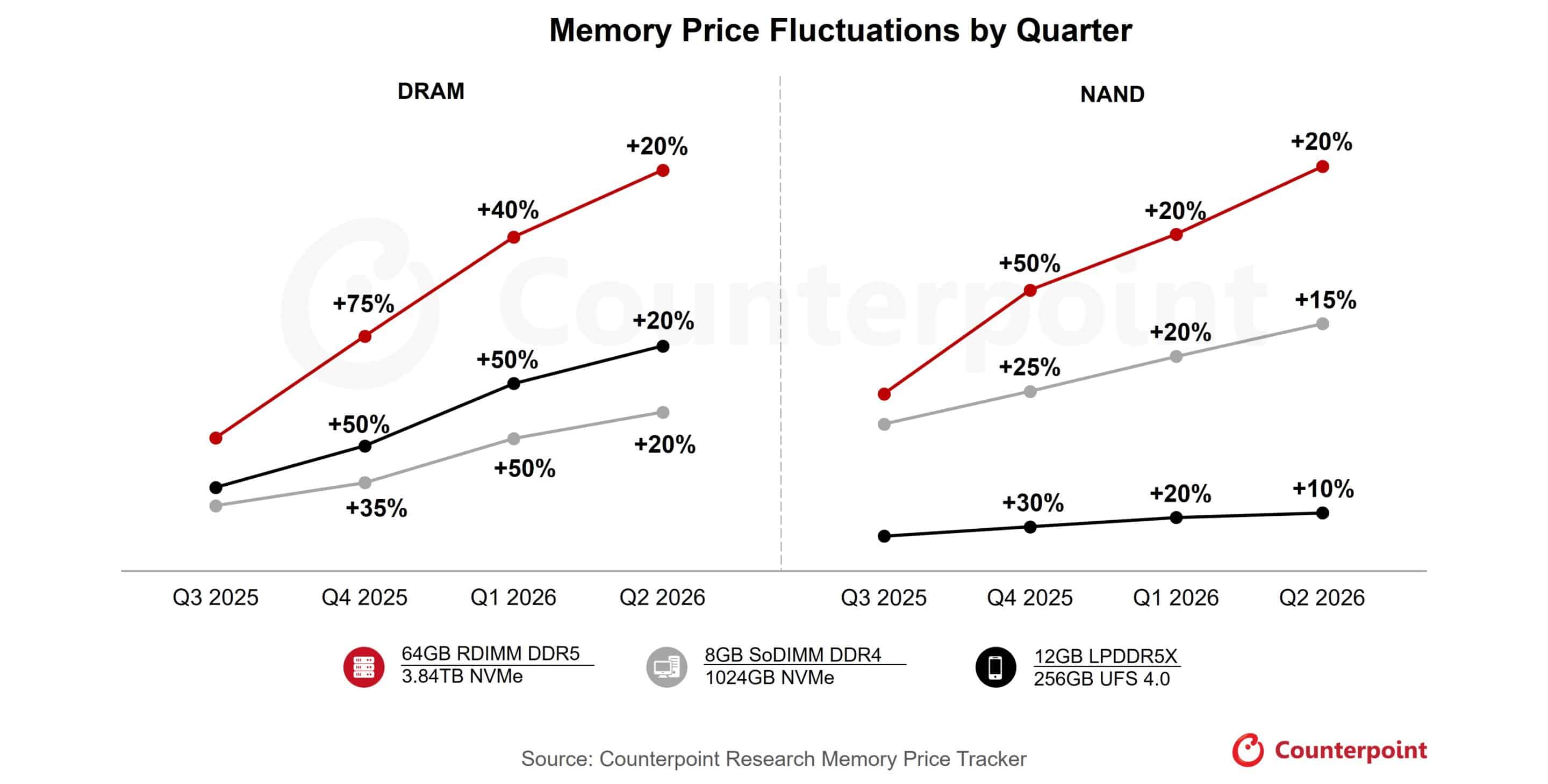
64GB RDIMM prices, for example, jumped from $255 in Q3 2025 to $450 in Q4 2025. It could hit $700 by March 2026, and possibly climb to $1,000 by the end of the year. That’s roughly $1.95 per Gigabit (Gb), almost double its 2018 high of $1.00 per Gb. Memory already accounts for about 10% of a high-end flagship phone’s total bill of materials (BoM), and it could grow to 20% soon.
This surge has been driven by a persistent shortage of memory supply and escalating demand, particularly from AI data centers and server operators. While Counterpoint expects DRAM production to grow 24% YoY in 2026, it will still “take time to meet demand.”
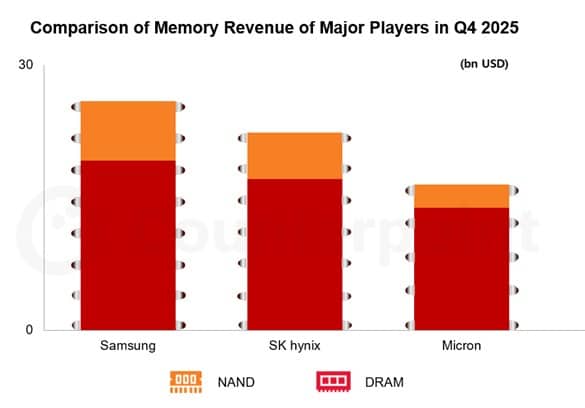
Amid this backdrop, Samsung has made significant progress in regaining its leadership position in the memory market. Counterpoint’s latest analysis shows that the company generated a record-breaking revenue of KRW 37.4 trillion (approx. $25.9 billion) from memory sales in Q4 2025. That’s 40% of Samsung’s total sales revenue for the quarter, and a stellar 34% growth compared to the previous quarter.
The Korean giant now holds the global No. 1 position by revenue in both the DRAM and NAND segments. The two memory segments generated revenues of KRW 27.7 trillion (~$19.2 billion) and KRW 9.7 trillion (~$6.7 billion), respectively.
This resurgence comes after a period where Samsung’s DRAM division lagged behind competitors like SK Hynix and Micron, particularly in advanced high-bandwidth memory (HBM) segments. Recent performance indicates that the company has strengthened its production strategies and responsiveness to market demand, helping it capture a greater share even as prices rise.

Written by
Sumit AdhikariSumit, a life-long Samsung user, is passionate about technology and has been professionally writing on tech since 2017. He’s a mathematics graduate by education and enjoys teaching basic mathematics tricks to school kids in his spare time. Sumit believes in artificial intelligence and dreams of a fully open, intelligent and connected world.

Follow us on Google Discover & set us as a preferred source in Google News
Share this Post
___________________________


New Blog Posts
___________________________
First Set of Pixel 11 Pro XL Renders Are Here
Pixel 11 Pro XL CAD renders show minimal design changes
Is Samsung Preparing One UI 8.5 Beta for Galaxy Z Fold 5 and Flip 5?
Samsung may launch a One UI 8.5 beta program for its 2023 foldables
Galaxy S25 One UI 8.5 Beta May Run Longer Than Expected
Galaxy S25 series’ One UI 8.5 beta may stretch to 10 rounds