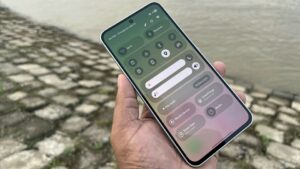
Samsung’s Quick Share is Superior to Google’s — Here’s How
SammyGuru is reader-supported. We have affiliate and sponsored partnerships, so we may earn a commission when you buy through links on our site — at no extra cost to you. Learn more.
When Google and Samsung announced the merger of their file-sharing platforms, it marked a major step toward simplifying Android’s ecosystem. Google’s in-house solution, Nearby Share, officially merged with Samsung’s Quick Share, adopting the latter’s name and branding. The goal was to deliver an AirDrop-like experience that worked seamlessly across all Android devices, Chromebooks, and even Windows PCs.
Today, Quick Share comes pre-installed on most Android devices and is available through Google Chrome and Windows as well. However, despite their shared interface and branding, Samsung’s and Google’s Quick Share implementations are not technically identical. This difference gives Samsung a real advantage: compatibility with iOS.
Samsung’s Quick Share offers better real-world compatibility
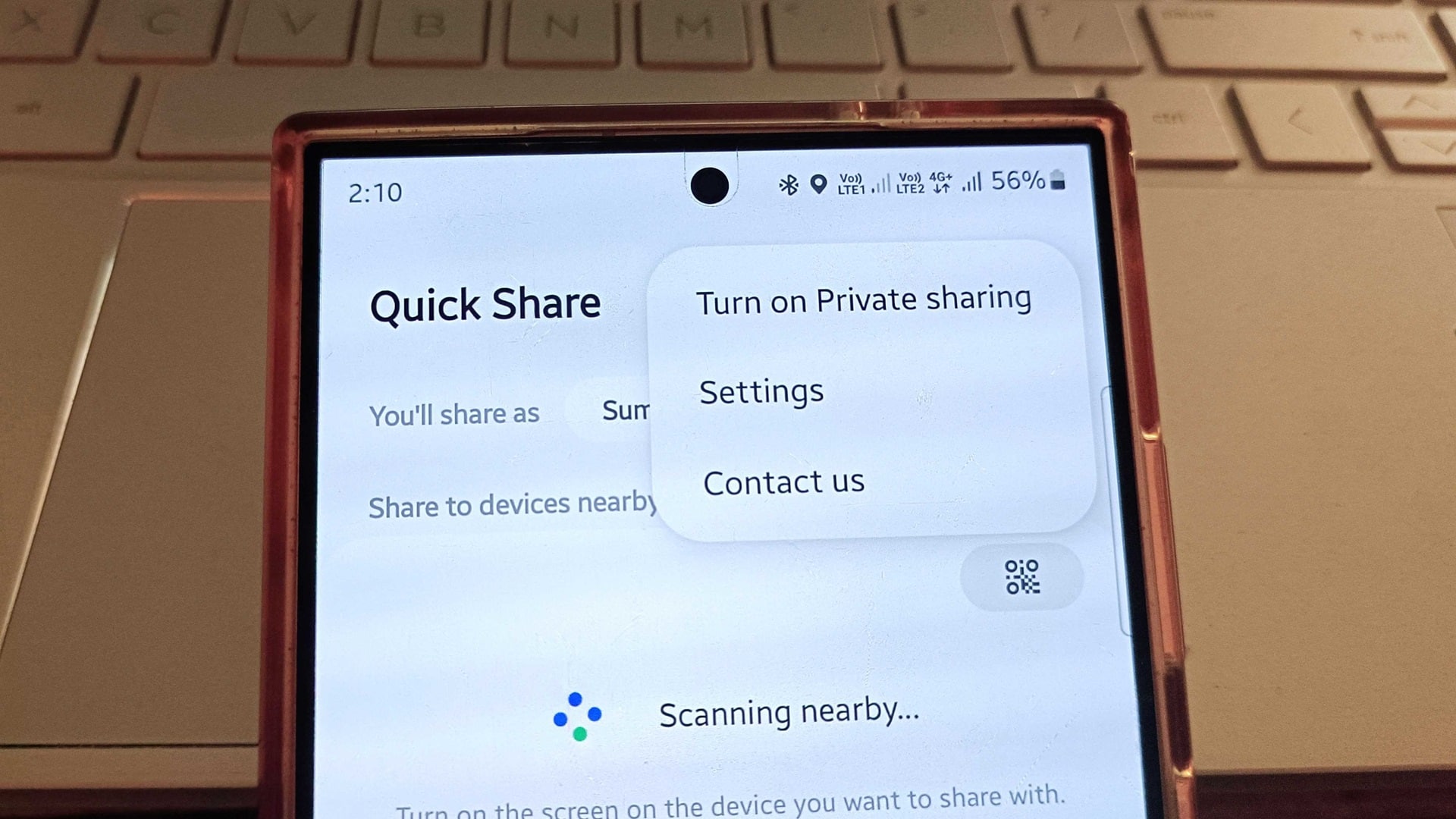
Samsung originally developed Quick Share as a proprietary feature for Galaxy devices, built on its own Samsung Cloud infrastructure. Even after merging with Google’s Nearby Share, Samsung chose to retain its independent backend system, especially for web-based and cross-platform sharing.
This design choice continues to pay off. When sharing files via QR code, Galaxy users can send files to virtually any device through a secure web link, including iPhones. In contrast, users on Google’s version of Quick Share (found on Pixel and other Android phones) encounter an error message: Sharing using a QR code is only supported on Android devices at this time.
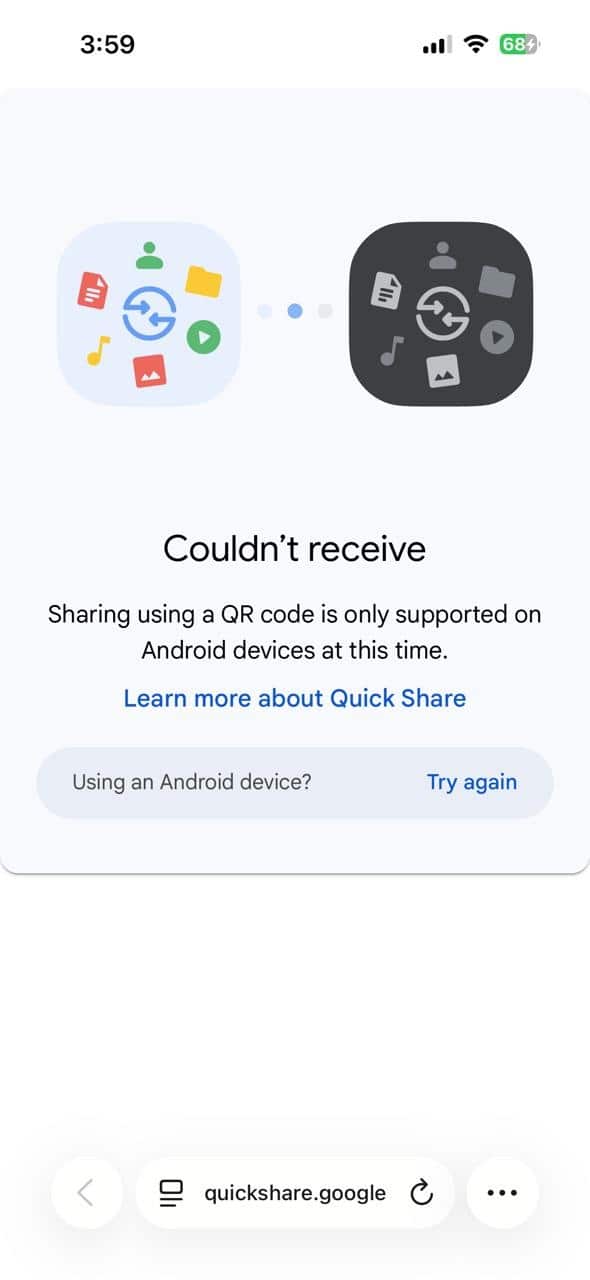
That’s because Google’s Quick Share relies on Google Play Services and Android’s system-level relay, which currently limits QR and link-based transfers to Android devices only. Samsung’s version, however, leverages its own cloud servers to generate shareable URLs, allowing recipients on any platform to access the files instantly.
In real-world use, this means Samsung’s Quick Share remains more flexible and universal, even though both systems now look and feel the same. On the other hand, Google’s version standardizes Android integration but falls short of cross-platform flexibility. This distinction also highlights Samsung’s ongoing strength in software optimization.
Fadhel contributed to this article!

Written by
Sumit AdhikariSumit, a life-long Samsung user, is passionate about technology and has been professionally writing on tech since 2017. He’s a mathematics graduate by education and enjoys teaching basic mathematics tricks to school kids in his spare time. Sumit believes in artificial intelligence and dreams of a fully open, intelligent and connected world.
Follow us on Google Discover & set us as a preferred source in Google News
Share this Post
___________________________


New Blog Posts
___________________________
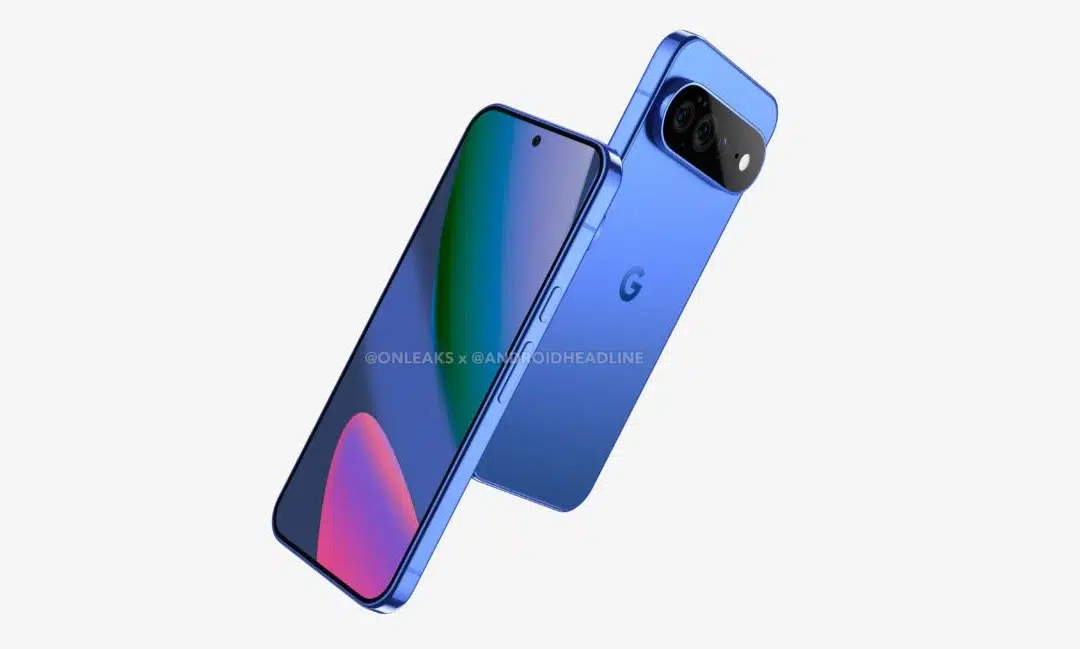
First Set of Pixel 11 Pro XL Renders Are Here
Pixel 11 Pro XL CAD renders show minimal design changes
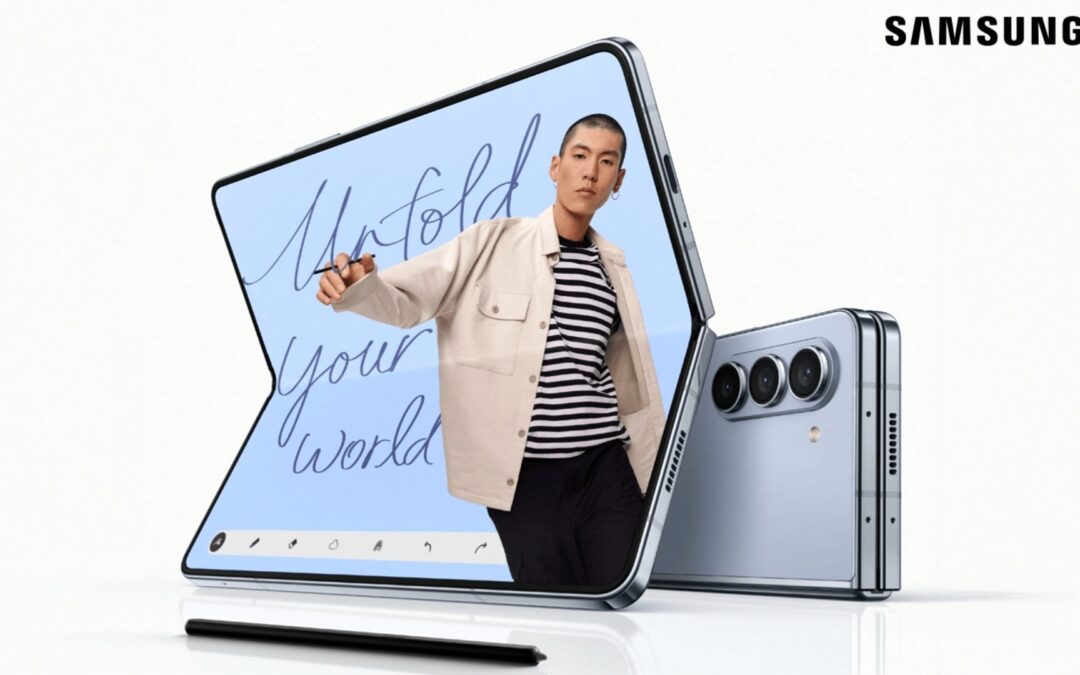
Is Samsung Preparing One UI 8.5 Beta for Galaxy Z Fold 5 and Flip 5?
Samsung may launch a One UI 8.5 beta program for its 2023 foldables
Galaxy S25 One UI 8.5 Beta May Run Longer Than Expected
Galaxy S25 series’ One UI 8.5 beta may stretch to 10 rounds