
Samsung Announces Exynos 1680 With Faster GPU and Improved AI
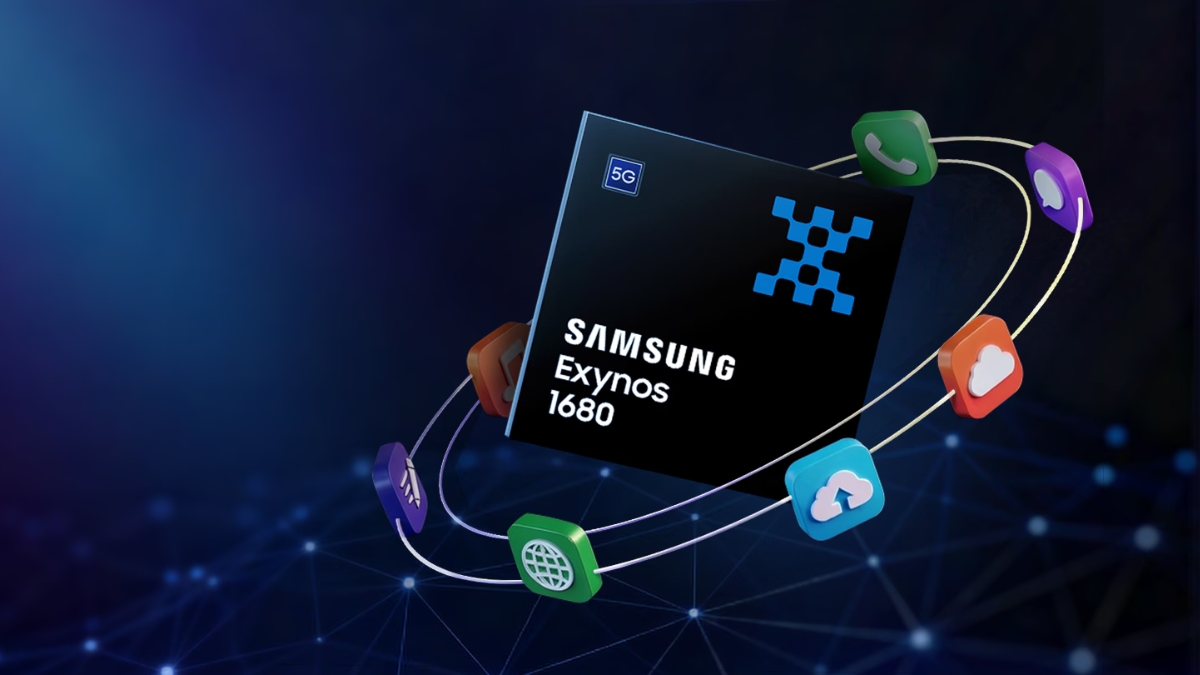
Samsung has officially unveiled the Exynos 1680, its latest mid-range smartphone processor. It is trying to close the gap with flagship-tier silicon. Built on an enhanced 4nm process, the new chip introduces a redesigned octa-core CPU with a 1+4+3 layout.
It includes one Cortex-A720 core at 2.9GHz, four Cortex-A720 cores at 2.6GHz, and three Cortex-A520 cores at 1.95GHz. More mid-performance cores should improve multitasking and sustained performance without a major hit to battery life.
Exynos 1680 pairs Xclipse 550 GPU with AMD’s RDNA 3 architecture
On the graphics side, Samsung uses the Xclipse 550 GPU based on AMD’s RDNA 3 architecture, with two Work Group Processors and two Render Blocks. The company claims a 15–16% boost in graphics performance, along with support for Full HD+ displays at up to 144Hz.
AI is another focus, with the integrated NPU delivering up to 19.6 TOPS, a clear jump over its predecessor, enabling faster on-device processing for tasks like image enhancement and other smart features.
Beyond performance, the Exynos 1680 adds upgrades in memory, imaging, and connectivity. It supports LPDDR5X RAM and UFS 4.1 storage, which should improve app load times, responsiveness, and data handling.
Samsung Exynos 1680 brings 200MP camera and 4K video support
The image signal processor has been refined. As a result, you can expect better noise reduction, improved contrast, and more accurate colors, especially in low light. The chipset supports camera sensors up to 200MP and 4K video recording at 60fps with 10-bit HDR for photos and videos.
Connectivity is up to date, with a 5G modem capable of download speeds up to 5.1Gbps and uploads up to 1.28Gbps on sub-6GHz networks, along with solid LTE fallback. It also includes Wi-Fi 6E, NFC, multi-system GNSS support, and Bluetooth 6.1.
The upcoming Galaxy A57, already unveiled, runs on the Exynos 1680. It’s official in select markets, so unboxings and hands-on videos aren’t surprising. It should hit the US soon.

Follow us on Google Discover & set us as a preferred source in Google News
Share this Post
___________________________


New Blog Posts
___________________________
First Set of Pixel 11 Pro XL Renders Are Here
Pixel 11 Pro XL CAD renders show minimal design changes

Is Samsung Preparing One UI 8.5 Beta for Galaxy Z Fold 5 and Flip 5?
Samsung may launch a One UI 8.5 beta program for its 2023 foldables
Galaxy S25 One UI 8.5 Beta May Run Longer Than Expected
Galaxy S25 series’ One UI 8.5 beta may stretch to 10 rounds