Samsung Doubles Down on Next-Gen Memory Chips to Ride the AI Wave
SammyGuru is reader-supported. We have affiliate and sponsored partnerships, so we may earn a commission when you buy through links on our site — at no extra cost to you. Learn more.
Samsung’s memory business played a key role in boosting its overall revenue and profit in the third quarter of 2025. And as the memory demand rises with the AI boom, the company is reportedly investing heavily in next-gen DRAM and NAND technologies. This will help the firm meet the growing demand for memory in AI infrastructures while strengthening its position in this space.
Samsung is developing advanced memory chips for the booming AI market
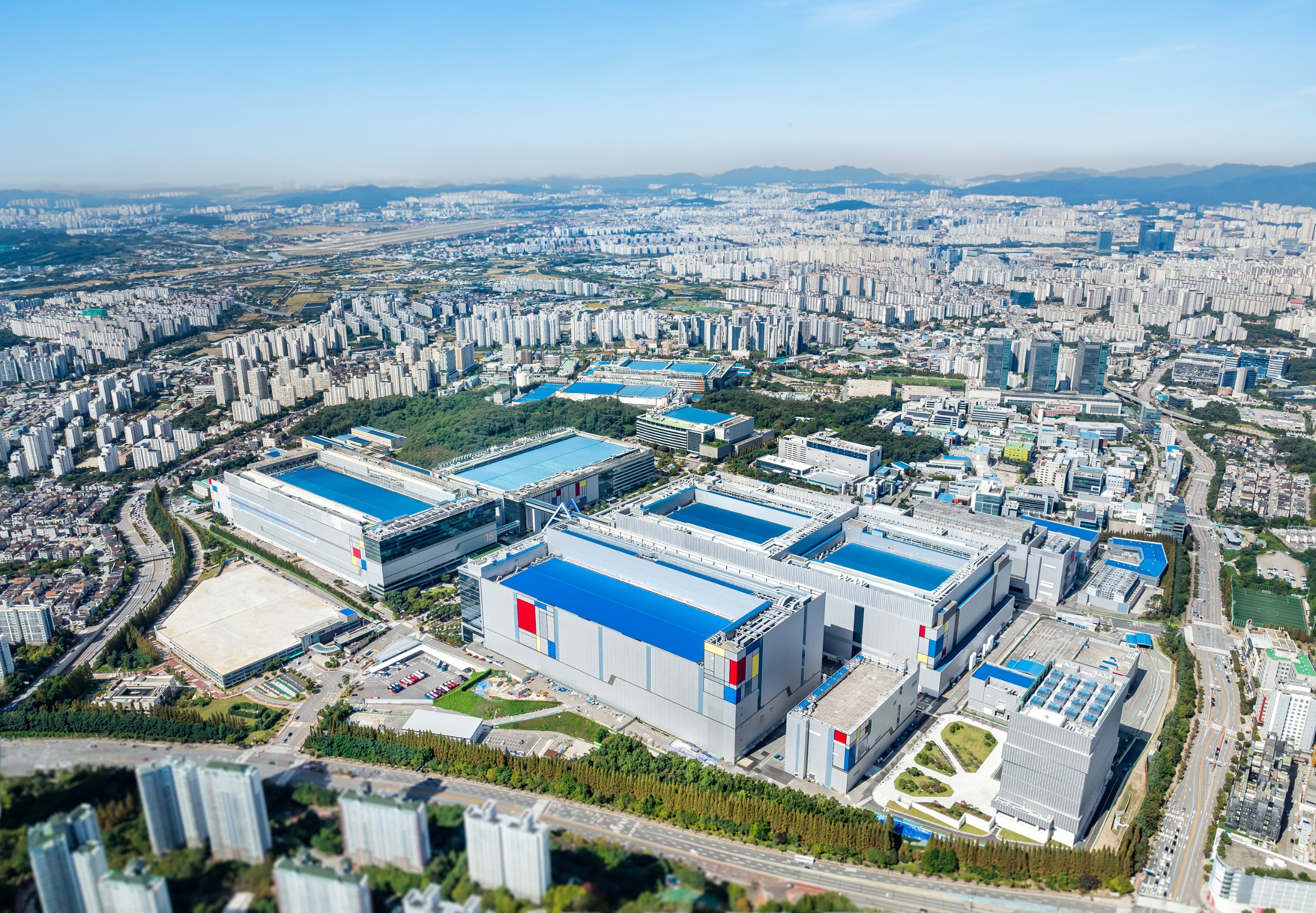
Since late 2023, Samsung has had to slow down its memory business due to sluggish market demand. However, with the recent wave in AI-related workloads, the company has restarted large-scale investments to upgrade its production lines. According to a report from Digital Daily, Samsung has been renovating its Pyeongtaek campus in Gyeonggi Province to support advanced memory production.
In the first half of the year, Samsung invested in about 30,000 wafers for Phase 1 of its P4 plant in Pyeongtaek, focusing on 6th-generation (1b) 10nm-class DRAM. Starting in October, equipment required to mass-produce 7th-generation (1c) DRAM began arriving at Phase 3 of the same plant.
Samsung may continue its investments till the third quarter of 2026 for Phase 4 of the P4 plant, followed by Phase 2 in late 2026 to early 2027. The goal is to make the entire P4 line fully operational by 2026-2027 while producing future memory technologies like HBM4, DDR5, and LPDDR6. The 1c DRAM process (more advanced than the current 1b process) will play a big role in high-performance memory such as HBM4.
Speaking of the NAND sector, the company is investing in its 9th-generation (V9) 3D NAND chips (15,000 wafers) at the P4 Phase 1 facility. This chip features more than 290 cell layers, which is important for handling the massive data generated during AI model training and inference. In 2027, Pyeongtaek lines P1 and P2 may switch to V9 NAND. Meanwhile, Samsung is also planning a similar upgrade at its Xi’an fab in China.
“Samsung Electronics’ complete reorganization of its mass production line centered on P4 in Pyeongtaek is a preemptive reflection of the future surge in demand in the AI memory market,” said an industry insider.

Written by
Binay KonwarBinay Konwar started his blogging journey in 2014 and has since written plenty of tech articles. At present, he is working as a News Writer at SammyGuru, covering everything about Samsung. He holds a Master's degree in Mathematics, but his real passion lies in tech and writing. In his free time, he enjoys playing chess and watching movies.

Follow us on Google Discover & set us as a preferred source in Google News
Share this Post
___________________________


New Blog Posts
___________________________

First Set of Pixel 11 Pro XL Renders Are Here
Pixel 11 Pro XL CAD renders show minimal design changes

Is Samsung Preparing One UI 8.5 Beta for Galaxy Z Fold 5 and Flip 5?
Samsung may launch a One UI 8.5 beta program for its 2023 foldables
Galaxy S25 One UI 8.5 Beta May Run Longer Than Expected
Galaxy S25 series’ One UI 8.5 beta may stretch to 10 rounds