Samsung Develops Technology for Early Detection of Alzheimer’s
SammyGuru is reader-supported. We have affiliate and sponsored partnerships, so we may earn a commission when you buy through links on our site — at no extra cost to you. Learn more.
Samsung has made substantial progress in the early detection of Alzheimer’s disease dementia by using innovative technology. Ahead of World Alzheimer’s Day (September 21), the company has highlighted its ongoing work to raise awareness about the disease. The research team is focusing on identifying the earliest signs using everyday devices, such as smartphones and wearables.
Digital biomarker technology can improve the early detection of Alzheimer’s disease
Alzheimer’s disease is the most common type of dementia, with around 60 to 70% of cases worldwide. Once its symptoms appear, memory and thinking abilities steadily decline. As such, early diagnosis is important, allowing people to make lifestyle changes, such as improving their diet and exercising. It also enables starting drug and non-drug interventions earlier to preserve cognitive abilities.
Thanks to Samsung Research, it has developed digital biomarker technology that can track changes in cognitive function. For this, it collects detailed information about users’ habits and behaviors from smartphones and wearables. This includes app usage, typing speed, messaging patterns, call frequency, sleep, and voice.
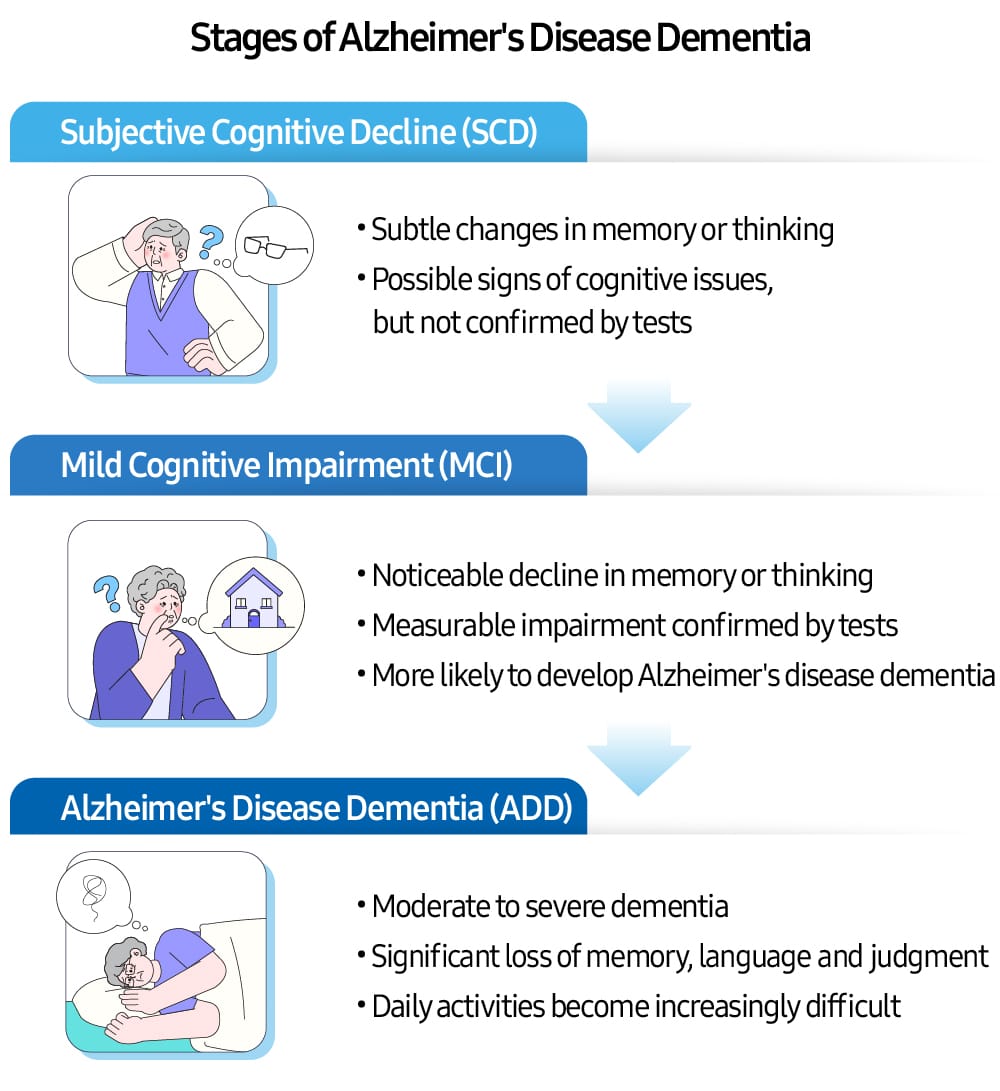
Researchers say that digital biomarkers can detect early signs of memory and thinking decline. The tech analyzes multimodal data from smartphones and wearables to estimate cognitive states. For example, if the user recalls and repeats short sentences, it can evaluate short-term memory-related brain regions. It can assess speech fluency and accuracy to learn the state of language ability. Furthermore, patterns in app use, messaging, and calls can offer insights into social networks and the brain’s executive functions.
In July, the Samsung Research team showcased its studies at an international medical conference in Copenhagen. It presented how its technology can analyze smartphone keyboard patterns, such as typing speed and corrections, to detect early signs of cognitive impairment. Furthermore, it used smartphone and Galaxy Watch sensors to track walking patterns, including gait speed, stride length, and balance, which can also spot cognitive changes. These results were comparable to hospital-based dementia tests. Samsung plans to continue improving its digital biomarker technology for more accuracy.

Written by
Binay KonwarBinay Konwar started his blogging journey in 2014 and has since written plenty of tech articles. At present, he is working as a News Writer at SammyGuru, covering everything about Samsung. He holds a Master's degree in Mathematics, but his real passion lies in tech and writing. In his free time, he enjoys playing chess and watching movies.

Follow us on Google Discover & set us as a preferred source in Google News
Share this Post
___________________________


New Blog Posts
___________________________
First Set of Pixel 11 Pro XL Renders Are Here
Pixel 11 Pro XL CAD renders show minimal design changes

Is Samsung Preparing One UI 8.5 Beta for Galaxy Z Fold 5 and Flip 5?
Samsung may launch a One UI 8.5 beta program for its 2023 foldables
Galaxy S25 One UI 8.5 Beta May Run Longer Than Expected
Galaxy S25 series’ One UI 8.5 beta may stretch to 10 rounds