
Samsung Announces HBM4 Mass Production and Shipments
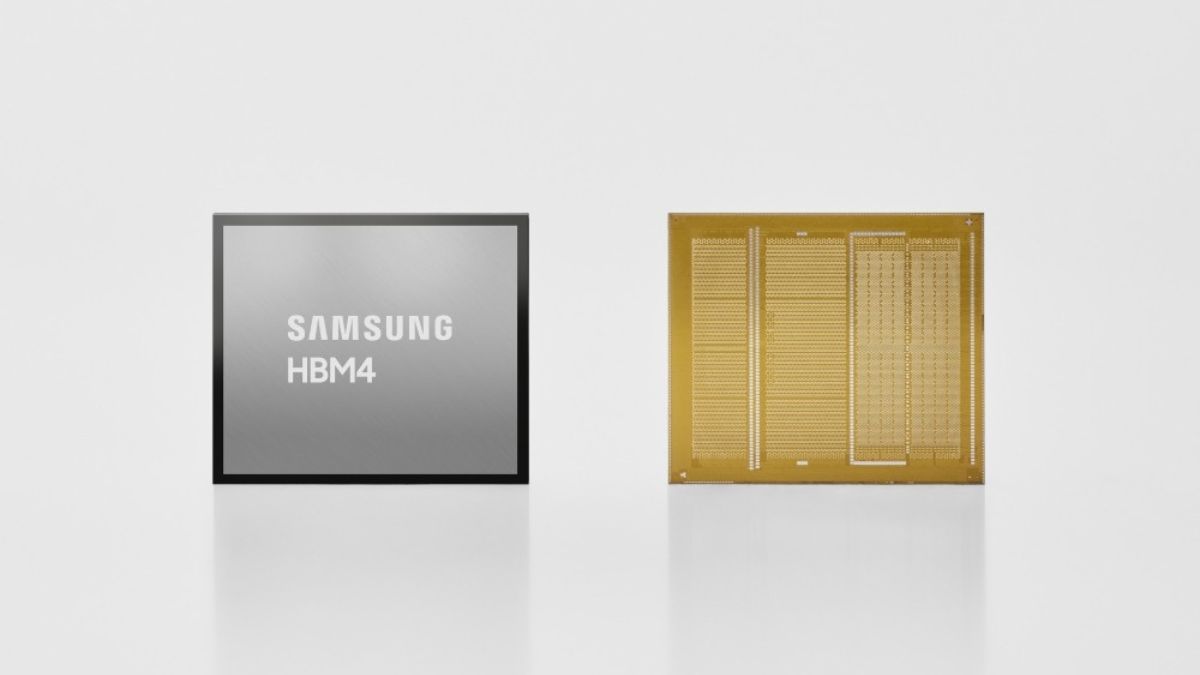
Samsung has officially announced HBM4, its 6th-generation high-bandwidth memory, designed to power advanced AI systems. The company has also confirmed the start of mass production and commercial shipments to customers. This makes it the first in the industry to do so, solidifying its lead in the HBM4 market.
Samsung’s HBM4 offers record-breaking processing speed
The announcement comes just after Samsung’s Chief Technology Officer (CTO) expressed confidence in HBM4 during the ongoing Semicon Korea 2026. The company’s HBM4 offers outstanding performance, energy efficiency, and high reliability for next-generation datacenters. Thanks to 6th-generation 10nm-class DRAM (1c DRAM) and 4nm logic process, the chip delivers stable yields and industry-leading performance.
Samsung’s HBM4 operates at a consistent processing speed of 11.7 gigabits-per-second (Gbps). This is around 46% faster than the current industry standard of 8 Gbps and about 1.22x increase than its predecessor, HBM3E (9.6 Gbps). HBM4 can also reach up to 13 Gbps for advanced AI workloads.
Aside from speed, the chip delivers a substantial increase in memory bandwidth. A single memory stack can reach up to 3.3 terabytes per second (TB/s), which is around 2.7 times more than HBM3E. Samsung offers HBM4 in capacities ranging from 24GB to 36GB thanks to 12-layer stacking technology. The company plans to expand to 48GB using 16-layer stacking in the future.
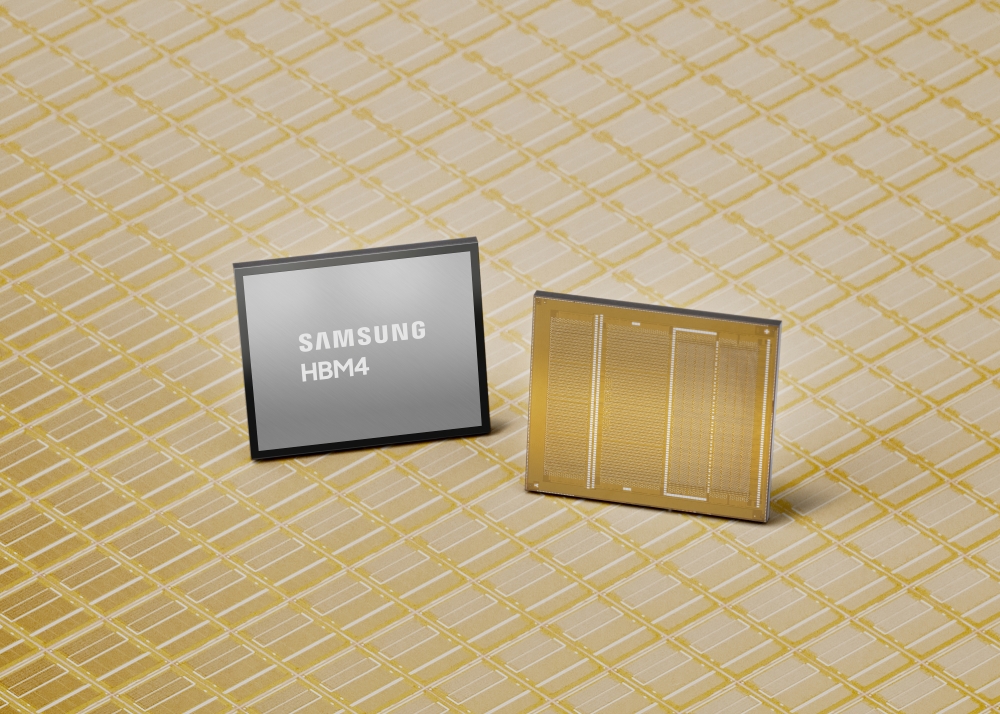
Samsung has doubled the data I/Os (from 1,024 to 2,048 pins) on HBM4 to address power consumption and thermal challenges. The memory uses (TSV) technology and an optimized power distribution network (PDN) to achieve a 40% improvement in power efficiency. This setup also results in 10% higher thermal resistance and 30% improved heat dissipation compared to HBM3E.
“By leveraging our process competitiveness and design optimization, we are able to secure substantial performance headroom, enabling us to satisfy our customers’ escalating demands for higher performance, when they need them,” said Sang Joon Hwang, Executive Vice President and Head of Memory Development at Samsung Electronics.
Samsung says its tightly integrated Design Technology Co-Optimization (DTCO) between its Foundry and Memory businesses ensures high-quality production and improved yield. The company expects to see more than a threefold increase in HBM sales in 2026 compared to 2025. Moreover, it plans to begin sampling HBM4E in the second half of 2026 and supply samples of custom HBM solutions in 2027.

Follow us on Google Discover & set us as a preferred source in Google News
Share this Post
___________________________


New Blog Posts
___________________________
First Set of Pixel 11 Pro XL Renders Are Here
Pixel 11 Pro XL CAD renders show minimal design changes

Is Samsung Preparing One UI 8.5 Beta for Galaxy Z Fold 5 and Flip 5?
Samsung may launch a One UI 8.5 beta program for its 2023 foldables
Galaxy S25 One UI 8.5 Beta May Run Longer Than Expected
Galaxy S25 series’ One UI 8.5 beta may stretch to 10 rounds