Samsung’s Gamble with Galaxy S26 Ultra: Change the Glass, Not the Sensor
SammyGuru is reader-supported. We have affiliate and sponsored partnerships, so we may earn a commission when you buy through links on our site — at no extra cost to you. Learn more.
In this article
- The LOFIC threat: Why 1-inch sensors look so impressive
- Samsung’s philosophy: Atmosphere over raw data
- LOFIC’s real advantage, and its real limitation
- The variable aperture trap
- The Galaxy S26 Ultra camera gamble: Change the glass, not the sensor
- The real trade-off: Flare vs. atmosphere
- Galaxy S26 Ultra main camera: Evolution or desperation?
- The future: It’s not just about size
With Chinese brands pushing aggressively into massive sensor territory, smartphone photography is once again chasing the familiar “bigger is better” narrative. Phones like the Xiaomi 17 Ultra are betting heavily on 1-inch LOFIC sensor technology to deliver extreme dynamic range and low-light performance. Samsung, however, appears to be taking a very different route with the Galaxy S26 Ultra.
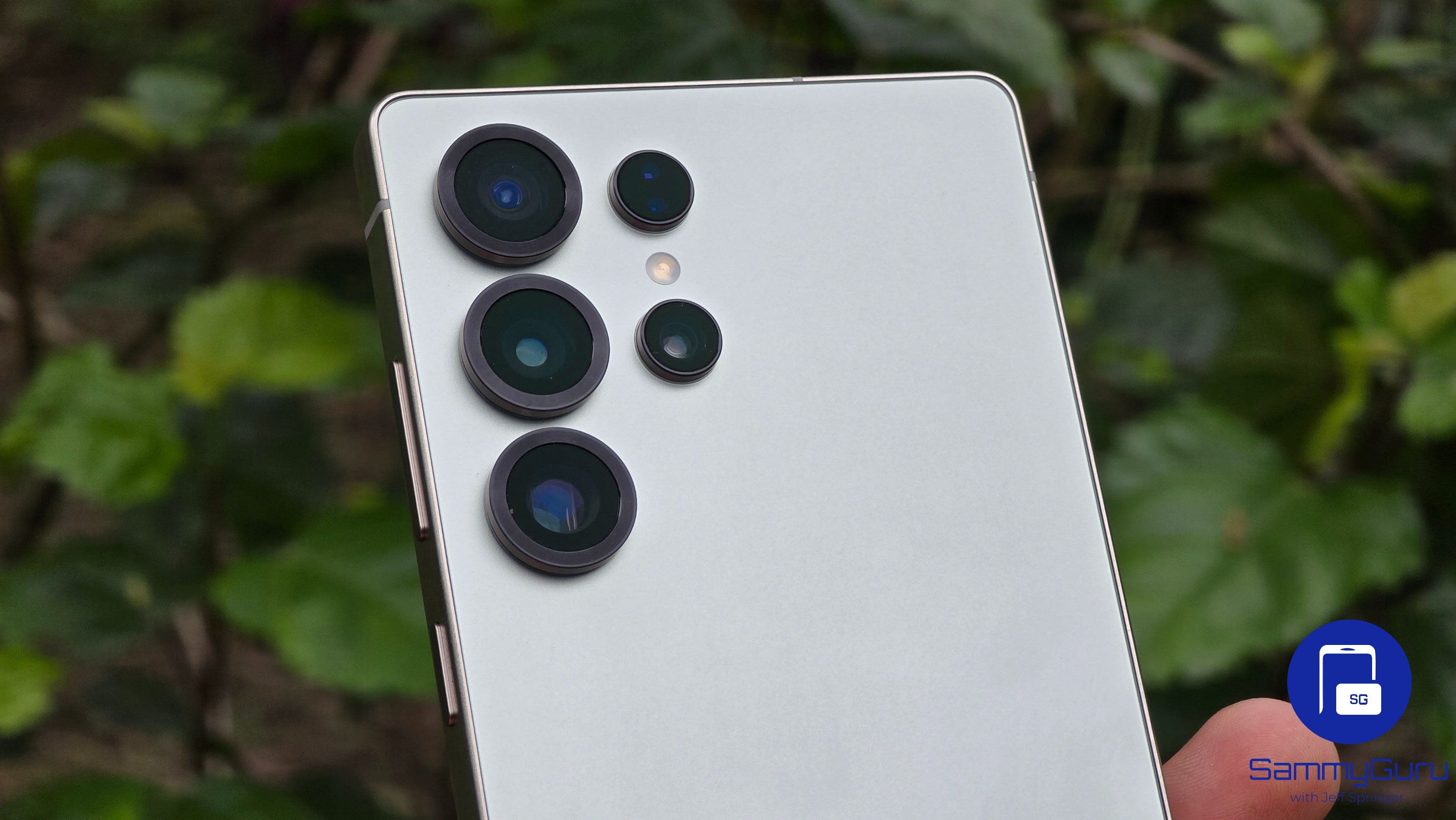
Instead of jumping to a bulky 1-inch sensor along with the optical, design, and flare-related compromises that come with it, rumors suggest Samsung will take a defensive posture by reusing the aging 200MP ISOCELL HP2 sensor. The key upgrade? A new 24mm f/1.4 main lens, a significant jump from the f/1.7 aperture on the Galaxy S25 Ultra, likely combined with a faster Snapdragon SoC and more mature image processing.
If this strategy proves real, Samsung may be aiming to approach 1-inch-class results using a smaller, more controlled imaging system. But make no mistake: if this fails, the company will lose its last line of defense. In real-world photography, that balance often matters more than sensor size alone, but the margin for error is now zero.
The LOFIC threat: Why 1-inch sensors look so impressive
Before discussing Samsung’s counter-move, it’s important to understand what it’s up against.
Disclaimer: I haven’t yet had a full retail Xiaomi 17 Ultra in hand, but analysis of early samples already explains why LOFIC (Lateral Overflow Integration Capacitor) technology is getting so much attention.
Unlike conventional sensors, which simply clip highlights to white when overwhelmed by light, LOFIC sensors include an additional charge storage path for each pixel. When a pixel saturates, excess charge is redirected instead of being lost.
On paper, this enables:
- No blown highlights
- Extreme highlight color separation
- Massive dynamic range in a single exposure
In extreme scenes like flames or gas burners, LOFIC output preserves details that others miss: distinctive blue gas at the base, hard orange flame tips, and clean transitions with minimal clipping. This approach prioritizes data fidelity and physical light behavior.
However, there’s an important detail that often gets overlooked. Even the Xiaomi 17 Pro Max, which already utilizes this technology, shows visible lens flare in these extreme highlight scenes. Soft glow bleed, internal reflections, and flare artifacts are present despite the advanced sensor.
That raises an unavoidable question: If this happens on a smaller LOFIC sensor, what happens when you scale up to a full 1-inch module with even larger, faster glass? LOFIC preserves information, but optics still obey physics.
Samsung’s philosophy: Atmosphere over raw data
Samsung’s approach, clearly visible on the Galaxy S25 Ultra, is fundamentally different. Instead of chasing maximum raw data, the Korean firm focuses on control and mood, simply because the hardware physically cannot capture more. On Galaxy flagships:
- Highlights are intentionally softened
- Transitions roll gently into white
- Colors near strong light sources are smoothed
- Lens flare is aggressively suppressed
In practice, Auto 12MP and Expert RAW modes show consistently clean highlights. Strong light sources rarely destroy the frame, and optical artifacts are tightly controlled. The result feels intentional: highlights “roll off” instead of exploding. The image looks cohesive and cinematic, with less “broadcast” and more “movie scene.” But on the Galaxy S26 Ultra, “mood” alone won’t be enough to save Samsung.
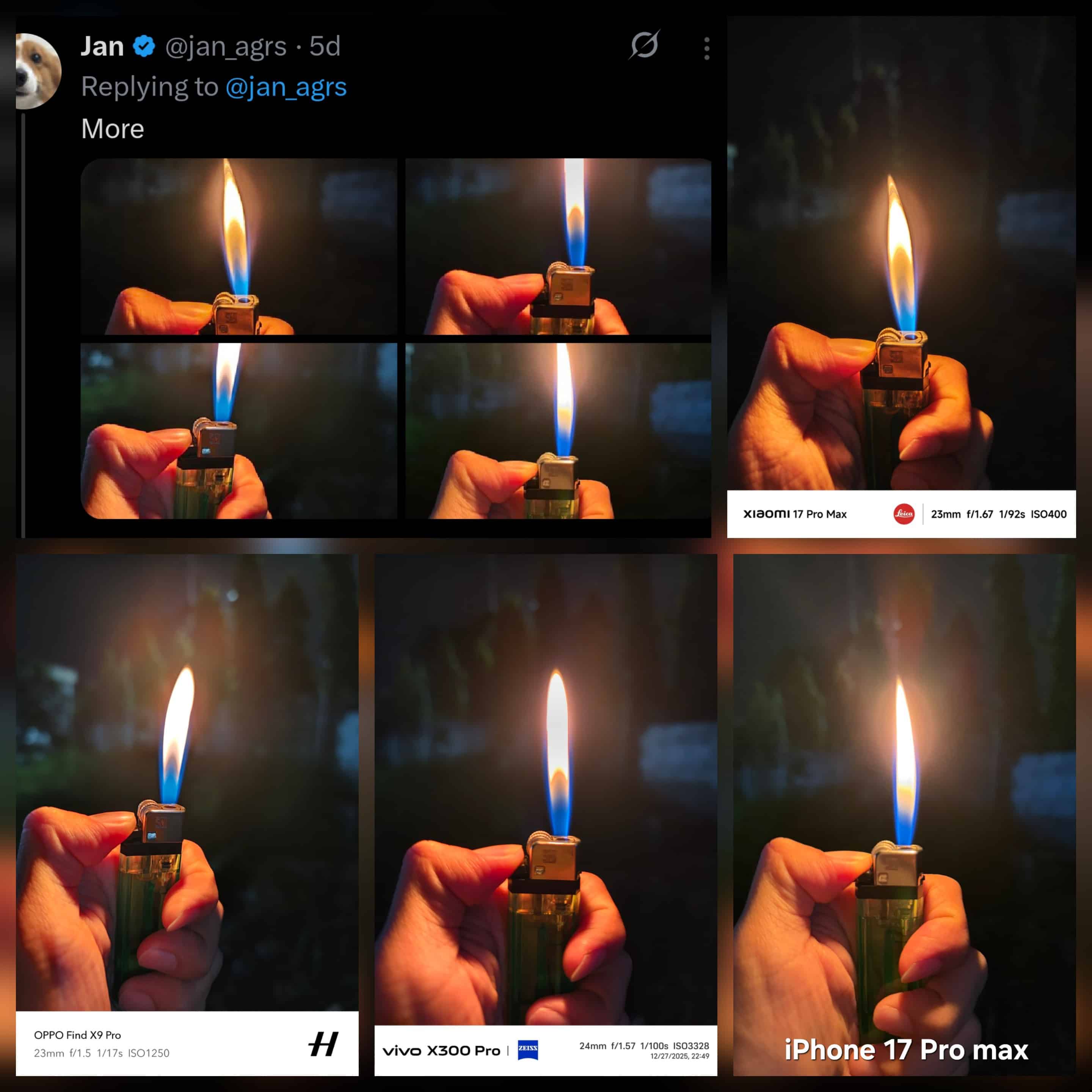
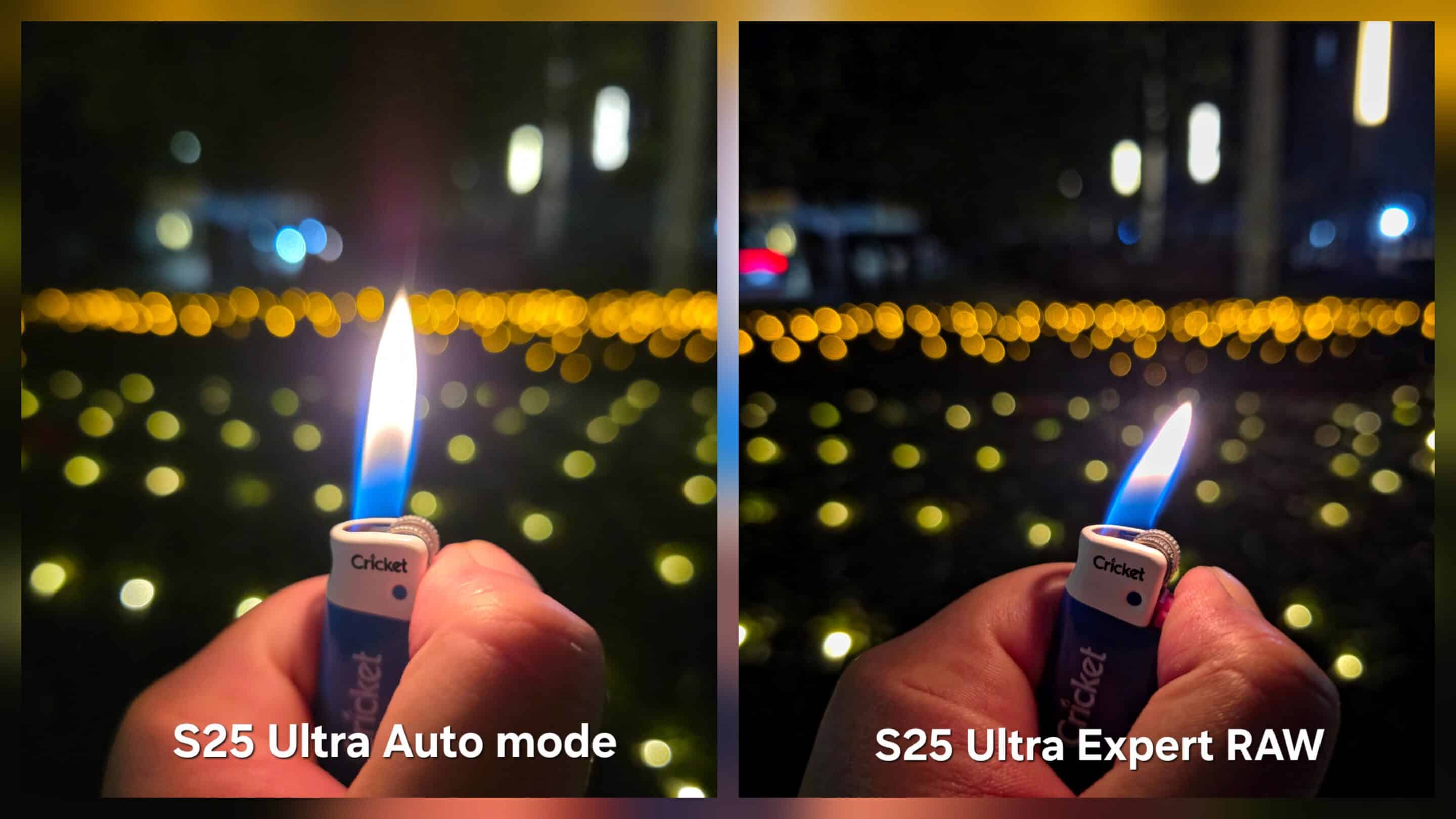
This same philosophy is shared by OPPO, vivo, and Apple, each with its own unique tuning. But credit where it’s due: The Galaxy S25 Ultra is currently one of the best smartphones on the market for lens flare control. But that is no longer enough. Check out my X post below for more.
S25 Ultra | 1x | All modes 📸
Big sensors (1" / LOFIC) sound like magic:
✔️ Huge dynamic range
✔️ Low noise
But they need big, fast glass… and that means ☀️ more risk of lens flare.Stop the lens down (smaller aperture)?
✅ Flare reduced
❌ Light reduced → noise back
❌ And… https://t.co/dCLLGhY9p8 pic.twitter.com/ASYDqqpKXt— W (@Wvisioncreation) December 28, 2025
In short: LOFIC prioritizes information. Samsung prioritizes atmosphere.
LOFIC’s real advantage, and its real limitation
To be clear, LOFIC is not marketing hype. It offers a real, physical advantage. By adding an extra charge storage path at the pixel level, LOFIC sensors can capture massive dynamic range in a single exposure. This is “data-first” imaging, capturing as much physical light information as possible. But LOFIC does not solve everything.
As sensor size increases, optics become the limiting factor. A 1-inch LOFIC sensor requires larger glass elements, wider entrance pupils, and more complex optical paths. This leads to a familiar trade-off:
- More light and data
- Higher risk of flare, reflections, and internal scattering
And here’s the key issue: LOFIC protects the sensor, not the lens. If unwanted light enters the optical system, no sensor technology can fully undo the physics.
The variable aperture trap
This is why variable aperture becomes almost mandatory for large 1-inch sensors, but it introduces a paradox. And notably, this feature does not exist on the Xiaomi 17 Ultra main lens. Wide Open: A 1-inch sensor enjoys its full-size advantage but suffers from high flare risk. Stopped Down: If you stop it down to control highlights and flare, the effective light-gathering advantage begins to resemble a standard 1/1.2″ or 1/1.3″ sensor. In other words: You control highlights, but you shrink the sensor’s real-world advantage.
The Galaxy S26 Ultra camera gamble: Change the glass, not the sensor
So how does Samsung compete with LOFIC without switching to a 1-inch sensor? By changing the lens. Leaks suggest the Galaxy S26 Ultra will retain the 200MP HP2 sensor but upgrade the main lens to f/1.4, a major step up from the f/1.7 lens on the S25 Ultra.
In optical terms, this is not a small upgrade.
- Closing the light gap: An f/1.4 lens gathers roughly 45–50% more light than an f/1.7 lens. This allows Samsung to lower ISO in low-light scenes, reducing noise naturally and depending less on aggressive computational cleanup. It won’t magically turn the HP2 into a 1-inch sensor, but it significantly narrows the real-world gap without introducing massive optics.
- Real optical bokeh, not just software blur: A wider aperture also means a shallower depth of field: more natural background separation, less reliance on portrait cutouts, and smoother subject-to-background transitions. This pushes Samsung closer to optical realism.
- Faster shutter, better motion capture: More incoming light enables faster shutter speeds, meaning better motion freezing and less blur indoors. This directly addresses one of Samsung’s long-standing weaknesses: motion capture in low light.
The real trade-off: Flare vs. atmosphere
This is where the real battle begins. Large 1-inch LOFIC systems pay a clear price in flare risk. Samsung, by contrast, has built its reputation on optical discipline. But let’s be clear: Moving to f/1.4 will increase flare risk. Faster glass always brings this challenge, no matter the brand.
The difference will be how Samsung manages its last defense against superior specs. If the company pairs the f/1.4 lens with more advanced lens coatings, continued aggressive flare suppression, and refined highlight roll-off, it may achieve something rare:
- The brightness of larger sensors
- The cleanliness of smaller, well-controlled optics
Galaxy S26 Ultra main camera: Evolution or desperation?
The Galaxy S26 Ultra doesn’t need a 1-inch sensor to compete, or at least, that is what Samsung wants us to believe. It can be true. If Samsung delivers a 24mm f/1.4 lens, the mature 200MP HP2 sensor, and refined HDR, it could strike a very smart balance:
- Enough light to challenge LOFIC giants
- Enough control to preserve Samsung’s clean, cinematic look
Samsung may once again bet on the better system, not the biggest sensor. Real-world Galaxy S26 Ultra vs Xiaomi 17 Ultra tests will tell the full story.
The future: It’s not just about size
LOFIC or similar technology with bigger sensors could certainly be the future for Samsung as well, but its plan appears delayed. Realistic solutions are not about sensor size alone. The path forward relies on smarter engineering, not just bigger hardware:
- Advanced nano-structure coatings to suppress flare at the optical level
- Hybrid aperture systems that adjust without collapsing the sensor advantage
- Smarter per-pixel exposure paired with moderate sensor sizes
- Faster lenses on smaller sensors, reducing the need for extreme glass
In this context, the Galaxy S26 Ultra might be a great balance or a massive failure. LOFIC is about capturing everything. Samsung is about shaping what matters.
The Galaxy S26 Ultra may not win the spec race, but it may once again prove that the best camera isn’t the one that sees the most, but the one that sees right. Or it will fail completely and teach Samsung a painful lesson. Time will tell. And when it comes to telephoto? That’s a whole different race for another article.


Follow us on Google Discover & set us as a preferred source in Google News
Share this Post
___________________________


New Blog Posts
___________________________
First Set of Pixel 11 Pro XL Renders Are Here
Pixel 11 Pro XL CAD renders show minimal design changes
Is Samsung Preparing One UI 8.5 Beta for Galaxy Z Fold 5 and Flip 5?
Samsung may launch a One UI 8.5 beta program for its 2023 foldables
Galaxy S25 One UI 8.5 Beta May Run Longer Than Expected
Galaxy S25 series’ One UI 8.5 beta may stretch to 10 rounds