
Galaxy S26 Ultra 5x Telephoto: ALoP or Refined Folded Periscope?
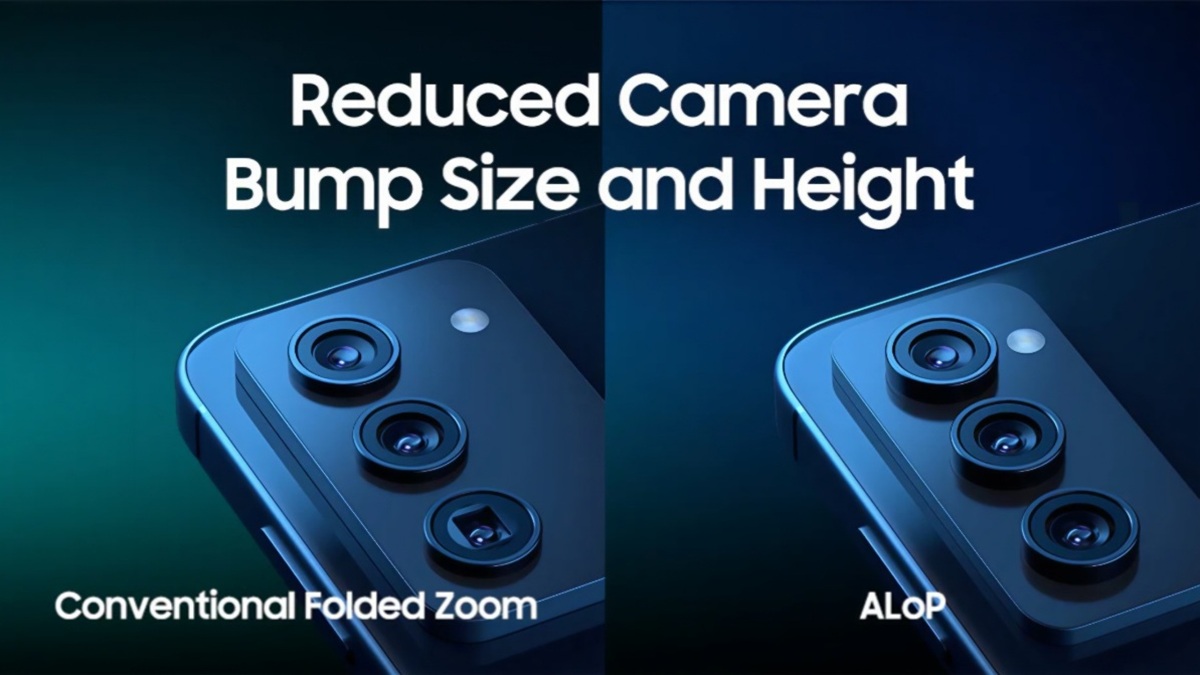
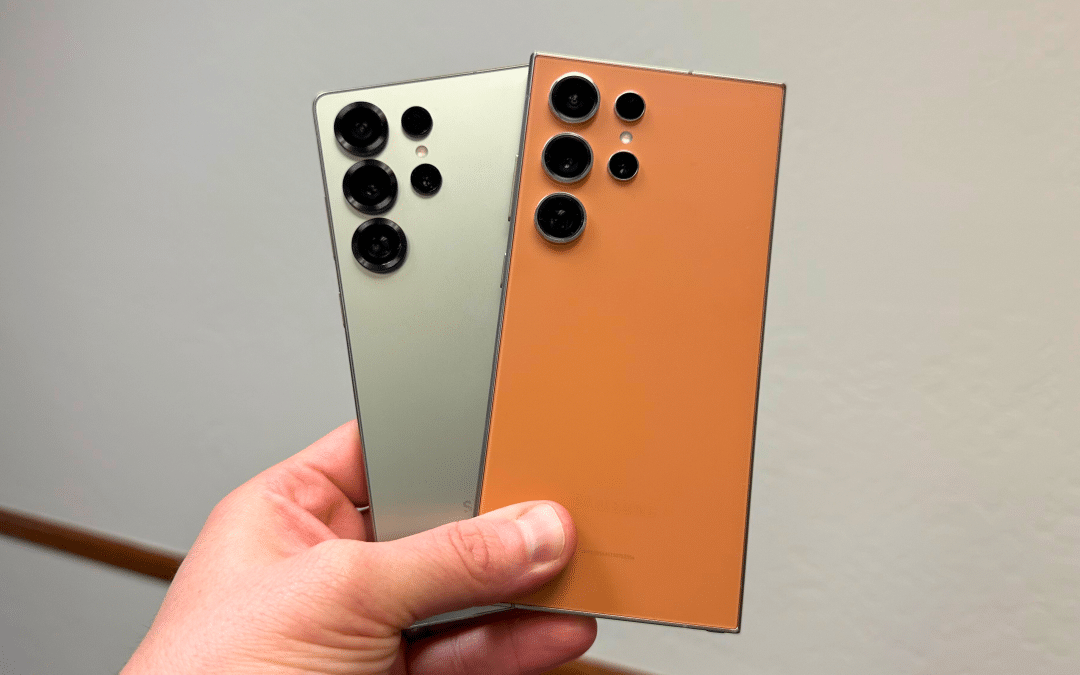
As discussion intensifies around the 5x telephoto camera of the Galaxy S26 Ultra, one visual detail has dominated the narrative: the perfectly circular entrance lens. For many observers, that circle alone may appear to be confirmation that Samsung has implemented ALoP — All Lenses on Prism. But there’s more to the story.
When Samsung introduced ALoP, the breakthrough was not aesthetic. It was structural. Traditional folded telephoto systems are prism-first designs: light enters, strikes a prism that bends it 90 degrees, then travels horizontally through a stacked lens assembly before reaching the sensor. This configuration constrains aperture growth. Increasing brightness often means increasing module height, or creating the infamous “volcano-style” camera bump.
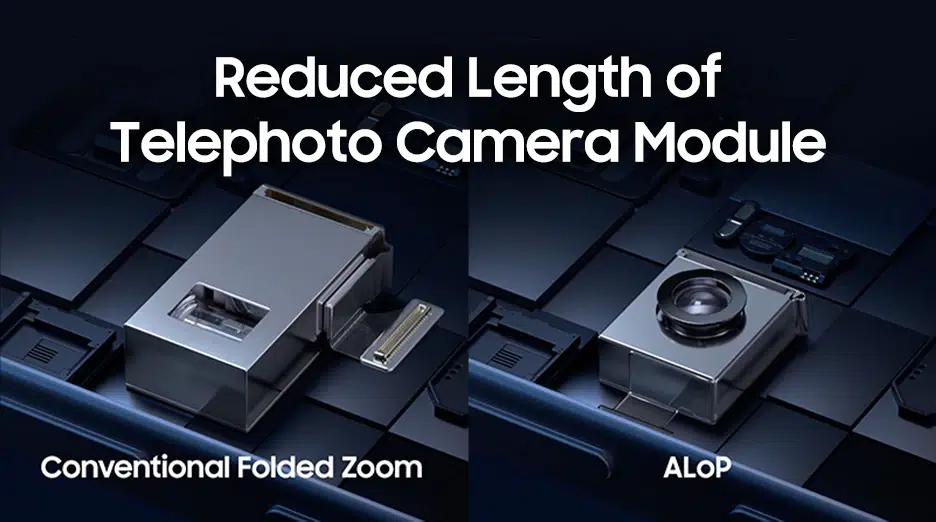
ALoP alters that geometry. The lens stack is positioned on top of the prism rather than behind it, making the lenses the first optical surface light encounters. The prism angle shifts. The sensor may tilt slightly to maintain alignment. The objective is packaging efficiency, shortening module length while enabling a larger entrance pupil inside a thinner chassis. Samsung’s early demonstrations suggested reductions of roughly twenty percent in module length compared to conventional layouts.
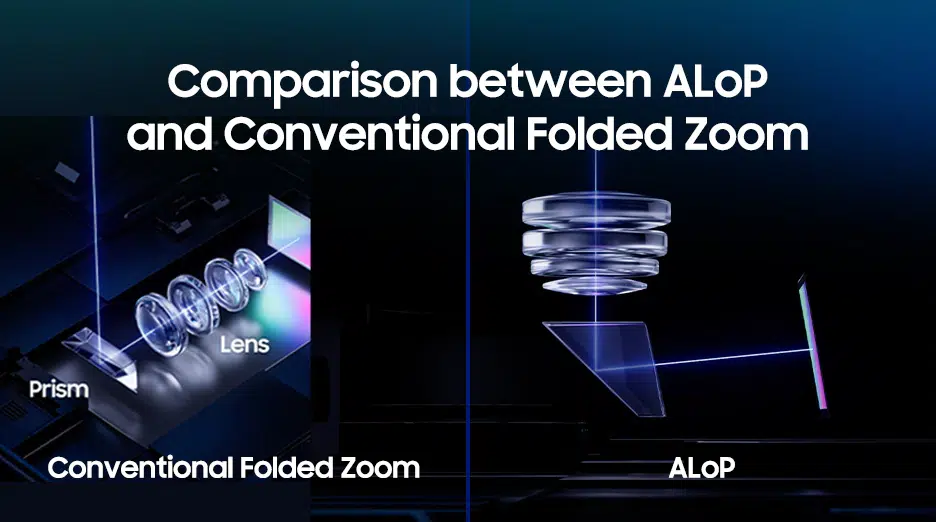
That is the theory. Now we apply it to what we actually know.
The Samsung Galaxy S25 Ultra measures 8.2mm thick and uses a rectangular 5x folded module at f/3.4, with relatively controlled protrusion. The S26 Ultra is rumored to be 7.9mm “thinner” yet appears to introduce a circular 5x lens, a brighter f/2.9 aperture, and a visibly defined camera bump. This is where the debate becomes technically interesting.
The Case for ALoP
Supporters argue that the circular lens and exterior symmetry suggest a lens-first orientation. More importantly, they point to physics: achieving 5x at f/2.9 with a large 50MP sensor inside a thinner 7.9mm chassis would be mechanically difficult using the previous prism-first “tunnel” without substantially increasing bump size.
Under that interpretation, ALoP would not be used to eliminate protrusion, but to redistribute internal volume. The shortened module length could be allocated to a larger sensor format, improved stabilization hardware, or a wider effective entrance pupil. In this scenario, the bump is not a contradiction of efficiency; it is controlled optimization within tighter dimensional constraints.
The Case Against ALoP
Skepticism remains justified. A circular entrance lens does not confirm lens-first geometry. Circular apertures are fundamental to optical physics. Prism-first folded systems can — and often do — use circular front elements. External symmetry does not reveal the internal light path.
Second, f/2.9, while brighter than f/3.4, is not radically aggressive. It is achievable through improved coatings, enhanced prism transmission efficiency, refined sensor design, and moderate entrance pupil enlargement without requiring a complete architectural inversion.
Third, the visible bump complicates the efficiency narrative. If ALoP’s primary advantage is spatial optimization, why does a thinner chassis still require a camera bump? That detail could imply an advanced but still prism-first configuration rather than a full lens-on-prism restructuring.
And finally, ALoP was previously positioned as a pathway to brighter telephoto optics, with demonstrations hinting at f/2.58-class performance. If the S26 Ultra lands at f/2.9, critics argue this does not reflect a dramatic architectural leap. A true ALoP implementation, they suggest, should push more aggressively toward lower F-numbers.
Where Geometry Actually Points
At this stage, evidence exists on both sides.
- The thinner chassis supports the possibility of ALoP.
- The moderate aperture and continued protrusion temper that certainty.
What would definitively confirm full ALoP implementation is not the shape of the glass, but the internal order of elements: lens stack positioned before the prism, altered prism orientation, and measurable sensor tilt relative to the optical axis.
Until a teardown exposes that geometry, certainty remains speculative.
The 5x telephoto system on the Galaxy S26 Ultra is almost certainly new. The optical path appears reworked. The packaging philosophy has evolved. But whether this represents full ALoP implementation or a highly refined prism-first folded system remains unconfirmed. The intellectually honest position is balanced:
- There are meaningful structural indicators.
- There is insufficient geometric proof.
Whether that geometry is full ALoP or evolutionary refinement will only be proven when the module is opened, and the prism orientation revealed. Until then, the circle is a clue, not a verdict. And when the teardown comes, we’ll break down exactly how the light moves.
Full ALoP architecture deep dive soon.

Follow us on Google Discover & set us as a preferred source in Google News
Share this Post
___________________________


New Blog Posts
___________________________
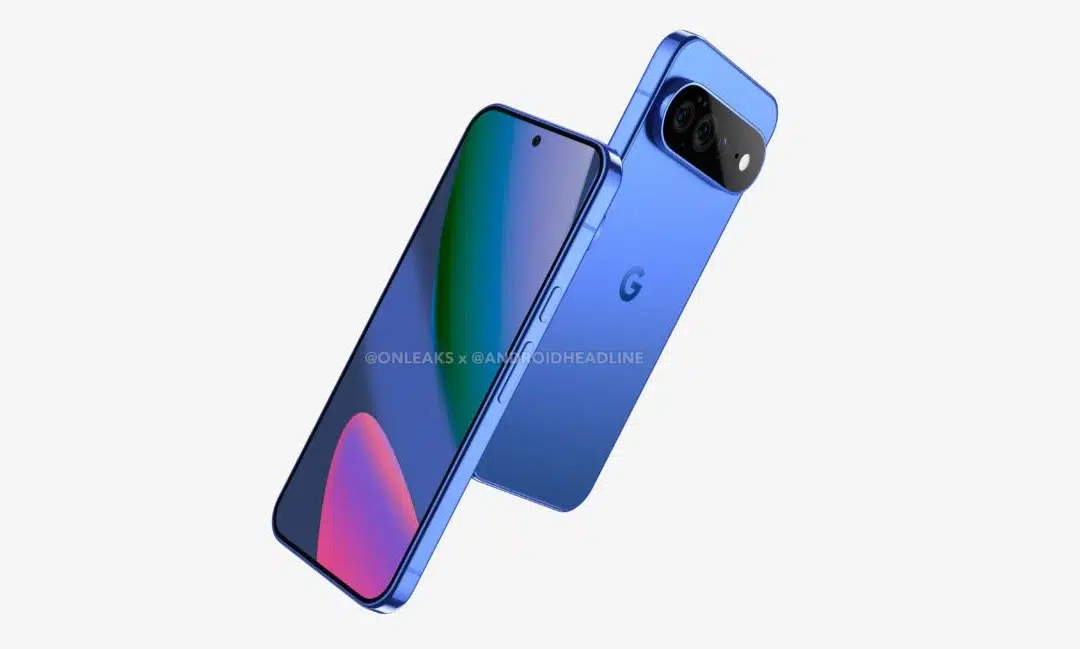
First Set of Pixel 11 Pro XL Renders Are Here
Pixel 11 Pro XL CAD renders show minimal design changes

Is Samsung Preparing One UI 8.5 Beta for Galaxy Z Fold 5 and Flip 5?
Samsung may launch a One UI 8.5 beta program for its 2023 foldables
Galaxy S25 One UI 8.5 Beta May Run Longer Than Expected
Galaxy S25 series’ One UI 8.5 beta may stretch to 10 rounds