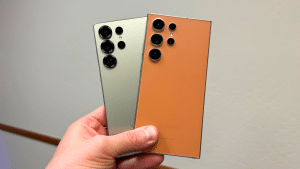
Galaxy S26 May Deliver Improved Battery Performance Thanks to a Key Change
SammyGuru is reader-supported. We have affiliate and sponsored partnerships, so we may earn a commission when you buy through links on our site — at no extra cost to you. Learn more.
Samsung may not increase battery capacity in the next-generation Galaxy S flagships, but it aims to improve performance without making the battery bigger. The company will reportedly adopt new EMC (Epoxy Molding Compound) battery protection circuit technology for its 2026 flagships. This will help prevent overcharging, overdischarging, and other battery-related issues.
Galaxy S26 may feature an advanced EMC battery protection circuit
While Chinese competitors are integrating larger batteries — up to 7000mAh — in their premium smartphones, Samsung has continued to use a 5000mAh battery in its Ultra flagships for several years. However, thanks to software optimizations and AI-powered battery management, the company has been able to deliver impressive battery life without increasing size.
To further enhance battery performance, Samsung is integrating an EMC battery protection circuit into its upcoming Galaxy S26 series. The manufacturer mounts this circuit outside the battery cell and builds it with different semiconductors and printed circuit boards. The circuit uses EMC, a special silica-based coating that provides electromagnetic wave blocking, waterproofing functions, and improves internal heat generation.
Samsung’s arch-rival Apple is also leveraging this technology in its iPhones. It’s good to see that Samsung will now also adopt advanced battery protection for the first time in the Galaxy S series, bringing similar performance benefits to its flagship lineup. According to a report from TheElec, the Korean firm has placed a purchase order with ITM Semiconductor for EMC battery protection circuits for the upcoming Galaxy S26.
ITM Semiconductor developed the EMC battery protection circuit based on the PMP (Protection Module Package) design. This design integrates PCM (Protection Circuit Module) into a compact semiconductor package. PMP includes all core components such as the protection element (Protection IC), switching element (MOSFET), and PCB. This helped the company to reduce heat generation by up to 24% compared to PCM designs.
As Samsung is leaning toward a slimmer design language while integrating a powerful processor, heat dissipation has become a challenge. That’s why the Korean company now sees EMC battery protection circuits as essential, not optional. More details about Samsung’s new battery technology should emerge in the coming months.

Written by
Binay KonwarBinay Konwar started his blogging journey in 2014 and has since written plenty of tech articles. At present, he is working as a News Writer at SammyGuru, covering everything about Samsung. He holds a Master's degree in Mathematics, but his real passion lies in tech and writing. In his free time, he enjoys playing chess and watching movies.

Follow us on Google Discover & set us as a preferred source in Google News
Share this Post
___________________________


New Blog Posts
___________________________

First Set of Pixel 11 Pro XL Renders Are Here
Pixel 11 Pro XL CAD renders show minimal design changes

Is Samsung Preparing One UI 8.5 Beta for Galaxy Z Fold 5 and Flip 5?
Samsung may launch a One UI 8.5 beta program for its 2023 foldables
Galaxy S25 One UI 8.5 Beta May Run Longer Than Expected
Galaxy S25 series’ One UI 8.5 beta may stretch to 10 rounds