
Exynos 2600 Could Mark Samsung’s Most Important Comeback Yet
Samsung’s path to redeeming Exynos has been surprisingly successful, contrary to popular belief. The troubled days of the Exynos 2100 and 2200 are firmly behind us. With the upcoming Exynos 2600, Samsung is tackling not only the dreaded thermal issues but much more.
Their efforts directly target higher performance metrics without sacrificing reasonable thermal thresholds. Heat-Pass Block stands as Samsung’s key innovation. Meanwhile, the next-generation GAA process becomes inevitable, a necessity for Intel and TSMC foundries alike.
Fighting the Laws of Thermodynamics
It’s never a fun time when your smartphone heats up. Thermal throttling brings a ton of downsides that kill the experience.
- Lowered Brightness
- Throttled Gaming Performance
- Comfort Issues
- Camera Lags and Recordings Stop
- Potential Crashes
Ironically, Samsung created a technology that attacks the root cause of heat, the chipset itself. Their patented Heat-Pass Block tackles it head-on. Before diving into its benefits, let’s examine the laws of thermodynamics and how Apple handled TSMC’s hidden drawback.
Laws of Thermodynamics:
- Energy cannot be created or destroyed, only transferred.
- Energy will naturally spread out.
- You cannot reach absolute zero.
Smartphones grow more powerful every year, and with that power comes serious heat. We’ll focus on the first two laws of thermodynamics here. Apple nailed it perfectly with the iPhone 17 Pro and Pro Max. They transformed those models into effective mini heat sinks.
Apple took a different approach to vapor chamber cooling. Unlike Google or Samsung, they positioned the vapor chamber on top of the chipset, not underneath. This strategic flip dissipates heat far more effectively from the SoC.
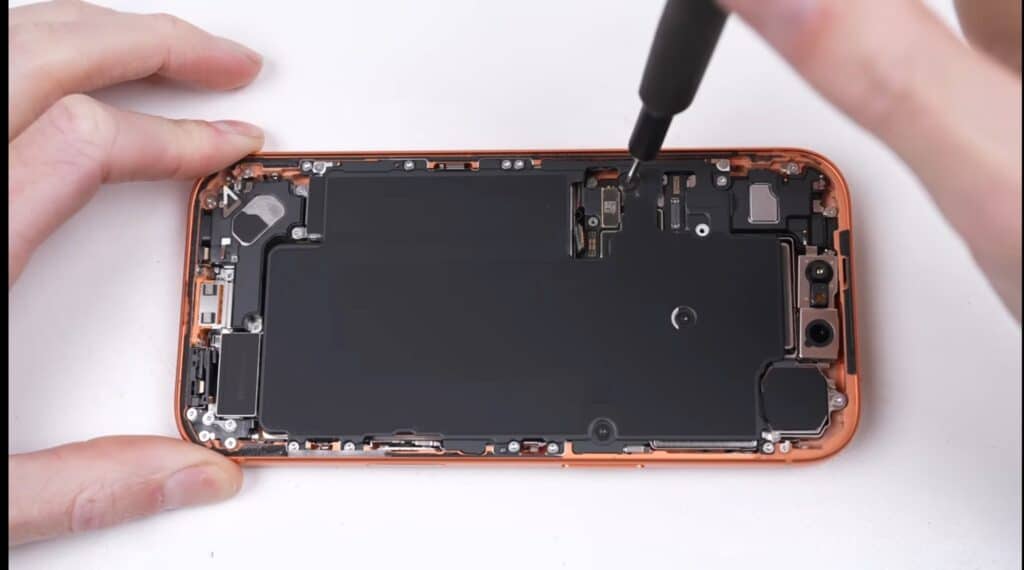
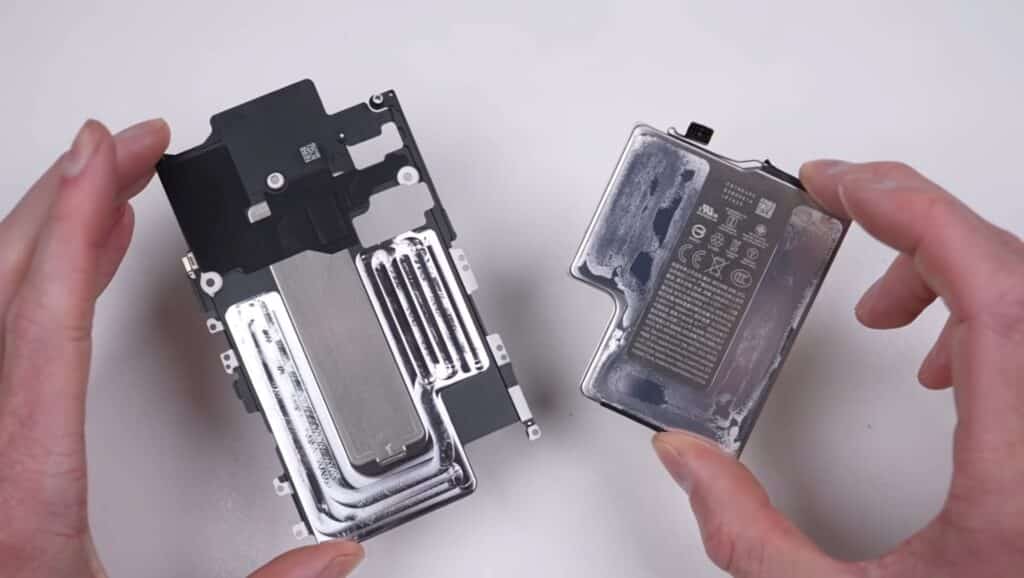
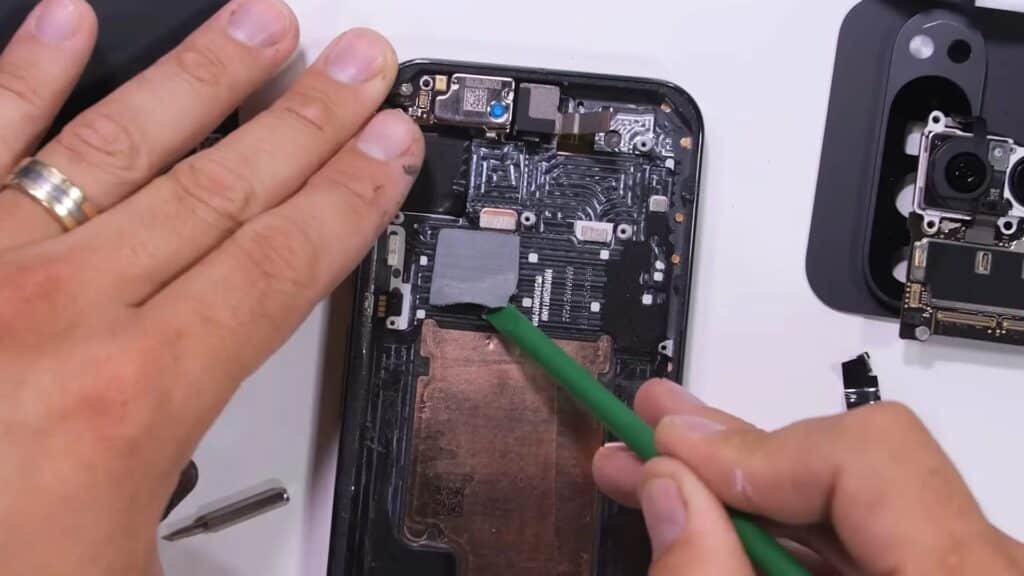
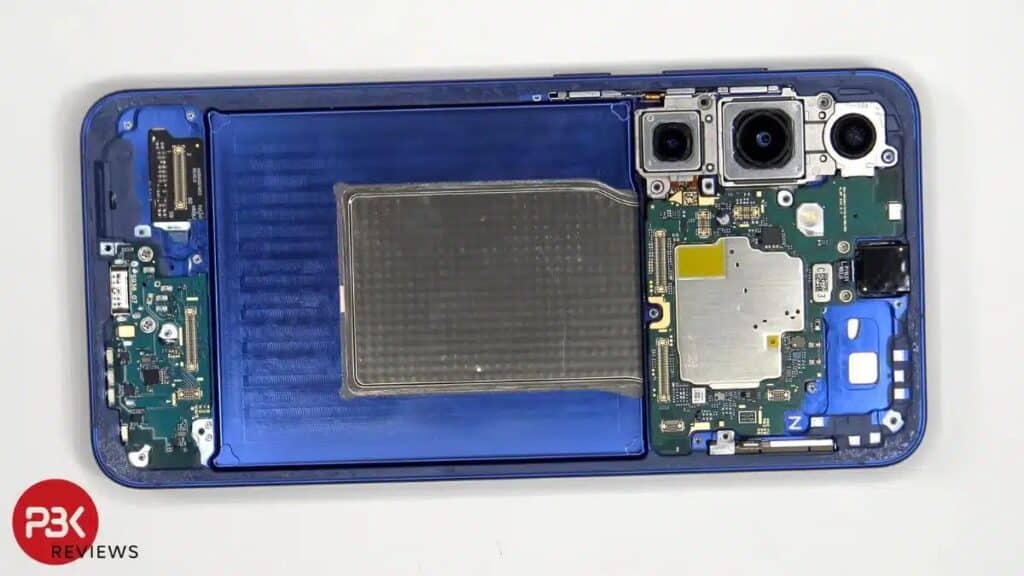
Apple has three layers to help combat the emission of heat; the vapor chamber quickly absorbs the heat emitted from the chipset, the graphite sheet (the black layer in the first image), and then the aluminum unibody is a better thermal conductor than titanium so it is able to absorb and dissipate heat. If heat isn’t properly removed then the heat will cause an accelerated decay of the A19 Pro.
The significance of Gate-All-Around (GAA) process
Samsung reportedly reached 50–60% yield rates on its 2nm GAA process back in November. According to TweakTown, the process delivers a 5% performance uplift and an 8% efficiency gain over Samsung’s second-gen 3nm node. This progress makes Samsung a viable option for Nvidia, potentially others.
FinFET is beginning to look as outdated as its predecessor, Planar. GAA delivers major improvements for 3nm nodes and beyond. Unlike FinFET’s linear channel, GAA surrounds the channel completely, allowing the gate to contact all four sides for superior control.
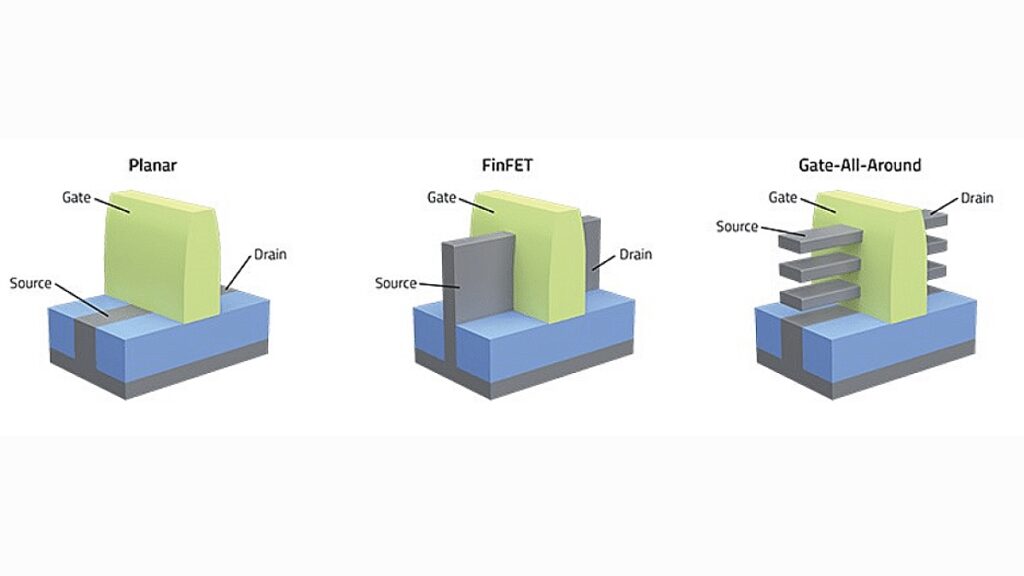
As we shrink to 3nm nodes and beyond, leakage power surges if we cling to FinFET. Tom’s Hardware reports that TSMC’s N3X process trades off up to 250% higher power leakage at peak frequencies. If Apple, Qualcomm, and others aren’t cautious, performance gains could bring far more downsides than benefits.
Samsung aims to run at lower voltages, delivering equal or superior performance, while unlocking significant efficiency gains.
Samsung is looking for improvements beyond fabrication
Where does the Exynos 2600 fit in? The Heat-Pass Block is a copper thermal plate placed directly above the application processor. It delivers a 30% reduction in chip temperature. Combine that with the efficiency and thermal improvements from the next-generation 2nm GAA process, and we’ve got a clear winner.
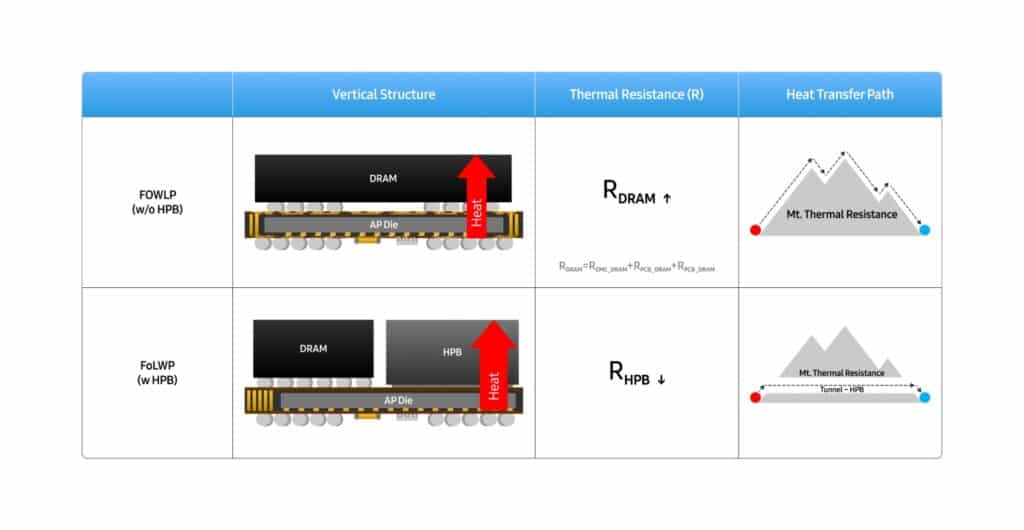
Instead of simply enlarging the vapor chamber, Samsung targets heat at its source, reducing emissions from the start. It’s proving to be a huge success already. Qualcomm is already adopting Heat-Pass Block for its next chipsets: Snapdragon 8 Elite Gen 6 and Snapdragon 8 Elite Gen 6 Pro.
Everyone wins when Samsung wins
Once Samsung succeeds, everyone reaps the rewards of this breakthrough. We gain higher performance, lower power consumption, and dramatically reduced heat.
An overheating device cannot sustain peak performance during long sessions. We already enjoy AAA PC gaming, the only barriers holding back Android smartphones and tablets are drivers and thermal limits.
Exynos now charts the direct path to solving the biggest challenge for smartphones, and potentially powerhouse tablets.

Follow us on Google Discover & set us as a preferred source in Google News
Share this Post
___________________________


New Blog Posts
___________________________

First Set of Pixel 11 Pro XL Renders Are Here
Pixel 11 Pro XL CAD renders show minimal design changes

Is Samsung Preparing One UI 8.5 Beta for Galaxy Z Fold 5 and Flip 5?
Samsung may launch a One UI 8.5 beta program for its 2023 foldables
Galaxy S25 One UI 8.5 Beta May Run Longer Than Expected
Galaxy S25 series’ One UI 8.5 beta may stretch to 10 rounds