
A Closer Look at Galaxy S26 Ultra’s Telephoto Cameras
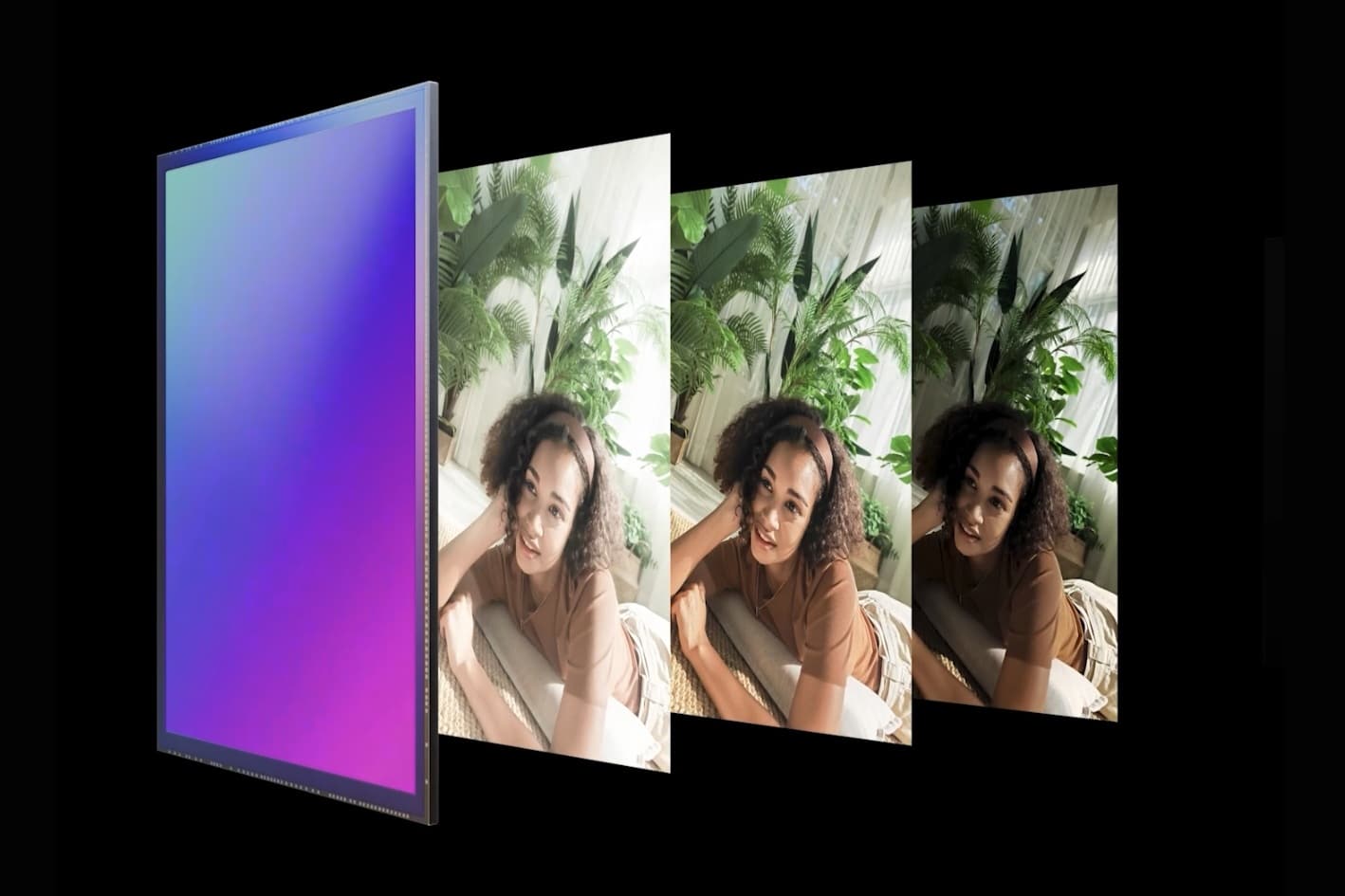
Samsung is taking a more grounded approach with the Galaxy S26 Ultra‘s telephoto camera. Instead of leaning heavily on aggressive AI reconstruction, the focus is on working within optical limits and enhancing results through smarter, more restrained processing. Let us take a closer look at this philosophy.
Disclaimer: This article is based on current leaks, supply-chain information, and engineering analysis available at the time of writing. Final hardware and software behavior may differ at launch.
Samsung assigns clear jobs to each telephoto lens
For years, smartphone brands have chased the same dream: one telephoto lens that does everything. Long range. Close focus. Low light. Video stability. Portraits. On paper, it sounds efficient. In reality, it creates compromises everywhere.
With the Galaxy S26 Ultra, Samsung appears to double down on a very different philosophy of system engineering over optical heroics. Instead of asking a single telephoto lens to handle every scenario, Samsung continues to split the workload into clearly defined roles, then uses computation to control the risks that come with ambitious optics. This is not a flashy approach. It is a calculated one.
Samsung could build a single, high-resolution telephoto using its own HP5-class 200MP sensor technology. It has the sensor expertise to do so. But using one massive HP5-style telephoto would complicate optical design, increase device thickness, and ultimately disrupt the Ultra’s industrial identity. After the strong market performance of the S25 Ultra, Samsung appears unwilling to risk that balance. Instead, the company keeps the system lean, modular, and controllable.
The leaked Galaxy S26 Ultra telephoto system follows a simple rule: short range demands speed, stability, and focus accuracy, while long range prioritizes reach and light, even if physics becomes risky. To achieve this, Samsung continues the dual-telephoto strategy seen in previous Ultra models, but with meaningful refinement.
The Galaxy S26 Ultra may quietly shine with its new S5K3LD 3x telephoto: The stability anchor
The new 3x telephoto sensor (if it materializes) belongs to Samsung’s LD family, a high-performance flagship sensor line. With dedicated Dual Pixel architecture and a larger Class-3 sensor format, this is not a recycled or entry-level component. It represents a clear step forward from the IMX754 used in the S25 Ultra and far beyond the smaller K-series sensors used in lower tiers. This lens has the potential to become the unsung hero of the S26 Ultra camera system.
Samsung opts for a native 12MP sensor with no Quad-Bayer structure and no pixel binning. Large effective pixels are built into the design rather than simulated through processing. This is a deliberate decision. The company prioritizes clean signal, consistency, and stability over chasing resolution numbers.
A native-resolution telephoto preserves micro-contrast, reduces temporal noise, improves autofocus reliability, and delivers stable video without heavy processing. In real-world use, this translates to fast, reliable autofocus, a short minimum focus distance of around 18cm, and excellent texture rendering for portraits, food, and everyday scenes.
From 3x to roughly 4.9x, a well-tuned native telephoto can outperform high-resolution crops or aggressive binning from 200MP sensors, if the sensor quality is good enough. This lens exists to handle daily zoom, portraits, close-range telephoto work, and stable video, and it can do so without drama or overprocessing.
Samsung takes the risk with the 5x lens
The real story begins at 5x. Samsung is rumored to push the Galaxy S26 Ultra’s periscope from 115mm to 120mm, while also adopting a brighter f/2.9 aperture, all on a standard single-layer stacked sensor. On paper, the benefits are obvious: more light intake, better low-light zoom, and stronger subject separation. But this is where physics stops being friendly.
As discussed in the Frankenstein Theory, pairing a bright aperture with a non-dual-layer stacked sensor introduces well-known risks: light leakage between pixels, crosstalk at steep telephoto angles, and amplified micro-jitter, especially in video. This is not speculation. It is a documented optical trade-off. Sony’s IMX854 cannot eliminate these limitations at the sensor level alone. Samsung knows this and accepts it.
Samsung’s answer: Software, not glass
Samsung does not try to solve these problems with increasingly complex optics. Instead, it leans into what it does best: computation at scale.
The Neural Frame Engine is not about sharpening or noise reduction. It operates temporally, not spatially. It maps micro-jitter across multiple frames, detects pixel-level crosstalk patterns, corrects light leakage over time, and stabilizes motion before final reconstruction. This allows Samsung to mask optical weaknesses where they matter most: in motion.
Additional layers include advanced lens coatings to reduce internal reflections, software focus mapping to control instability at closer ranges, and aggressive motion compensation during video capture. Samsung is not trying to beat physics. It is trying to contain it, and this strategy makes sense. The goal isn’t perfection, but cost-aware engineering, predictable behavior, and controllable failure points.
By refining both telephoto lenses compared to the S24 and S25 Ultra, while maintaining clear role separation, Samsung achieves a system where:
- The 3x lens focuses on stability and daily use
- The 5× lens focuses on reach and light
- The optical-quality coverage remains strong from 5x to 10x, with software absorbing the risk in between
This is a system designed to be tuned, updated, and improved over time. Samsung appears willing to accept optical limitations and intentionally mask them computationally. Not because it has no choice, but because it prefers control over spectacle.
If Samsung’s Neural Frame Engine is tuned correctly, the Galaxy S26 Ultra telephoto system could deliver cleaner short-range zoom than high-resolution crops, more usable low-light telephoto than conservative optics, and better long-range stability than the specs alone would suggest.
This is not the loudest solution. But it may be one of the smartest. And it sets the stage for the real question: How does this philosophy hold up against Oppo, Xiaomi, Vivo, and Apple? That comparison is coming next. Stay tuned.

Follow us on Google Discover & set us as a preferred source in Google News
Share this Post
___________________________


New Blog Posts
___________________________
First Set of Pixel 11 Pro XL Renders Are Here
Pixel 11 Pro XL CAD renders show minimal design changes
Is Samsung Preparing One UI 8.5 Beta for Galaxy Z Fold 5 and Flip 5?
Samsung may launch a One UI 8.5 beta program for its 2023 foldables
Galaxy S25 One UI 8.5 Beta May Run Longer Than Expected
Galaxy S25 series’ One UI 8.5 beta may stretch to 10 rounds