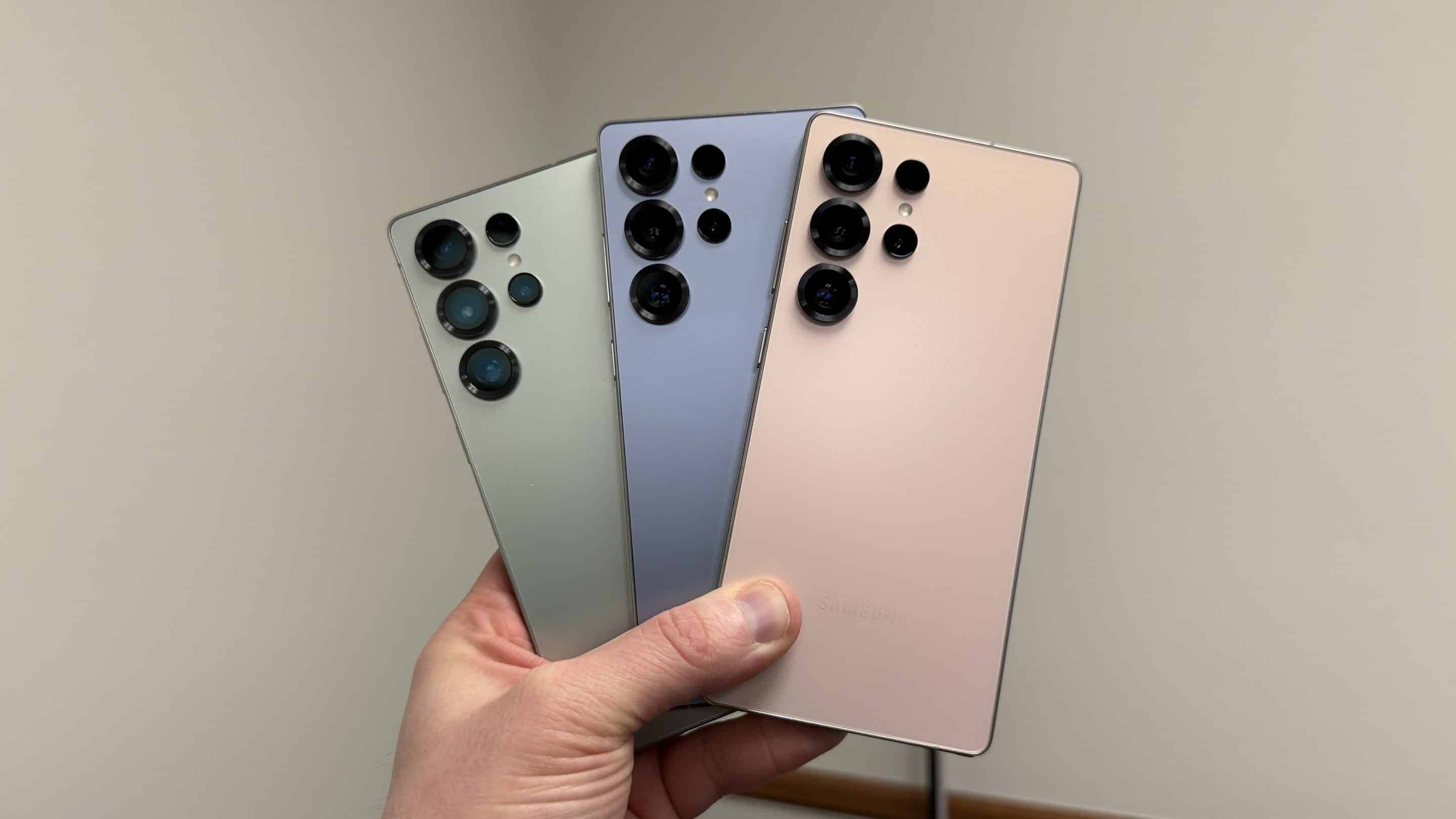
Samsung Keeps Pace With Apple Despite a Slow Smartphone Market in 2025
SammyGuru is reader-supported. We have affiliate and sponsored partnerships, so we may earn a commission when you buy through links on our site — at no extra cost to you. Learn more.
According to new figures from Omdia, Apple shipped 240.6 million iPhones in 2025, narrowly beating Samsung, which shipped 239.1 million Galaxy phones. That gives Apple a 19% market share, although Samsung also effectively sits at 19% once rounding is applied. What really matters, though, is that both companies grew shipments by the exact same amount at 7% year over year.
Samsung matches Apple’s growth as smartphone market barely moves in 2025
That’s a strong result for Samsung, especially in a market that only grew by 2% overall in 2025, reaching total shipments of 1.25 billion units. Growth showed up in nearly every region, with Greater China the main exception due to the fading impact of national subsidy programs. Even so, Samsung managed to hold its ground globally while several rivals struggled.
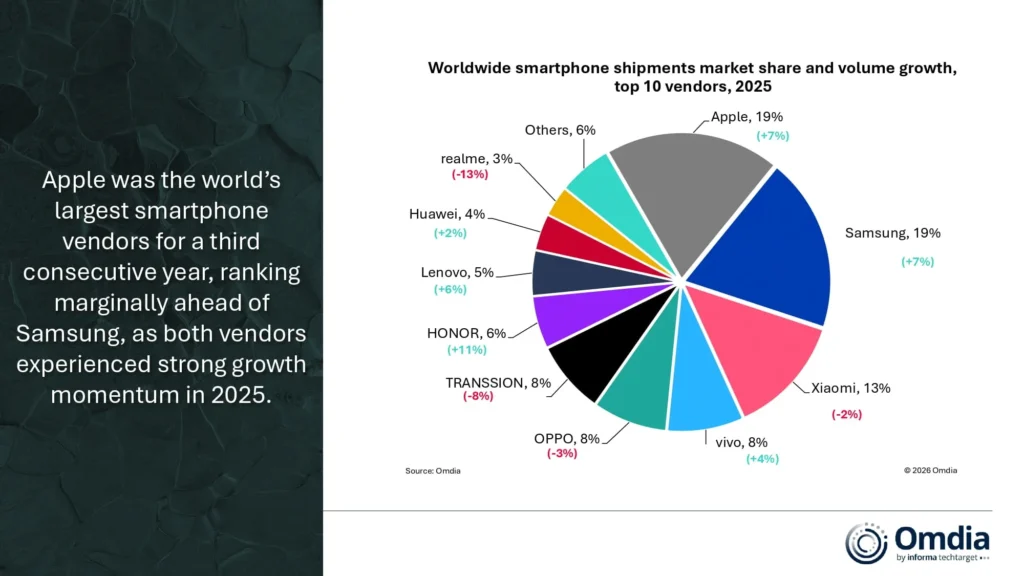
Below the top two, the rankings stayed fairly stable. Xiaomi held onto third place with 165.4 million units shipped, though that represents a 2% decline compared to 2024. Vivo followed with 105.3 million units and 4% growth, while Oppo slipped slightly with a 3% year over year decline. Transsion just missed out on the top five, despite matching Oppo and Vivo with an 8% market share.
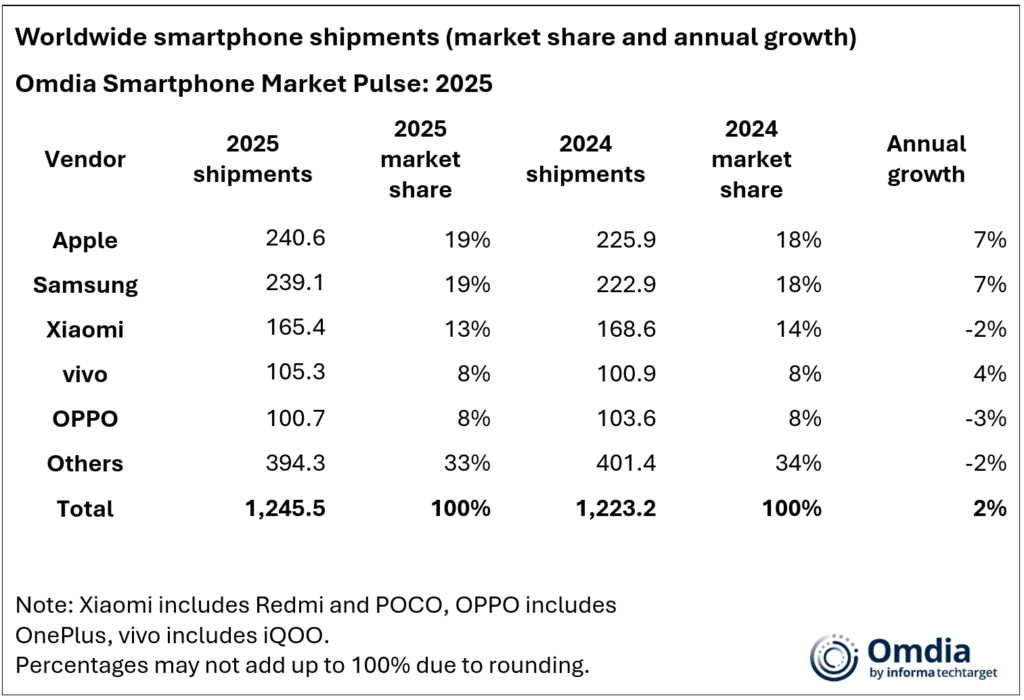
Honor was the fastest growing smartphone brand in 2025
Honor was the standout among major brands. It witnessed the fastest growth at 11% year over year. But it still sits well behind Samsung and Apple in overall volume. Noticeably absent from the data were Google Pixel phones, which is, well, not surprising.
It will be interesting to see what changes in the 2026 data and why. Unlike 2025, this year is shaping up to be loaded with uncertainty around memory chips and how that could affect consumer electronics. So we’re particularly interested in seeing what happens to the global smartphone market in 2026.
“Although 2025 overall has been a positive year for most vendors, headwinds are building for the 2026 outlook,” noted Omdia’s senior analyst, Runar Bjorhovde. Research manager, Le Xuan Chiew, added “With market contraction looking increasingly unavoidable for 2026, vendors will shift toward prioritizing profitability while expanding alternative revenue streams.”

Written by
Abhinav AnandAbhinav Anand is the News Editor at SammyGuru and a technology journalist based in New Delhi. Before joining SammyGuru, he contributed to numerous outlets, including Android Headlines, ExtremeTech, The Mac Observer, Financial Express, Economic Times, iGeeksBlog, KnowTechie, PhonesWiki, SlashGear, and more. You can reach him at abhinav@sammyguru.com.

Follow us on Google Discover & set us as a preferred source in Google News
Share this Post
___________________________


New Blog Posts
___________________________
First Set of Pixel 11 Pro XL Renders Are Here
Pixel 11 Pro XL CAD renders show minimal design changes
Is Samsung Preparing One UI 8.5 Beta for Galaxy Z Fold 5 and Flip 5?
Samsung may launch a One UI 8.5 beta program for its 2023 foldables
Galaxy S25 One UI 8.5 Beta May Run Longer Than Expected
Galaxy S25 series’ One UI 8.5 beta may stretch to 10 rounds