Samsung Launches ISOCELL HP5, World’s First 0.5μm 200MP Camera Sensor

SammyGuru is reader-supported. We have affiliate and sponsored partnerships, so we may earn a commission when you buy through links on our site — at no extra cost to you. Learn more.
Samsung has launched a new 200MP camera sensor, the ISOCELL HP5. Built to push the boundaries of smartphone photography, it is the world’s first 200MP sensor with 0.5μm pixels. Unfortunately, we may not see it on Galaxy phones anytime soon.
Samsung launches ISOCELL HP5 200MP camera with big upgrades
At a 1/1.56-inch optical format, the ISOCELL HP5 is a compact 200MP sensor. However, it defies the traditional trade-off between pixel size and image quality through a series of cutting-edge innovations. Typically, smaller pixels capture less light, resulting in lower image quality. Samsung overcame this limitation through advanced structural design and materials science.
The new sensor uses Front Deep Trench Isolation (FDTI) and Dual Vertical Transfer Gate (D-VTG) to maximize Full Well Capacity (FWC), enabling it to store more electrons and capture brighter, more detailed images even in challenging lighting.
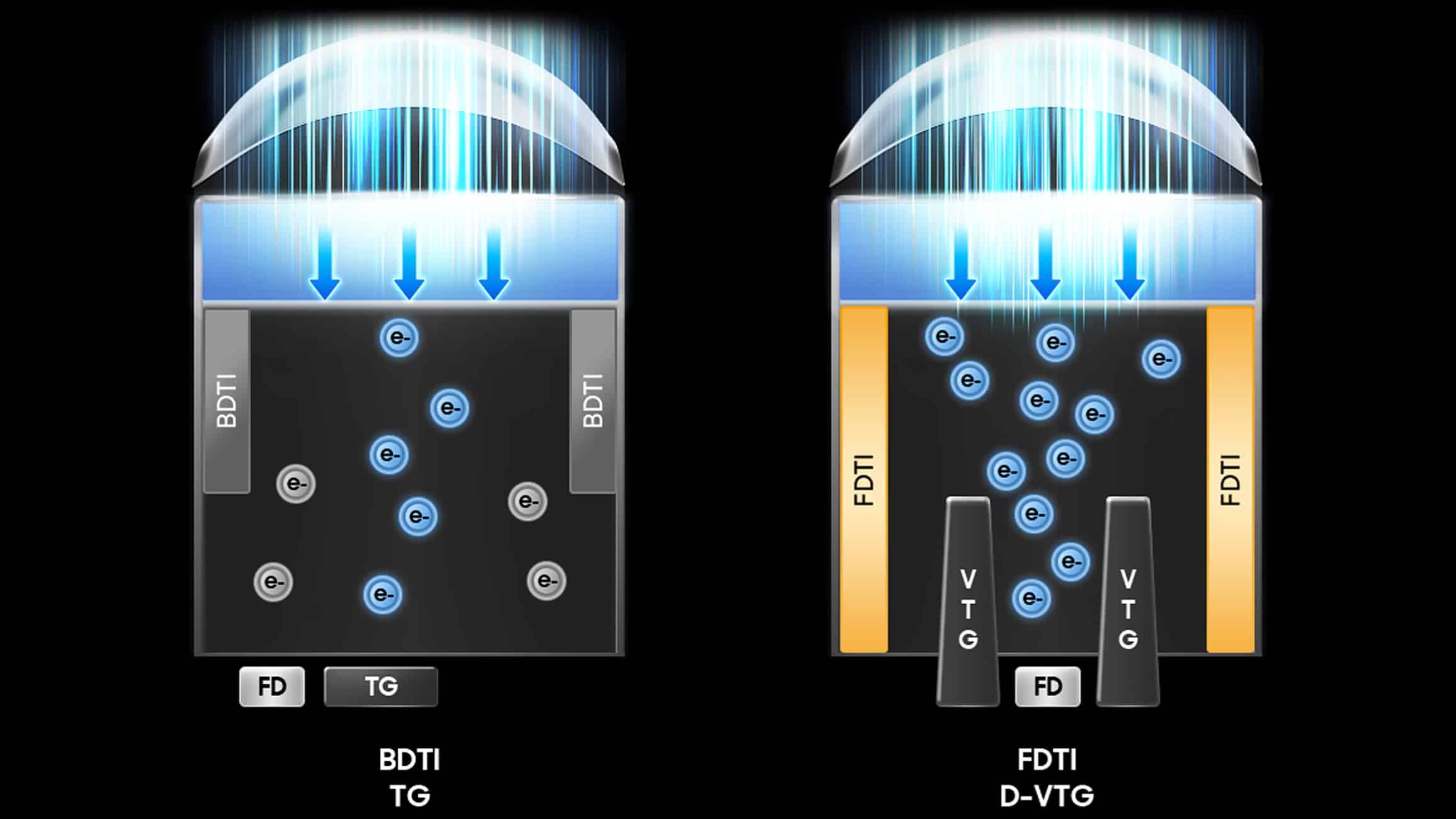
Adding to this is the DTI Center Cut (DCC) technology, a structural innovation that opens part of the trench among four photodiodes. This enhances autofocus precision and reduces noise, resulting in a 150% increase in conversion gain (CG) and a 3–40% reduction in random noise (RN) compared to conventional designs. The outcome is noticeably cleaner and more vibrant photos, even in low light.
Advanced optics and AI for realistic color and clarity
To make the most of every photon, Samsung integrated a suite of proprietary optical technologies into the ISOCELL HP5. The sensor features High Precision Microlens (High-P) to improve light absorption efficiency and High Transmittance ARL (High-T) to minimize reflection and scattering, maximizing quantum efficiency for richer color expression. It also includes High Sensitivity DTI (High-S) to reduce interference and light loss.
Together, these advancements ensure the ISOCELL HP5 delivers stunningly clear, true-to-life images in both bright and dim environments. But that’s not it. Samsung has also equipped this 200MP camera with End-to-End (E2E) AI Remosaic processing, allowing the sensor to capture and process full 200MP images in under two seconds. The feature ensures high-resolution photos are ready instantly, without any visible delay.
Meanwhile, the sensor’s 13-bit color depth offers over 550 billion color combinations, eight times more than a 12-bit sensor. This leads to better tonal transitions and smoother color gradients. The ISOCELL HP5 also employs Staggered HDR, capturing long, medium, and short exposures line by line, then merging them to produce balanced images that fully express both shadows and highlights. Combined with Smart ISO Pro, users can expect a significant boost in dynamic range and realism.
Versatile for wide and telephoto lenses
Designed for flexibility, the ISOCELL HP5 can serve as both a wide-angle and telephoto sensor. Its 2x in-sensor zoom produces lossless results superior to digital zoom, and when paired with a 3x telephoto module, it delivers up to 6x zoom while maintaining exceptional clarity.
Samsung’s Tetrapixel technology further enhances versatility by adapting the pixel structure to lighting conditions. In bright scenes, the sensor operates at full 200MP resolution, while in low light, it intelligently merges pixels, producing 50MP images at 1.0μm or 12.5MP shots at 2.0μm for enhanced brightness and detail. Check out the full technical specifications below.
- Resolution: 16,384 x 12,288 (200MP)
- Pixel size: 0.5μm
- Optical format: 1/1.56″
- Frame Rates:
- 7.5 fps @ 200MP
- 30 fps @ 50MP
- 90 fps @ 12.5MP
- Video: 8K @ 30fps, 4K @ 120fps, FHD @ 480fps
- Autofocus: Super QPD (PDAF)
- HDR: Smart ISO Pro (iDCG), Staggered HDR
- Output Formats: RAW8 / RAW10 / RAW12 / RAW14
- Color Depth: 13-bit
With its combination of record-breaking pixel size, intelligent AI processing, and next-gen optical engineering, the ISOCELL HP5 is poised to elevate mobile imaging. Its design allows for thinner camera modules, faster performance, and greater flexibility. Currently in mass production, the sensor is expected to debut first in Chinese smartphones in the coming months. It’s unclear if Samsung plans to use it in Galaxy flagships.

Written by
Sumit AdhikariSumit, a life-long Samsung user, is passionate about technology and has been professionally writing on tech since 2017. He’s a mathematics graduate by education and enjoys teaching basic mathematics tricks to school kids in his spare time. Sumit believes in artificial intelligence and dreams of a fully open, intelligent and connected world.

Follow us on Google Discover & set us as a preferred source in Google News
Share this Post
___________________________


New Blog Posts
___________________________
First Set of Pixel 11 Pro XL Renders Are Here
Pixel 11 Pro XL CAD renders show minimal design changes

Is Samsung Preparing One UI 8.5 Beta for Galaxy Z Fold 5 and Flip 5?
Samsung may launch a One UI 8.5 beta program for its 2023 foldables
Galaxy S25 One UI 8.5 Beta May Run Longer Than Expected
Galaxy S25 series’ One UI 8.5 beta may stretch to 10 rounds